

Researchers recently found that sucralose could negatively impact cancer patients’ response to immunotherapy and that the gut microbiome likely mediates this relationship.
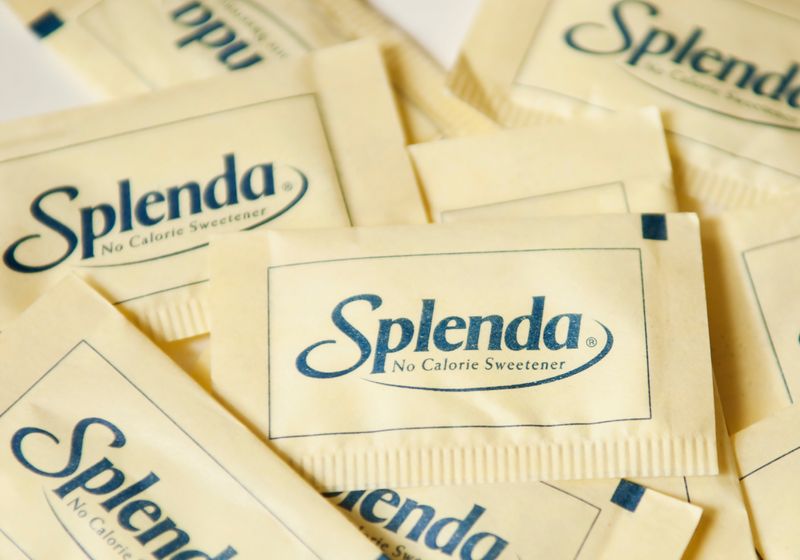
In 1976, researchers Leslie Hough and Shakshikant Phadnis from Queen Elizabeth College in London were studying the chemical derivatives of sucrose. Phadnis tasted one of these compounds, having misheard Hough’s instruction to test it—the intense sweetness blew Phadnis away. Now, sucralose, widely sold under the trade name Splenda, is in nearly every sweetened “diet” food and beverage product.
Many consumers of artificial sweeteners agree that sucralose most closely resembles table sugar in taste. At about 600 times sweeter than table sugar, it’s also one of the sweetest—and based on a new study, possibly the most dangerous for certain populations.
Researchers previously found that artificial sweeteners could alter the gut microbiome and that the gut microbiome could in turn affect cancer immunotherapy response.1,2 Abigail Overacre-Delgoffe, a cancer immunologist at the University of Pittsburgh, wanted to know if the two phenomena are connected.
Abigail Overacre-Delgoffe is a cancer immunologist at the University of Pittsburgh who studies how the microbiome mediates the immune system’s response in cancer.
University of Pittsburgh
Recently, Overacre’s team discovered that sucralose could weaken cancer patients’ response to immunotherapy.3 The team used mouse models to validate this finding and showed that the gut microbiome mediated this relationship. This work, published in Cancer Discovery, indicate that this popular artificial sweetener may not be as harmless as once thought.
“It’s a really important study that connected the dots that we didn’t even think were connected, and it all came up very elegantly,” said Jotham Suez, a microbiologist at Johns Hopkins University who was not involved in the new research. Suez’s team was the one to reveal the connection between artificial sweeteners and the gut microbiome.
In the present study, Overacre-Delgoffe’s team recruited over 100 patients with advanced skin or lung cancer who consumed artificial sweeteners and were undergoing immunotherapy. The researchers observed that sucralose consumption negatively impacted the response of patients to immune checkpoint inhibitors as well as their progression-free survival. In contrast, intake of aspartame and saccharin, other popular options of artificial sweetener, had no significant effect on these patients. “This is the first time that anyone has ever linked artificial sweetener consumption to immunotherapy response,” said Overacre-Delgoffe.
To understand how sucralose disrupts the body’s immune response, Overacre-Delgoffe and her colleagues looked to mouse models of melanoma and adenocarcinoma. They fed mice sucralose at doses that were comparable to those that the cancer patients consumed.
“What was really interesting is that the amount that somebody had to consume to see a negative effect was extremely low,” Overacre-Delgoffe said. “These aren’t people who are consuming 12 diet Mountain Dews a day, but just a packet [of sucralose] or two in their coffee in the morning.”
Consistent with their observations in human patients, the team saw that mice that consumed sucralose were resistant to immune checkpoint blockade, had increased tumor growth, and had reduced overall survival. However, the researchers only observed these effects in the mice they obtained from one vendor, but not another, which hinted at the involvement of the gut microbiome.

Jotham Suez, a microbiologist at Johns Hopkins University, studies how the microbiome shapes human health and diseases. He was not involved in the study.
Jotham Suez
“I really like that part of the study,” said Suez. “It’s actually very established in the field that mice and rats that we buy from various vendors around the country arrive with different microbiomes, and that can lead to different clinical outcomes. We think that this is actually not a limitation but is very relevant to human health.”
To determine if the microbiome played a role in the sucralose and immune association, Overacre-Delgoffe and her colleagues worked with germ-free mice, which lack a microbiome. They showed that fecal microbial transfer (FMT) from mice that consumed sucralose to those that weren’t exposed to the sweetener had the same effect on tumor progression and survival as its direct consumption. In contrast, FMT from mice that responded well to immune checkpoint inhibitor treatment could reverse therapeutic resistance in sucralose-consuming mice.
“What they’re telling us here that we weren’t aware before is that the changes that artificial sweeteners elicit in the microbiome are sufficient to impair our ability to respond to cancer immunotherapy,” Suez said. “But I do think we should be cautious and consider this as the beginning of a conversation, or a line of investigations, rather than completely changing public health recommendations.”
In the future, Overacre-Delgoffe hopes to understand how cells in the body and the microbiome metabolize artificial sweeteners. She would also like to learn how artificial sweeteners affect other diseases besides cancer.
“Things that could be very bad in cancer might actually be beneficial in things like autoimmunity, where you do need to tamp down your immune responses,” she said.
