

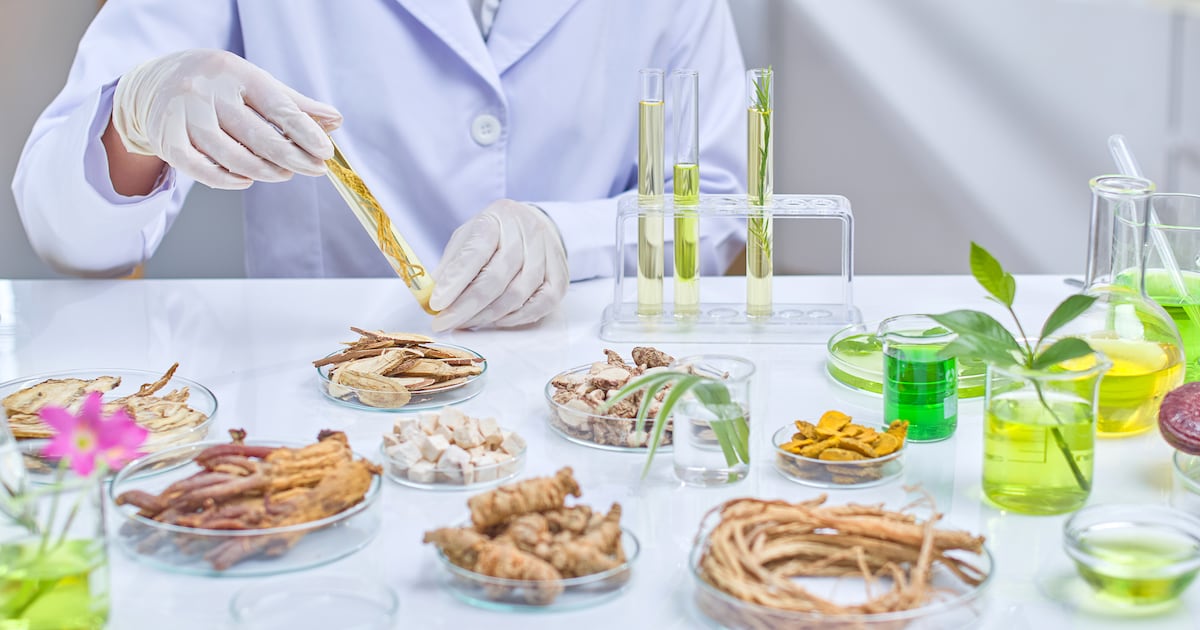
Speakers warned that the notion that ‘more is better’ is driving a market of highly-concentrated ‘herbal’ supplements that no longer resemble the plant of origin and may even pose a risk to consumer health.
These concerns were raised at the 73rd International Congress and Annual Meeting of the Society for Medicinal Plant and Natural Product Research (GA) held in Naples, Italy from Sept 1 to 3. The event brought together hundreds of professionals from across academia and industry to share scientific and technological insights.
Dr. Olaf Kelber, biologist, toxicologist and steering committee member for the Botanical Safety Consortium and Dr. Stefan Gafner, chief scientific officer at American Botanical Council, chaired a series of presentations and a panel discussion focused supplement quality.
.
Case study mysteries
Thomas Brendler, PhD, founder of consultancy Plantaphile, expressed his frustration at the lack of detail provided in case studies that link herbal supplements to ill health or death.
He said that without full product details and a full case report of who the patient was, the exact product usage and any other impacting factors, understanding the cause “is going to remain a complete guessing game.”
Dr. Gafner noted there have been several case studies involving toxicity with turmeric and green tea in which the supplement user had a genetic predisposition to liver injury, creating challenges for industry to address genetic diversity.
Paula Brown, PhD, director of applied research at the BC Institute Technology of Canada, said she suspected the supplements involved were highly concentrated.
“You get turmeric that has been concentrated to 80% curcuminoid and green tea extract that is so concentrated it’s so far removed from how these plants were used, and I think that plays a factor in triggering a response,” she said.
“There seems to be this approach that more is better, and the maker will concentrate and concentrate and concentrate until it no longer resembles the plant used.”
She added that she would like to see more guidance on how to assess the safety of highly concentrated botanical products and how to produce these products without losing the value of the herb.
Dr. Brendler agreed and noted a report published by European member states in 2024 outlining botanical ingredients ‘of concern’.
“Turmeric is on that list because of highly purified curcumin products on the market that give turmeric a bad rap,” he argued.
Land littered with legislation loopholes
The panelists also identified the lack of consumer education as a key quality control issue, emphasizing that many consumers have limited understanding of what constitutes a high quality herbal supplement. This concern is particularly relevant when purchases are made online, where the risk of encountering illegitimate products is higher.
They also noted that the regulatory framework in Europe or the United States does not force companies to put quality first.
In Europe, the assessment of thousands of botanical health claims are incomplete or on hold, due their complexity falling outside the remit of the European Food Safety Authority (EFSA). The use of “on hold” botanical health claims in Europe is still permitted, although this varies significantly by country.
“That’s a huge issue because it leaves loopholes everywhere to utilize claims that are potentially false,” Dr. Brendler.
He further suggested there should be a minimum expectation for research to provide a detailed composition of the product studied in order to be published in peer reviewed journals.
“As long as journals accept studies without these details, we will have a problem,” he added.
Cranberry and passionflower under the spotlight
Alexa Brouns, a PhD student at the University of Münster in Germany, shared her research into the quality of both cranberry and passionflower food supplements.
She noted that, in Europe, passionflower products are marketed either as registered herbal medicinal products or as food supplements but that medicines are subject to much tighter quality controls than supplements
In a study published in Planta Medica, Brouns and her colleagues assessed the quality of 11 products (six supplements and five drugs) on the market.
Her team used TLC (Thin Layer Chromatography) fingerprinting and UHPLC (Ultra-High-Performance Liquid Chromatography) to assess the samples for the plant’s diagnostic characteristics.
They found that five of the six supplements could not be identified as passionflower, while five pharmaceutical products and just one supplement did meet specification.
In a separate unpublished study, she and her colleagues analyzed and assessed the quality of 12 cranberry-based food supplements.
Cranberry’s phytochemistry is mainly characterized by tannins, predominantly proanthocyanidins (PACs) and anthocyanins.
Three of the investigated products did not exhibit typical anthocyanin HPLC fingerprint, and there was no batch-to-batch conformity.
A significant number of quality deficiencies were identified, and PAC content did not match that stated on label in products with a PAC declaration. Samples without a PAC declaration exhibited no significant PAC concentration or relevant cranberry dosages.
The reports concluded that the food supplements evaluated were of low quality and called for transparent and intensified quality control.
Dr. Brown commended this work and said these studies were a perfect representation of “what happens to a product once it has been highly concentrated to a point where you can no long find the plant’s diagnostic characteristics.”
Ashwagandha safety concerns across Europe
Updating attendees on the growing safety concerns over ashwagandha in Europe, Dr. Brendler explained that the concerns related to potential abortifacient, endocrinological and immunological effects and hepatotoxicity, as a result of some case studies.
The safety concerns have been dismissed by many as a result of studies involving poor quality or adulterated products and a lack of necessary expertise within the assessing food safety agencies.
He said the only way to address the authorities’ safety concerns is to provide them with good quality data.
Alongside colleague Professor Jo Barnes, of the University of Auckland, NZ, he initiated a call for papers for a special edition of Phytotherapy Research in which they would review all the noted safety concerns.
The call closed in June this year, and they collected close to 20 publications.
Dr. Brendler said the data collected revealed safety and good tolerance with up to 24,000 mg of raw material equivalent over up to 52 weeks. Animal toxicity studies showed safety of ashwagandha up to around 8,000 mg of raw material equivalent.
“While alkaloids and withanolides administered as isolates showed toxicity, this is not representative for consumption of extracts,” he said.
Regarding the concerns of authorities over potential abortifacient effects, he emphasized this is pure myth with no backing, with some studies even indicating the plant has beneficial effects on reproductive health.
The plant is very well researched with many gold-standard studies, Dr. Brendler said, but he suggested more work could be done to build the data in cases of hormonal complications, such as in women with PCOS, as this is the pain area of safety concern.
Toxicity arising from different plant parts?
Several experts have argued that supplements developed from the leaves of the plant may be the source of toxicity cases as the root is the traditionally used and highly studied part, while the leaves contain a different profile of compounds.
Speaking from the audience, Dr. Deepak Mindkinajeddu, head of R&D at Natural Remedies Private, questioned whether different plant parts should be subject to separate studies, safety analysis and regulations.
Dr. Brendler agreed that separate legislation and studies might be appropriate for different plant parts of the plant when those parts have a distinct compositions. However, he noted that the studies on ashwagandha that he reviewed did did not suggest any difference in toxicity risk between the plant parts.
“I haven’t seen any difference in study outcome, adverse event reporting, level of efficacy or anything actually that would justify a statement that would separate leaf from root,” he said, “but I come back to my mantra, give me more data and I can make a better assessment.”
Scientific research in a time of AI
Evelyn Wolfram of Zurich University of Applied Sciences in Switzerland, spoke about the work of the European Scientific Cooperative on Phytotherapy (ESCOP).
The group produces reviews of the therapeutic use of leading herbal medicinal products and herbal drug preparations based on scientific evidence and on leading expertise across Europe.
She explained that compiling a monograph is very time consuming as the aim is to generate a consensus from the available literature, ensuring all data is high quality.
“Now you can just ask a question to some chatbot and you get an answer,” she said. “The question is, what kind of answer do you get? It depends from where it gets its data because we know ‘rubbish in, rubbish out’.”
She emphasized the importance of collaboration among her colleagues in the room to develop a solution to this problem.
