
Close Menu
My Blog

    Subscribe to Updates

    Get the latest creative news from FooBar about art, design and business.

    What's Hot

    Nautilus debuts Voyager platform in push toward next-gen proteomics

    March 1, 2026

    First-in-Human Success for Prenatal Stem Cell Therapy in Spina Bifida

    February 28, 2026

    Pressure-Driven Pathway Links Liver Congestion to Fibrosis and Cancer

    February 28, 2026
    Facebook X (Twitter) Instagram
    X (Twitter) YouTube
    My BlogMy Blog
    Sunday, March 1
    • Home
    • About Us
    • Healthy Living
    • DNA & Genetics
    • Podcast
    • Shop
    My Blog
    Home»DNA & Genetics»Tin Man Syndrome Paper Retracted, Author Admits to Fake Report
    DNA & Genetics

    Tin Man Syndrome Paper Retracted, Author Admits to Fake Report

    adminBy adminSeptember 6, 2025No Comments4 Mins Read
    Facebook Twitter Pinterest LinkedIn Tumblr WhatsApp VKontakte Email
    The Scientist Logo
    Share
    Facebook Twitter LinkedIn Pinterest Email

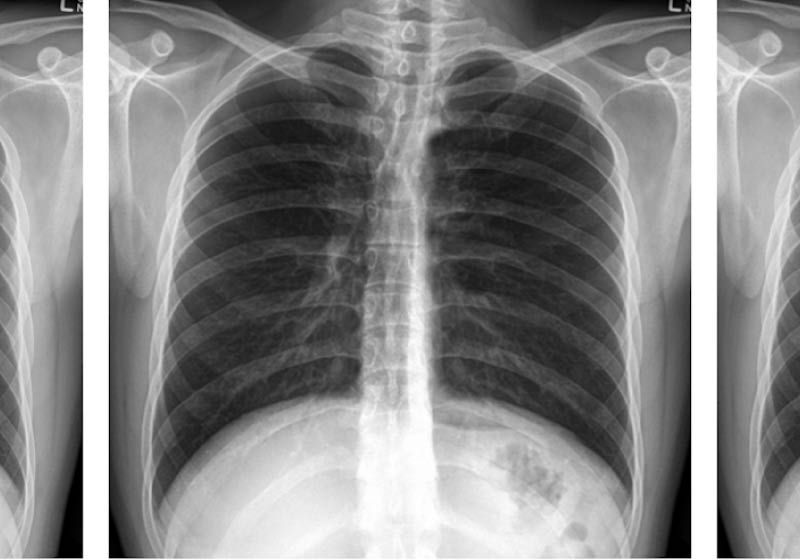
    A comparison of the images and an overlay, provided by a sleuth to Retraction Watch.

    Image credit:Retraction Watch

    A journal has retracted a study on ‘Tin Man Syndrome’ plagiarized from a decade-old April Fools’ joke—which the author now admits was fake.

    On August 15, we wrote about a “rare case report” published in Medicine in which authors claimed they had encountered a case of “ectopia cordis interna” and described an asymptomatic man with his heart located in his abdomen. Sleuths believed the case report plagiarized images from a 2015 satirical paper describing a condition of the same name.

    A week later on August 22, Medicine, published by Wolters Kluwer, retracted the paper and five others—all published this year—with shared authors.1 None of the papers have been cited, according to Clarivate’s Web of Science.

    The retracted papers are:

    The retraction notice for the ectopia cordis interna case states the authors were “unable to provide the necessary documentation, which casts doubt on the credibility of the presented case.”

    The other notices linked above read, in part:

    Information brought to our attention during a recent investigation casts doubt on both the authorship and credibility of the presented case, and the Publisher has lost faith in the integrity of the content.

    The corresponding author on all six studies is Ashraf Basalilah, a researcher at Hadhramaut Hospital in Yemen. Basalilah shared an August 21 email sent to him by journal editor Megan Larkin in which she notes concerns with the other five case studies, “while not enough on their own to justify retraction, taken with the allegations above, present a pattern of submission and authorship that raises serious questions.” She then lists several concerns about authors on the papers, such as lack of public records and contact information to confirm author affiliations, outdated affiliations and incomplete author profiles.

    “As a result of this investigation, we have concluded that we can no longer support the validity of the content submitted by the corresponding author,” Larkin continued.

    Neither Larkin nor Maya Workowski, another editor and Wolters Kluwer, responded to our request for comment. Several emails to Medicine’s listed contact email went unanswered.

    Basalilah told us the paper was “a trap made by someone who wants to destroy my career intentionally” and that the person in question, who Basalilah says is not a medical professional, provided the researchers with “all the case details and documentations” regarding the ectopia cordis interna case.

    “I trusted that guy and his documentation done everything based on that, we all the authors were not involved in the patient’s care or management [sic],” Basalilah continued.

    At the time of our first article, Basalilah provided redacted versions of what he said were the patient’s file, ethical approval paperwork, hospital and radiology department verification letter and patient consent form. He told us he couldn’t share photos of the patient’s body or face for consent reasons.

    After the paper was retracted, Basalilah told us: “I admit that Ectopia cordis is not real case based on our investigation and t was faked … to destroy authors’ reputation [sic].”

    Basalilah stood by his other five case studies, calling them “real, credible and valid.” He said he disagreed with the retractions of those five, and said the journal “has not found any mistakes or justification for retracting them.

    David Sanders, an image expert and biologist at Purdue University in Lafayette, Ind. who weighed in on the images in our previous story, told us from his experience, “when one finds egregious problems in one article it is probable that other articles from one or more of the authors also violate scientific norms.”

    This article was authored by Avery Orrall and first published at Retraction Watch.

    Admits Author Fake Man Paper Report Retracted Syndrome Tin
    Share. Facebook Twitter Pinterest LinkedIn Tumblr WhatsApp Email
    Previous ArticleWalnuts May Help You Sleep Better
    Next Article Coral-Inspired Pill Reveals Insights into the Gut’s Hidden Ecosystem
    admin
    • Website

    Related Posts

    A Video Report from AGBT

    February 27, 2026

    Novo Nordisk, Vivtex Ink Up to $2.1B Deal to Develop Oral Biologics for Metabolic Conditions

    February 27, 2026

    Increasing Rice Yields with Gene-Informed Selective Breeding

    February 27, 2026

    Mutant p53 Selective Reactivation Demonstrated in Advanced Solid Tumors

    February 27, 2026
    Leave A Reply Cancel Reply

    Our Picks

    9 Time-Saving Kitchen Gadgets for Fall at Amazon

    September 5, 2025

    Why Exercise Is So Important For Heart Health, From An MD

    September 5, 2025

    An Engineered Protein Helps Phagocytes Gobble Up Diseased Cells

    September 5, 2025

    How To Get Rid Of Hangnails + Causes From Experts

    September 5, 2025
    • Facebook
    • Twitter
    • Pinterest
    • Instagram
    • YouTube
    • Vimeo
    Don't Miss
    Longevity

    Nautilus debuts Voyager platform in push toward next-gen proteomics

    By adminMarch 1, 20260

    Company’s new benchtop system promises a clearer view of proteins following validation at a leading…

    First-in-Human Success for Prenatal Stem Cell Therapy in Spina Bifida

    February 28, 2026

    Pressure-Driven Pathway Links Liver Congestion to Fibrosis and Cancer

    February 28, 2026

    A cellular atlas of aging comes into focus

    February 28, 2026

    Subscribe to Updates

    Get the latest creative news from SmartMag about art & design.

    About Us

    At FineGut, our mission is simple: to enhance your self-awareness when it comes to your gut health. We believe that a healthy gut is the foundation of overall well-being, and understanding the brain–gut connection can truly transform the way you live.

    Our Picks

    9 Time-Saving Kitchen Gadgets for Fall at Amazon

    September 5, 2025

    Why Exercise Is So Important For Heart Health, From An MD

    September 5, 2025

    An Engineered Protein Helps Phagocytes Gobble Up Diseased Cells

    September 5, 2025
    Gut Health

    Nautilus debuts Voyager platform in push toward next-gen proteomics

    March 1, 2026

    First-in-Human Success for Prenatal Stem Cell Therapy in Spina Bifida

    February 28, 2026

    Pressure-Driven Pathway Links Liver Congestion to Fibrosis and Cancer

    February 28, 2026
    X (Twitter) YouTube
    • Contact us
    • Privacy Policy
    • Disclaimer
    • Terms and Conditions
    © 2026 finegut.com. Designed by Pro.

    Type above and press Enter to search. Press Esc to cancel.