
Close Menu
My Blog

    Subscribe to Updates

    Get the latest creative news from FooBar about art, design and business.

    What's Hot

    Nautilus debuts Voyager platform in push toward next-gen proteomics

    March 1, 2026

    First-in-Human Success for Prenatal Stem Cell Therapy in Spina Bifida

    February 28, 2026

    Pressure-Driven Pathway Links Liver Congestion to Fibrosis and Cancer

    February 28, 2026
    Facebook X (Twitter) Instagram
    X (Twitter) YouTube
    My BlogMy Blog
    Sunday, March 1
    • Home
    • About Us
    • Healthy Living
    • DNA & Genetics
    • Podcast
    • Shop
    My Blog
    Home»Probiotics»Plant photorespiration found to make folate but rising CO2 threatens nutrient levels
    Probiotics

    Plant photorespiration found to make folate but rising CO2 threatens nutrient levels

    adminBy adminSeptember 7, 2025No Comments3 Mins Read
    Facebook Twitter Pinterest LinkedIn Tumblr WhatsApp VKontakte Email
    mainsitelogo
    Share
    Facebook Twitter LinkedIn Pinterest Email

    A new study has discovered that photorespiration, long thought to be a wasteful process, is key to producing folates. It suggests that scientists could help engineer plants that produce more nutrients while raising awareness of rising CO2 levels, which make plants less nutritious.

    Michigan State University, US, researchers explain that photorespiration involves the conversion of carbon into these nutrients that are essential to prevent birth defects.

    The study found that around 6% of carbon absorbed by plants is used to make the prenatal vitamins. However, when photorespiration is hindered, the production of vitamin B9 drops fivefold.

    “In cultures where the bulk of their calories come from rice, it’s a pretty big deal if that rice is less nutritious,” says study lead Berkley Walker, associate professor in the MSU-DOE Plant Research Laboratory and the Department of Plant Biology. 

    “The way plants respond to changing climates is complicated. Understanding how they might adapt can help us plan better for the future.”

    Toxic waste to vitamin 

    The publication in Nature Plants explains that in the process of plants making food through light, water, and CO2, rubisco is a key player that captures CO2 and brings it into the “supply line.” Nutrition Insight recently spoke to Leaft Foods’ CEO about the successful commercial extraction of Rubisco, the most abundant protein on Earth, from green leaves.

    However, rubisco may accidentally absorb oxygen, which causes the production of a toxic byproduct called phosphoglycolate. This is where photorespiration neutralizes the toxic waste and turns it into useful compounds for humans.

    “Understanding how nature makes this vitamin will help us engineer plants fortified with this nutrient,” says Walker. “That may become necessary, especially in cultures where people can’t simply take a multivitamin to make up for less nutritious plants.”

    Scaling testing

    Until now, photorespiration making folates was only a speculation, as it was not clear how much carbon in the process helped make the vitamin. 

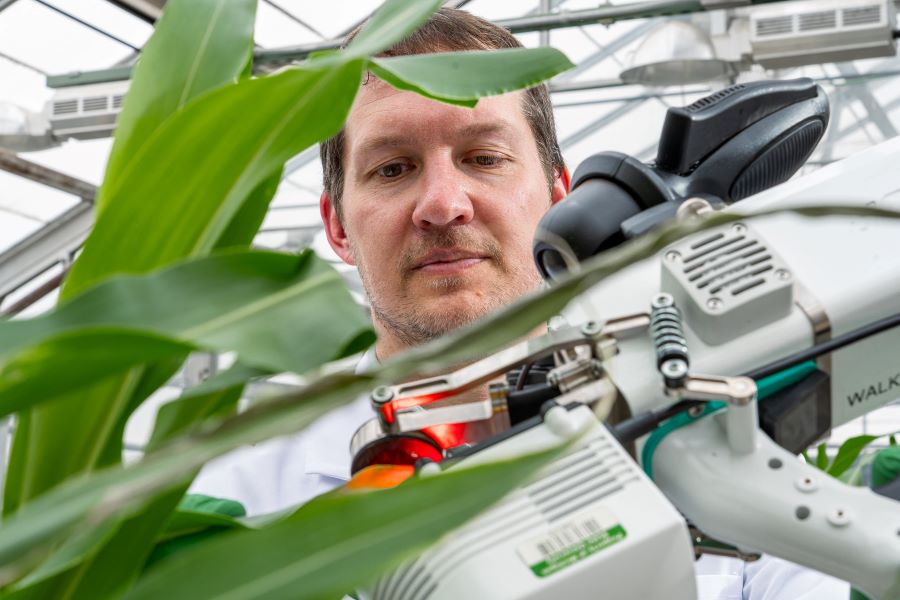
    Walker used liquid nitrogen to freeze plant leaves while they were still being measured by an infrared gas analyzer.The study found that higher CO2 levels in the air lower photorespiration in plants. In such cases vitamin B9 production dropped from about 6% to 1%.

    However, Walker’s test with the common model plant Arabidopsis thaliana, with and without photorespiration, enabled the measurement of CO2 absorption levels. 

    His team used an infrared gas analyzer on the plant’s leaves, while mass spectrometry revealed its chemicals and how they incorporated CO2. They also repeatedly checked this process over months.

    Next, the lab is carrying out similar tests with outdoor crops to check whether the trends in the lab are true for plants in the field.

    “We need this knowledge about plants in order to engineer them for the future,” adds Walker. “If we don’t have that foundation, we’ll never get to the application.”

    Crop nutrition in spotlight

    Scientists are developing a new approach to food security by creating a “smart bacterium” that can reprogram crops’ responses to environmental stresses in real time. Nutrition Insight spoke with the lead researcher about improving nutrition yield and quality.

    Rice, maize, and wheat — key cereal crops using the C3 pathway — supply food for billions worldwide. However, research has warned that they may be threatened by rising atmospheric CO2 levels.

    Other research from found that a symbiosis between plants and members of an ancient phylum of fungi caused bread wheat plants to grow more grain and accumulate greater amounts of nutrients.

    On fortifying microgreens with zinc, recent papers positioned these edible plants as a solution to global hunger.

    CO2 folate levels nutrient photorespiration Plant rising threatens
    Share. Facebook Twitter Pinterest LinkedIn Tumblr WhatsApp Email
    Previous ArticleYour Pisces Full Moon Lunar Eclipse Horoscope Just Dropped
    Next Article Dietitians Love This High-Protein Snack for Weight Loss
    admin
    • Website

    Related Posts

    100 IPA Newsletters Later: Setting the Global Standard for Biotics

    February 24, 2026

    Fido Needs an Antibiotic: Are There Strategies to Maintain Gut Integrity and Restore Gut Microbiota?

    February 24, 2026

    Why CoQ10 Production Depends on Microbial Balance

    February 23, 2026

    Quantum Sensor Detects Ultra-Low Levels of Cancer Biomarkers in Blood

    February 13, 2026
    Leave A Reply Cancel Reply

    Our Picks

    9 Time-Saving Kitchen Gadgets for Fall at Amazon

    September 5, 2025

    Why Exercise Is So Important For Heart Health, From An MD

    September 5, 2025

    An Engineered Protein Helps Phagocytes Gobble Up Diseased Cells

    September 5, 2025

    How To Get Rid Of Hangnails + Causes From Experts

    September 5, 2025
    • Facebook
    • Twitter
    • Pinterest
    • Instagram
    • YouTube
    • Vimeo
    Don't Miss
    Longevity

    Nautilus debuts Voyager platform in push toward next-gen proteomics

    By adminMarch 1, 20260

    Company’s new benchtop system promises a clearer view of proteins following validation at a leading…

    First-in-Human Success for Prenatal Stem Cell Therapy in Spina Bifida

    February 28, 2026

    Pressure-Driven Pathway Links Liver Congestion to Fibrosis and Cancer

    February 28, 2026

    A cellular atlas of aging comes into focus

    February 28, 2026

    Subscribe to Updates

    Get the latest creative news from SmartMag about art & design.

    About Us

    At FineGut, our mission is simple: to enhance your self-awareness when it comes to your gut health. We believe that a healthy gut is the foundation of overall well-being, and understanding the brain–gut connection can truly transform the way you live.

    Our Picks

    9 Time-Saving Kitchen Gadgets for Fall at Amazon

    September 5, 2025

    Why Exercise Is So Important For Heart Health, From An MD

    September 5, 2025

    An Engineered Protein Helps Phagocytes Gobble Up Diseased Cells

    September 5, 2025
    Gut Health

    Nautilus debuts Voyager platform in push toward next-gen proteomics

    March 1, 2026

    First-in-Human Success for Prenatal Stem Cell Therapy in Spina Bifida

    February 28, 2026

    Pressure-Driven Pathway Links Liver Congestion to Fibrosis and Cancer

    February 28, 2026
    X (Twitter) YouTube
    • Contact us
    • Privacy Policy
    • Disclaimer
    • Terms and Conditions
    © 2026 finegut.com. Designed by Pro.

    Type above and press Enter to search. Press Esc to cancel.