

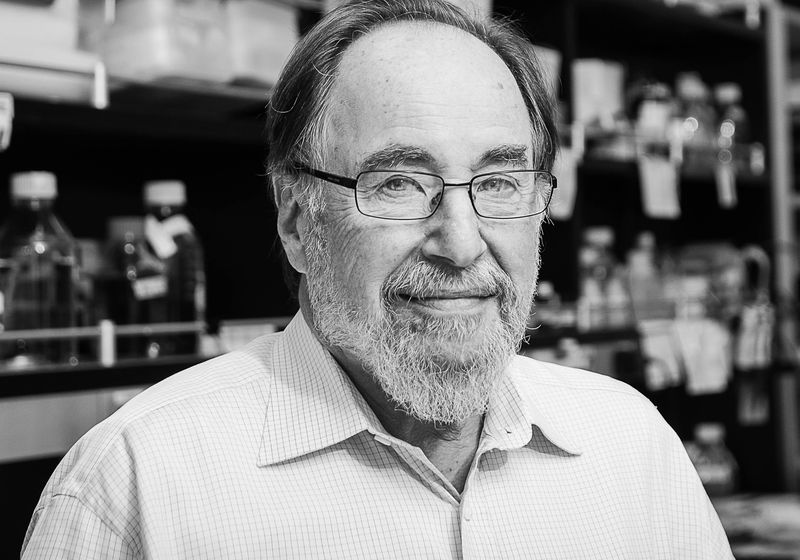
David Baltimore, a distinguished molecular biologist and Nobel Laureate, passed away at the age of 87.
Image credit:Courtesy of Caltech
David Baltimore, a celebrated molecular biologist and Nobel laureate, passed away on 6 September 2025 at age 87. Through a career that spanned more than half a century, he influenced the trajectory of many fields in biology, from unraveling the molecular mechanisms of the human immunodeficiency virus to obtaining a deeper understanding of cancer. He published over 600 academic papers throughout his career.
“David Baltimore’s contributions as a virologist, discerning fundamental mechanisms and applying those insights to immunology, to cancer, to AIDS, have transformed biology and medicine,” said Thomas Rosenbaum, a physicist, and current president of the California Institute of Technology (Caltech), in a statement . “David’s profound influence as a mentor to generations of students and postdocs, his generosity as a colleague, his leadership of great scientific institutions, and his deep involvement in international efforts to define ethical boundaries for biological advances fill out an extraordinary intellectual life.”
Baltimore was born on March 7, 1938, in New York City to Richard and Gertrude (Lipschitz) Baltimore. He received his BA in Chemistry from Swarthmore College in 1960, following which he enrolled at the Massachusetts Institute of Technology to study bacteriophages in his pursuit of a PhD. However, a summer course on animal virology at the Cold Spring Harbor Laboratory put him on a new path. He transferred to the Rockefeller Institute to work with Richard Franklin, a pioneer in the molecular biology of animal viruses. He studied the replication of RNA viruses, such as poliovirus, which laid the foundation for his future experiments on retroviruses. In 1970, he discovered that retroviruses have an enzyme called reverse transcriptase that enables generation of a DNA copy from viral RNA, which earned him the Nobel Prize in Physiology/Medicine in 1975, along with Renato Dulbecco and Howard Martin Temin.1
“The experiment is an exemplar of excellence and simplicity,” said Carlos Lois, a neuroscientist at Caltech and Baltimore’s colleague. “In a single stroke, David demonstrated that genetic information can flow from RNA to DNA, something that had been considered to be impossible for more than 20 years. It is a testament to David’s acumen that he had never worked with retroviruses before! For this experiment, he requested purified retroviral particles from another lab at the National Institutes of Health. The viruses were sent to him by mail, and he did the experiment. So, the first time that he had ever worked with retroviruses, he did an experiment that got him a Nobel Prize.”
Baltimore also received various other accolades throughout his academic journey: the National Medal of Science in 1999, the National Academy of Sciences Award in Molecular Biology in 1974, and the Lasker~Koshland Special Achievement Award in Medical Science in 2021, among others. He also served as the director of two leading scientific institutes and was a member of various international scientific societies.
Outside of the lab, Baltimore was a dedicated higher-education leader and science-policy advocate. During his tenure as the president of Caltech from 1997 to 2006, he led various fundraising initiatives for the biological sciences and started a three-million-dollar fund to support student-life activities and services. He also spear-headed policies to increase diversity of campus and brought more women into administrative roles.
While the scientific community celebrates Baltimore for his immense contributions, close friends remember him for other things. “One thing, obviously, he was a brilliant scientist—one of the greatest scientists of his generation, a university leader, and important in public service. Everyone knows about that,” said Thomas Palfrey, an economist at Caltech and Baltimore’s close friend. “But what they probably don’t know is how diverse and broad his interests were: music, classical, jazz, art, wine, exceptional food. He led a very multifaceted life, one of these people who put his foot on the accelerator and never let up his whole life. The amount of things that he did—traveling for pleasure and work—were mind-boggling. I think that it’s important to know that he did all sorts of things as a person as well as scientist. He cared about his friends, and he cared about the world. A lot of his work was trying to improve the human condition. He should be remembered for that.”
Baltimore is survived by his wife, Alice Huang, a biologist at Caltech, and their daughter, TK Konopka.
