
Close Menu
My Blog

    Subscribe to Updates

    Get the latest creative news from FooBar about art, design and business.

    What's Hot

    Nautilus debuts Voyager platform in push toward next-gen proteomics

    March 1, 2026

    First-in-Human Success for Prenatal Stem Cell Therapy in Spina Bifida

    February 28, 2026

    Pressure-Driven Pathway Links Liver Congestion to Fibrosis and Cancer

    February 28, 2026
    Facebook X (Twitter) Instagram
    X (Twitter) YouTube
    My BlogMy Blog
    Sunday, March 1
    • Home
    • About Us
    • Healthy Living
    • DNA & Genetics
    • Podcast
    • Shop
    My Blog
    Home»Microbiome»Neuroregeneration after Spinal Cord Injury Restored by MAOB Inhibition
    Microbiome

    Neuroregeneration after Spinal Cord Injury Restored by MAOB Inhibition

    adminBy adminSeptember 14, 2025No Comments3 Mins Read
    Facebook Twitter Pinterest LinkedIn Tumblr WhatsApp VKontakte Email
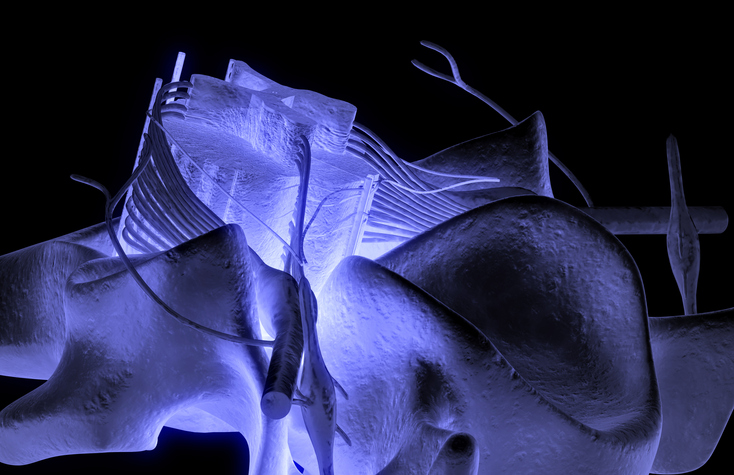
    The spinal cord
    Share
    Facebook Twitter LinkedIn Pinterest Email

    Credit: MedicalRF.com / Getty Images

    Scientists at the Center for Cognition and Sociality at the Institute for Basic Science (IBS) in South Korea have identified a molecular “brake” that inhibits regeneration after a spinal cord injury (SCI). Their research, published in Nature Neuroscience, shows that the inhibitory neurotransmitter GABA, which is produced by astrocytes via the enzyme monoamine oxidase B (MAOB), is key player in suppressing recovery and shows MOAB inhibition promotes spinal cord repair.

    “This study identifies a direct molecular pathway that suppresses neural regeneration after spinal cord injury and presents a strategy to overcome it. Unlike existing treatments, this offers a fundamentally new therapeutic approach,” said IBS Director C. Justin Lee, PhD, the study’s co-senior author.

    To date, the failure of some patients to recover from a spinal cord injury typically has been attributed to formation of what is called a glial barrier that is formed by the rapid proliferation of astrocytes and other glial cells around the area of injury. Initially, this protects the injury site, but it later prevent the regrowth of axons. Because of this understanding, most treatments for spinal cord injury focus on suppressing inflammation or alleviating other symptoms and have not focused on trying to directly encourage neural repair.

    The new findings building on earlier research by the IBS team which showed that astrocytic GABA produced through MAOB impaired neural circuit function in diseases such as Alzheimer’s and Parkinson’s diseases and looked into whether a similar mechanism influenced recovery from SCI. They discovered that elevated GABA levels suppressed the expression of pro brain-derived neurotrophic factor (BDNF) and TrkB, thus blocking a regenerative signaling cascade.

    To test this, the team used mouse models that either suppressed or enhanced MAOB expression in spinal astrocytes. The mice with MAOB suppression showed axonal regrowth and regained motor function, while those with increased MAOB experienced severe tissue loss and no functional recovery.

    The researchers also tested whether pharmacologically inhibiting MOAB using the selective inhibitor KDS2010, would allow neural regeneration by restoring levels of BDNF and its receptor TrkB. In rodents, treatment resulted in fewer hindlimb slips in ladder-walking tests and increased remyelinated axons. In non-human primates, KDS2010 promoted tissue preservation and neural protection. Histological data showed reduced lesion cavity size and increased expression of pro-regenerative markers.

    “We discovered that GABA from scar-forming reactive astrocytes acts as a brake on the CNS repair system in severe SCI animal models. We could eliminate this brake through genetic or pharmacological inhibition of MAOB, leading to significant functional and tissue recovery after SCI,” the researchers wrote.

    KDS2010 has already passed a Phase I clinical trial in its development as a treatment for Alzheimer’s and Parkinson’s disease. Lee noted that its  experimental validation across mice, primates, and human Phase I trials strengthens the case for KDS2010 as a viable treatment SCI, with the team planning to launch a Phase II study to evaluated its efficacy in humans.

    In addition to continuing their development of KDS2010 for SCI, the team plans to explore whether the MAOB-GABA pathway is involved in other CNS diseases and injuries. They also aim to clarify the mechanism of BDNF induction and investigate the role of other pathways like DAO, which may contribute to reactive astrogliosis and GABA production in some cases where KDS2010 is less effective.

    “The translational relevance of our findings is particularly strong, as the effects of MAOB inhibition are consistently observed across species and various SCI recovery phases,” the researchers wrote.

    Cord Inhibition Injury MAOB Neuroregeneration Restored Spinal
    Share. Facebook Twitter Pinterest LinkedIn Tumblr WhatsApp Email
    Previous ArticleWhy Is Sagittarius So Powerful? What To Know About This Sign
    Next Article 20+ Three-Step Mediterranean Diet Dinner Recipes to Reduce Inflammation
    admin
    • Website

    Related Posts

    First-in-Human Success for Prenatal Stem Cell Therapy in Spina Bifida

    February 28, 2026

    Pressure-Driven Pathway Links Liver Congestion to Fibrosis and Cancer

    February 28, 2026

    Genetic Biomarkers to Predict Efficacy of GLP-1 Therapies Uncovered

    February 28, 2026

    Mapping the Cellular Architecture of Aging Across 21 Organs

    February 28, 2026
    Leave A Reply Cancel Reply

    Our Picks

    9 Time-Saving Kitchen Gadgets for Fall at Amazon

    September 5, 2025

    Why Exercise Is So Important For Heart Health, From An MD

    September 5, 2025

    An Engineered Protein Helps Phagocytes Gobble Up Diseased Cells

    September 5, 2025

    How To Get Rid Of Hangnails + Causes From Experts

    September 5, 2025
    • Facebook
    • Twitter
    • Pinterest
    • Instagram
    • YouTube
    • Vimeo
    Don't Miss
    Longevity

    Nautilus debuts Voyager platform in push toward next-gen proteomics

    By adminMarch 1, 20260

    Company’s new benchtop system promises a clearer view of proteins following validation at a leading…

    First-in-Human Success for Prenatal Stem Cell Therapy in Spina Bifida

    February 28, 2026

    Pressure-Driven Pathway Links Liver Congestion to Fibrosis and Cancer

    February 28, 2026

    A cellular atlas of aging comes into focus

    February 28, 2026

    Subscribe to Updates

    Get the latest creative news from SmartMag about art & design.

    About Us

    At FineGut, our mission is simple: to enhance your self-awareness when it comes to your gut health. We believe that a healthy gut is the foundation of overall well-being, and understanding the brain–gut connection can truly transform the way you live.

    Our Picks

    9 Time-Saving Kitchen Gadgets for Fall at Amazon

    September 5, 2025

    Why Exercise Is So Important For Heart Health, From An MD

    September 5, 2025

    An Engineered Protein Helps Phagocytes Gobble Up Diseased Cells

    September 5, 2025
    Gut Health

    Nautilus debuts Voyager platform in push toward next-gen proteomics

    March 1, 2026

    First-in-Human Success for Prenatal Stem Cell Therapy in Spina Bifida

    February 28, 2026

    Pressure-Driven Pathway Links Liver Congestion to Fibrosis and Cancer

    February 28, 2026
    X (Twitter) YouTube
    • Contact us
    • Privacy Policy
    • Disclaimer
    • Terms and Conditions
    © 2026 finegut.com. Designed by Pro.

    Type above and press Enter to search. Press Esc to cancel.