

To make a safe and effective drug, pharmaceutical scientists must also analyze and manage impurities and stability. “This is a fundamental set of problems that has existed for as long as drug development itself,” says Jeff Patrick, PhD, who is the global functional lead of CMC analytical development at BioAgilytix Labs in Durham, NC. It’s also a set of problems that never goes away. So, scientists keep coming up with new methods to test and address impurity and stability.
“Impurities are entities that should not be present in the drug and may have come from the process, equipment, or contaminants in materials used in the generation of a drug product,” Patrick says. “Instability can be caused by or contributed to by impurities, and it is the degradation over time of the active drug and/or the chemicals used in the formulation created to effectively deliver the drug to the patient.”
Carefully measuring impurities and instability makes up a crucial part of developing and manufacturing a drug. The manufacturer wants to make a drug that is as pure and stable as possible, and regulators require proof of those features. Most importantly, impurities and instability “result in issues for the end-user as safety or efficacy issues,” Patrick says.
Never perfectly pure or stable
Just like no drug is 100% safe or effective, all drugs include some impurities and instability. “So long as the materials used are well characterized and appropriately sourced and controlled, impurities can be minimized and controlled,” Patrick says. To take on instability, “a thorough understanding of the drug, its formulation, and how it behaves under certain conditions will permit minimization of instability—aka degradation,” Patrick explains. “This understanding will permit the establishment and control of container materials, storage environments, and formulation conditions to minimize instability and the loss of active drug or formulation excipients.”
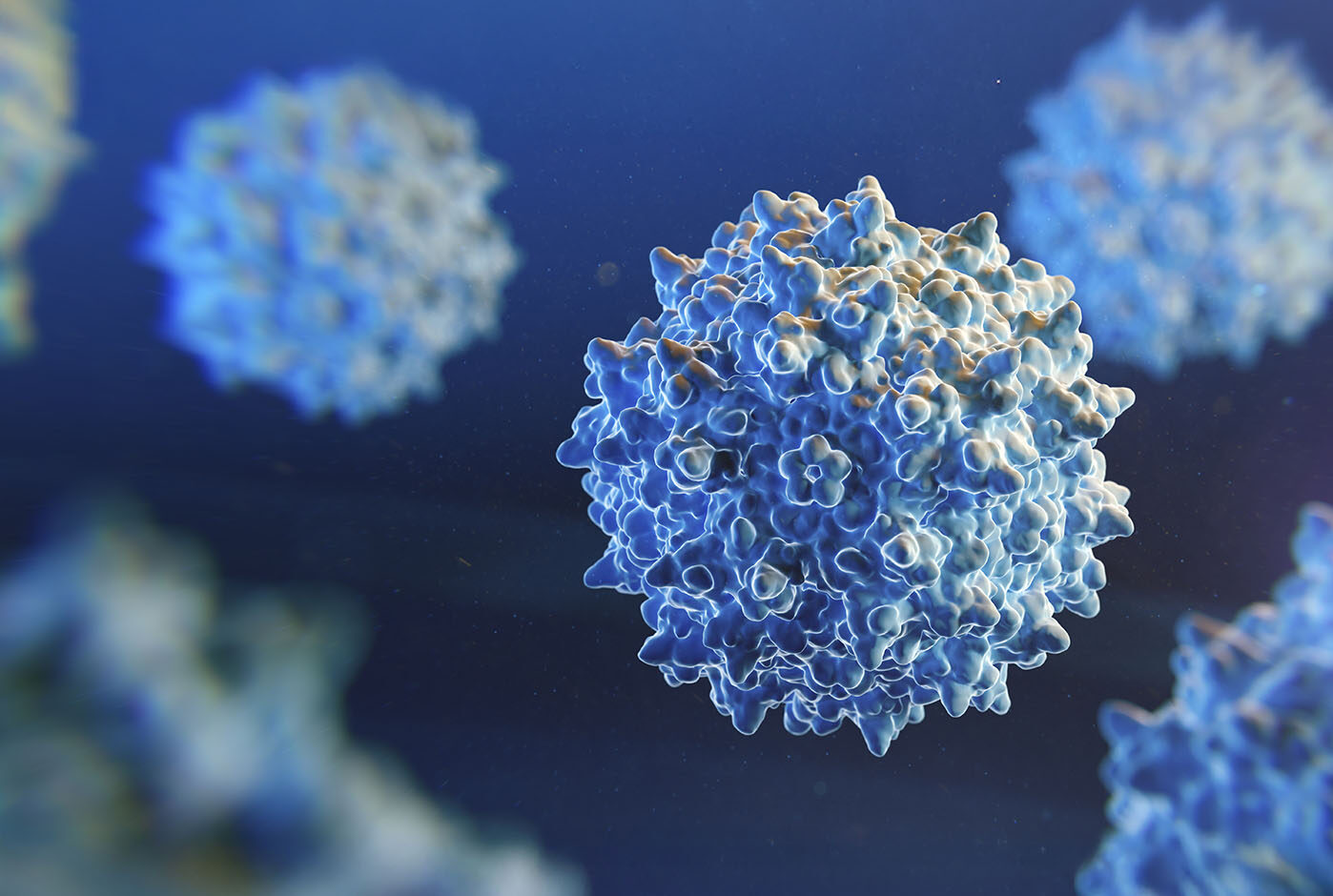
The types of impurities and instabilities depend on the drug. With gene therapies based on adeno-associated viruses (AAVs), for example, impurities often include host-cell proteins (HCPs), residual DNA, empty capsids, aggregates, and process-related contaminants. Such impurities “can compromise safety, trigger immunogenic responses, and reduce therapeutic efficacy,” says Xin Swanson, PhD, chief strategy officer at PackGene Biotech in Houston, TX. “Instability—particularly aggregation or degradation of AAV capsids and genomes—can compromise accurate clinical dosing and reduce vector potency and shelf life.”
The most efficient process to produce the best product starts early. As an example, Swanson mentions using design-of-experiment (DoE) methods during process development. By applying this to AAV-based drugs, says Swanson, you can “optimize processing parameters for better impurity clearance and capsid stability.”
To improve the downstream product, manufacturers must optimize the upstream processes, such as cell culturing. For AAV-based gene therapies, for example, “using high-quality plasmids, optimized transfection conditions, and controlled cell-culture environments coupled with optimized harvesting/clarification steps will work together to reduce impurity loads and increase overall efficiency during downstream purification steps,” Swanson says.
In some cases, a new container or drug-delivery system can improve stability. These advances can “better preserve the drug or protect it from exposure to stresses that cause instability,” Patrick says.
Downstream work
To manage impurities and instabilities in downstream drug-substance development, scientists use a multi-step purification process that is tailored to the characteristics of the target molecule. “This typically involves a highly-selective capture step, followed by orthogonal polishing steps targeting process- and product-related impurities,” says Tyler Gadoury, senior director, process development, Catalent. “Process parameters are then optimized to preserve product stability, minimizing risks of protein denaturation or aggregation.”
In some situations, new manufacturing techniques also provide a way to minimize impurities and improve stability. As Patrick says, “Purification technologies and manufacturing technologies will permit the control of exposure and conditions, while purification technologies will permit the removal of impurities and, through this removal, potential degradation of—that is, instability of—the active substance.”
To remove impurities and enhance stability in AAV-based therapies, for example, manufacturers can use various technologies. For instance, affinity chromatography can be used to remove most non-AAV proteins and DNA, ion-exchange chromatography can separate full from empty capsids, size-exclusion chromatography can reduce aggregates, and low-molecular-weight impurities, like salts or nucleotides, can be removed with ultrafiltration. Plus, Swanson points out that “stabilizing formulations help preserve capsid integrity and minimize degradation.”
In addition, Gadoury points out the need for orthogonal technologies to produce the desired product. To address stability, for example, “low-shear processing, optimized hold conditions, and stabilizing excipients, such as histidine buffering systems or polysorbates, are evaluated via high-throughput screening,” he says.
Improving analysis
“You can’t control what you do not see,” Patrick says. So, scientists often focus on new methods of detecting impurities and quantifying instability. As Patrick adds, these techniques “will improve the control of impurities and drug instability through awareness.”
In some situations, in-process analytics such as in-line monitoring of pH, conductivity, protein content, and real-time analysis of in-process samples can be incorporated with control strategies. These methods can be used “to monitor impurity reduction trends and maintain product integrity throughout purification,” Swanson says.
Other companies also aim to gain better production control with in-process controls and real-time monitoring. For example, Gadoury says that these techniques help to “ensure consistent impurity clearance and overall product quality.”
More AI ahead
Even though drugs will never be totally pure and stable, pharmaceutical scientists strive to get as close to those goals as possible. Various tools and techniques, including AI, will support the pursuit of these goals.
For one thing, new spectroscopic techniques will give scientists better detection of potential problems. As Patrick notes, “Mass spectrometry will continue to be leveraged with enhanced sensitivity to allow for the identification of impurities and degradants, and new materials, formulation, and devices for drug delivery will better support the mitigation of instability through controlled exposure and dose minimization.”
Manufacturing could also make more pure and stable products. As one example, Swanson mentions continuous manufacturing combined with automated process analytical technology, where “automation and AI-driven, real-time monitoring and adaptive control will reduce batch variability and impurity carryover.”
In addition, Swanson says that advanced membrane technologies will allow “faster processing through convective flow, resulting in better separation of empty and full capsids at high throughput,” and next-generation formulation development will provide the “ability to quickly screen for AAV stabilizers using a high-throughput method to significantly reduce the time spent during final formulation development.”
In looking ahead, Gadoury is optimistic about better control of products. “We’re seeing a lot of recent progress here, from integrated process analytical technology, advanced AI/ML predictive modeling, and next-generation chromatography resins,” he says. “These technologies are expected to continue to enable earlier impurity detection while improving process consistency.” Moreover, Gadoury adds, “The combination of real-time data, process modeling, and new technologies has the potential to reduce development timelines and risk, even as modalities become more complex.”
