
Close Menu
My Blog

    Subscribe to Updates

    Get the latest creative news from FooBar about art, design and business.

    What's Hot

    Nautilus debuts Voyager platform in push toward next-gen proteomics

    March 1, 2026

    First-in-Human Success for Prenatal Stem Cell Therapy in Spina Bifida

    February 28, 2026

    Pressure-Driven Pathway Links Liver Congestion to Fibrosis and Cancer

    February 28, 2026
    Facebook X (Twitter) Instagram
    X (Twitter) YouTube
    My BlogMy Blog
    Sunday, March 1
    • Home
    • About Us
    • Healthy Living
    • DNA & Genetics
    • Podcast
    • Shop
    My Blog
    Home»Microbiome»AI Model Predicts Cardiovascular Events Risk Using Mammograms
    Microbiome

    AI Model Predicts Cardiovascular Events Risk Using Mammograms

    adminBy adminSeptember 17, 2025No Comments4 Mins Read
    Facebook Twitter Pinterest LinkedIn Tumblr WhatsApp VKontakte Email
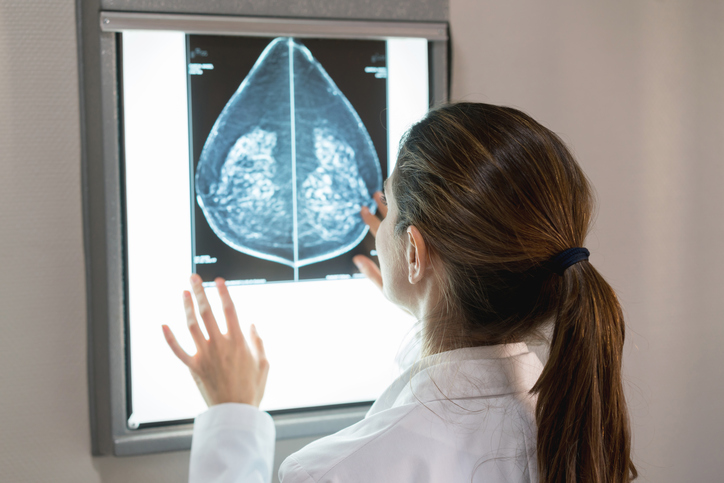
    Unrecognizable female gynocologist looking at a mammogram at the hospital. New AI model can identify cardiovascular disease risk based on mammograms.
    Share
    Facebook Twitter LinkedIn Pinterest Email

    Credit: andresr/ Getty Images

    Researchers in Australia at the independent global medical research institute, The George Institute for Global Health, in collaboration with the University of New South Wales and the University of Sydney, have developed a machine learning model that can analyze mammography images to successfully predict the risk of cardiovascular events in women. 

    Cardiovascular diseases, such as coronary artery disease, arrhythmia, and heart valve disease, and including cardiovascular events such as heart attacks and strokes, are the leading cause of death worldwide, resulting in approximately 20 million deaths each year. 

    Every year, around nine million women die of cardiovascular disease, but despite these high numbers, several international studies have shown that the symptoms of cardiovascular disease and cardiovascular events, as well as their risk factors, are overlooked far more often in women than in men.

    For example, a 2024 study showed that women who were hospitalized with a heart attack were less likely to receive the necessary treatment and more likely to die than men. 

    For this reason the researchers at The George Institute for Global Health wanted to find a way to use existing data to predict the risk for cardiovascular events in women. 

    “It’s a common misconception that cardiovascular disease predominantly affects men, resulting in underdiagnosis and undertreatment of the condition in women,” explained co-author Clare Arnott, PhD, associate professor and global director of the cardiovascular program at The George Institute.

    “By integrating cardiovascular risk screening with breast screening through the use of mammograms—something many women already engage with at a stage in life when their cardiovascular risk increases—we can identify and potentially prevent two major causes of illness and death at the same time.”

    In their study, published in the journal Heart and titled “Predicting cardiovascular events from routine mammograms using machine learning,” they developed a fully automated deep learning algorithm that can analyze whole breast architecture and characteristics to predict cardiovascular risk in women who undergo routine mammography screening for breast cancer.

    While the idea to use mammogram images to understand this risk is not new, studies to date have focused merely on few features in mammographic images, such as breast arterial calcification. However, this has limitations, as the risk for cardiovascular events can come from many factors. Breast arterial calcification, for example, cannot be applied as accurately to older women. 

    In their study, the researchers looked at mammography data from 49,196 women aged 35-94 years, with a mean age of around 60 years, and a median follow-up of 8.8 years. Of these women, 3,392 reported during their follow-up that they had experienced a first major cardiovascular event, such as atherosclerosis, heart failure, heart attack, or stroke. 

    The researchers trained their automated algorithm to analyze the full range of internal breast structures and characteristics from these routine mammogram images, taking into account the women’s age to predict their major cardiovascular disease risk over ten years. 

    They then compared their AI model with other risk scores and calculators, which need multiple data points based on known cardiovascular risk factors, including blood pressure and cholesterol. 

    “We found that our model performed just as well without the need for extensive clinical and medical data,” said Arnott. “Our model is the first to use a range of features from mammographic images combined simply with age—a key advantage of this approach being that it doesn’t require additional history taking or medical record data, making it less resource intensive to implement, but still highly accurate.” 

    As a next step, the researchers aim to validate their algorithm in more diverse patient populations, utilizing different screening practices to assess the generalizability of their AI model and to refine it further.

    Cardiovascular Events Mammograms model Predicts Risk
    Share. Facebook Twitter Pinterest LinkedIn Tumblr WhatsApp Email
    Previous ArticleGolden Goose Award Honors Joseph Gall, the Father of Modern Cell Biology
    Next Article 5 Foods That Could Delay Dementia
    admin
    • Website

    Related Posts

    First-in-Human Success for Prenatal Stem Cell Therapy in Spina Bifida

    February 28, 2026

    Pressure-Driven Pathway Links Liver Congestion to Fibrosis and Cancer

    February 28, 2026

    Genetic Biomarkers to Predict Efficacy of GLP-1 Therapies Uncovered

    February 28, 2026

    Mapping the Cellular Architecture of Aging Across 21 Organs

    February 28, 2026
    Leave A Reply Cancel Reply

    Our Picks

    9 Time-Saving Kitchen Gadgets for Fall at Amazon

    September 5, 2025

    Why Exercise Is So Important For Heart Health, From An MD

    September 5, 2025

    An Engineered Protein Helps Phagocytes Gobble Up Diseased Cells

    September 5, 2025

    How To Get Rid Of Hangnails + Causes From Experts

    September 5, 2025
    • Facebook
    • Twitter
    • Pinterest
    • Instagram
    • YouTube
    • Vimeo
    Don't Miss
    Longevity

    Nautilus debuts Voyager platform in push toward next-gen proteomics

    By adminMarch 1, 20260

    Company’s new benchtop system promises a clearer view of proteins following validation at a leading…

    First-in-Human Success for Prenatal Stem Cell Therapy in Spina Bifida

    February 28, 2026

    Pressure-Driven Pathway Links Liver Congestion to Fibrosis and Cancer

    February 28, 2026

    A cellular atlas of aging comes into focus

    February 28, 2026

    Subscribe to Updates

    Get the latest creative news from SmartMag about art & design.

    About Us

    At FineGut, our mission is simple: to enhance your self-awareness when it comes to your gut health. We believe that a healthy gut is the foundation of overall well-being, and understanding the brain–gut connection can truly transform the way you live.

    Our Picks

    9 Time-Saving Kitchen Gadgets for Fall at Amazon

    September 5, 2025

    Why Exercise Is So Important For Heart Health, From An MD

    September 5, 2025

    An Engineered Protein Helps Phagocytes Gobble Up Diseased Cells

    September 5, 2025
    Gut Health

    Nautilus debuts Voyager platform in push toward next-gen proteomics

    March 1, 2026

    First-in-Human Success for Prenatal Stem Cell Therapy in Spina Bifida

    February 28, 2026

    Pressure-Driven Pathway Links Liver Congestion to Fibrosis and Cancer

    February 28, 2026
    X (Twitter) YouTube
    • Contact us
    • Privacy Policy
    • Disclaimer
    • Terms and Conditions
    © 2026 finegut.com. Designed by Pro.

    Type above and press Enter to search. Press Esc to cancel.