

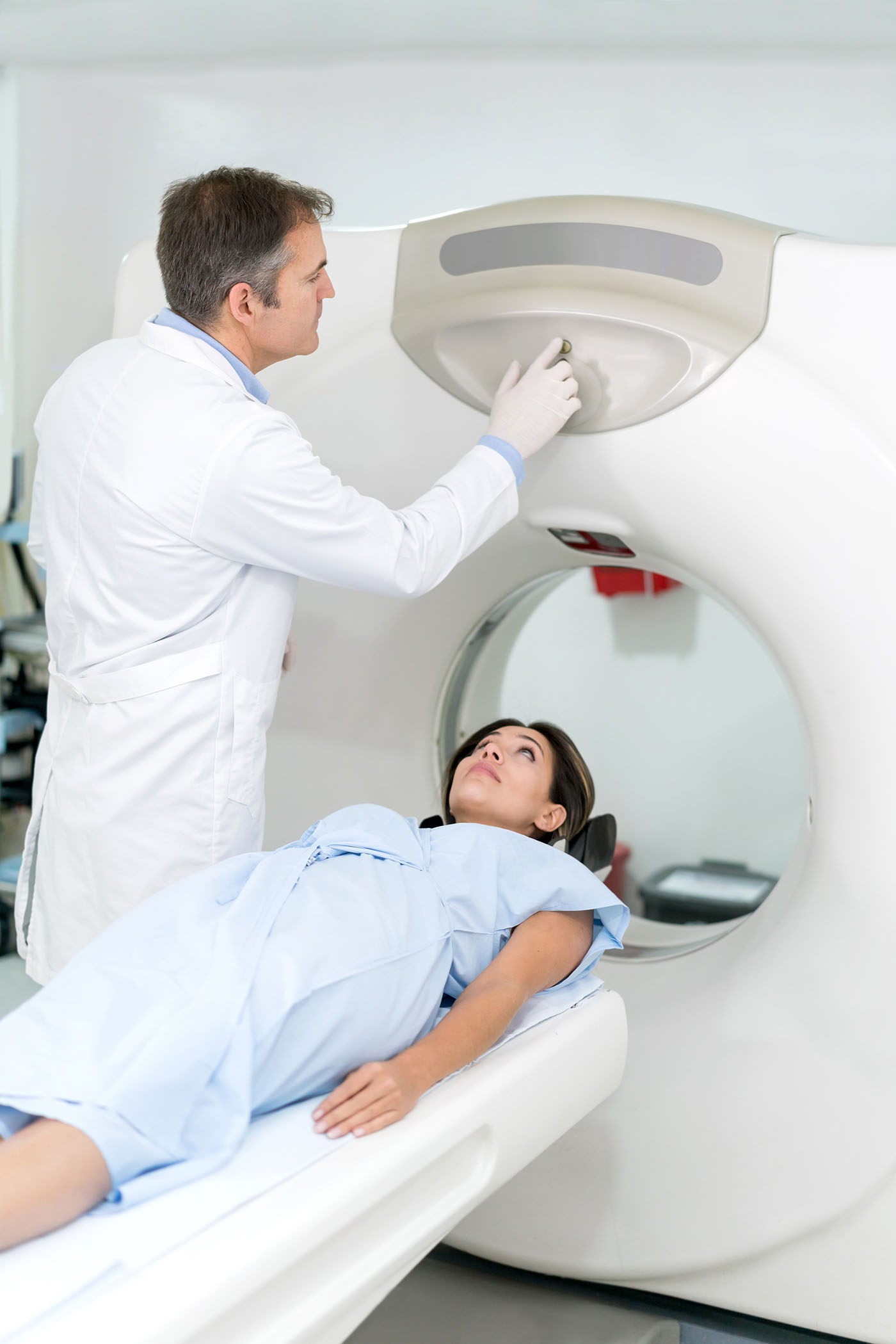
Screening non-smokers for lung cancer could be a step closer following the results of the Female Asian Nonsmoker Screening Study (FANSS), which highlight the potential value of low dose computed tomography (LDCT) screening in a high-risk population.Lung cancer in individuals who have never smoked (LCINS) is growing in global incidence and is now the fifth most common cause of cancer-related deaths worldwide. Yet, most cases are diagnosed at advanced or late stages as there are currently no screening guidelines for this population.
At present, lung cancer screening in the United States via LDCT chest scans is only available to current or former smokers, according to the findings of the National Lung Screening Trial (NLST).
The increasing incidence of LCINS caused Elaine Shum, MD, from NYU Perlmutter Cancer Center, to determine the feasibility of lung cancer screening in a nonsmoking population.“I believe that the key to expanding lung cancer screening in non-smoking populations will be to identify which high-risk groups within the non-smoking population that can benefit from screening, as I agree with many that just screening every individual regardless of smoking history also is not the right approach,” she told Inside Precision Medicine.“Historically, within the non-smoking population, Asian women are known to have higher incidences of lung cancer, especially those known to harbor driver mutations in lung cancer. Given our patient population in New York City, we felt it reasonable to start this study in these women.”
FANSS included 1000 women aged 40–74 years (median 56 years) who identified as Asian descent who had never smoked or smoked fewer than 100 cigarettes in their lifetime and had no history of lung cancer. Of these, 29.7% had a family history of lung cancer, 68.6% had no family history, and the remainder did not know.
All participants underwent a baseline LDCT chest scan, which was read according to Lung-RADS criteria, with plans for up to two additional LDCT scans during the study. A positive LDCT was defined as Lung-RADS 3 (probably benign) or 4 (suspicious or very suspicious). Plasma samples were also taken at the time of each scan and analyzed for cell-free DNA (cfDNA) fragments for early cancer detection.Shum reported at the International Association for the Study of Lung Cancer 2025 World Conference on Lung Cancer that, following the first LDCT, 2.2% of participants had a Lung-RADS score of zero, 38.8% were Lung-RADS 1, 52.1% were Lung-RADS 2, 4.2% were Lung-RADS 3, and 2.8% were Lung-RADS 4.Thirteen participants were diagnosed with invasive lung adenocarcinoma, giving a lung cancer detection rate of 1.3% on the baseline LDCT. Of these, nine cases were stage IA invasive adenocarcinoma, two were stage IIB, and two were stage IIIB/C. A further 14 participants with Lung-RADS 3 or 4 are currently awaiting additional imaging follow-up.The majority (n=11) of the 13 cancers detected were among patients with no family history of lung cancers and all had at least one EGFR or HER2 driver mutation.Shum described the detection rate of 1.3% as “striking,” particularly as it was higher than the rate of 1.1% observed among smokers in the NLST.
By comparison, the TALENT study, a lung cancer screening study for a nonsmoking population with selected high-risk factors such as family history or second-hand smoke exposure in Taiwan reported a lung cancer invasive adenocarcinoma detection rate of 1.5%.
However, Shum noted that the definition of a positive screen varied between FANSS, NLST, and TALENT, reflecting different management guidelines between the United States and Asia.She said she is now hoping to expand the study to multiple sites within the United States and extend screening to women, and possibly men, from other racial or ethnic groups, such as Hispanic or Latino populations, that are known to have high incidences of LCINS associated with driver mutations.“FANSS is a big first step for exploring lung cancer screening in nonsmoking populations in the U.S,” Shum remarked. “While additional studies are needed, we are hopeful that this will open the conversation on the potential benefits of doing so.”She continued: “The biology of lung cancers in nonsmoking populations is often different to those with a smoking history, including the increased presence of driver mutations. Identification of these driver mutations has been the cornerstone of precision medicine in lung cancer treatment as these mutations can be matched to targeted therapies. If we can identify more early-stage lung cancer patients through screening, more patients could potentially benefit from precision medicine approaches for the use of both neoadjuvant and adjuvant targeted therapies for the treatment of their lung cancer.”
