
Close Menu
My Blog

    Subscribe to Updates

    Get the latest creative news from FooBar about art, design and business.

    What's Hot

    Nautilus debuts Voyager platform in push toward next-gen proteomics

    March 1, 2026

    First-in-Human Success for Prenatal Stem Cell Therapy in Spina Bifida

    February 28, 2026

    Pressure-Driven Pathway Links Liver Congestion to Fibrosis and Cancer

    February 28, 2026
    Facebook X (Twitter) Instagram
    X (Twitter) YouTube
    My BlogMy Blog
    Sunday, March 1
    • Home
    • About Us
    • Healthy Living
    • DNA & Genetics
    • Podcast
    • Shop
    My Blog
    Home»DNA & Genetics»Organoids Recreate Native Kidney Architecture to Model Complex Disease in Mice
    DNA & Genetics

    Organoids Recreate Native Kidney Architecture to Model Complex Disease in Mice

    adminBy adminSeptember 18, 2025No Comments3 Mins Read
    Facebook Twitter Pinterest LinkedIn Tumblr WhatsApp VKontakte Email
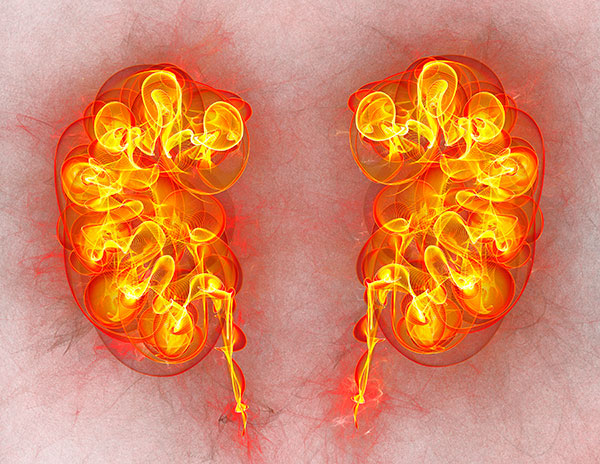
    kidney
    Share
    Facebook Twitter LinkedIn Pinterest Email

    A research effort led by scientists from the Keck School of Medicine at the University of Southern California (USC) has led to the development of more mature and complex lab-grown kidney progenitor organoids. Building on previous work where they constructed organoids composed of nephrons as well as organoids resembling collecting ducts, the team now reports that they have combined both types of organoids to form new mouse and human structures dubbed “assembloids.” 

    Full details of the work are published in a new Cell Stem Cell paper titled “Spatially patterned kidney assembloids recapitulate progenitor self-assembly and enable high-fidelity in vivo disease modeling.” The assembloids are “a revolutionary tool for creating more accurate models for studying kidney disease,” said Zhongwei Li, PhD, corresponding author on the study and associate professor of medicine, and stem cell biology and regenerative medicine at the Keck School of Medicine of USC. These developments are a critical part of the group’s “long-term goal of building a functional synthetic kidney for more than 100,000 patients in the U.S. awaiting transplant,” he added. 

    A key step in the scientists’ work was optimizing the conditions needed to grow the assembloids. They then transplanted the mouse and human assembloids into live mice, and observed how the assembloids grew and matured, including the development of connective tissue and blood vessels. According to the paper, both transplanted mouse and human assembloids exhibited kidney-like functions such as blood filtration, protein uptake, hormone secretion, and early signs of urine production.

    “By maturing the assembloids in the native environment of the body, we tapped into kidney progenitor cells’ natural ability to self-assemble,” Li said, adding that “we believe this will be a key to succeeding in the complex endeavor of building functional synthetic kidneys.”

    Furthermore, gene expression data and other forms of evidence show that while previous kidney organoids only matured to an embryonic state, the mouse assembloids reached the same level of maturity as a newborn mouse kidney. Human assembloids also matured beyond the embryonic stage, although their precise maturity level could not be determined due to the lack of available newborn human kidney samples.

    The scientists also reported results from experiments that demonstrate that assembloids can work as high-fidelity models for studying complex human kidney diseases. Specifically, they report growing human assembloids from cells that were edited to remove a functional PKD2 gene. The loss of this gene causes autosomal dominant polycystic kidney disease, a genetic condition where the kidneys develop multiple large cysts that impair their function. 

    According to the team, the transplanted diseased assembloids grew into large human kidney cysts in the mice and exhibited complex disease features such as inflammation and fibrosis. This is particularly noteworthy since these features could not be modeled before.

    “Our study provides a powerful new tool for studying a wide range of complex kidney diseases,” said Li, “as well as [a] strong foundation for engineering functional synthetic kidneys as a lifesaving option for the patients who need them.”

    Architecture Complex Disease Kidney Mice model Native Organoids Recreate
    Share. Facebook Twitter Pinterest LinkedIn Tumblr WhatsApp Email
    Previous ArticlePostdoc Portrait: Mukta Sharma | The Scientist
    Next Article Bioelectronic implants built from rolled-up stretchy circuits
    admin
    • Website

    Related Posts

    Mapping the Cellular Architecture of Aging Across 21 Organs

    February 28, 2026

    A Video Report from AGBT

    February 27, 2026

    Novo Nordisk, Vivtex Ink Up to $2.1B Deal to Develop Oral Biologics for Metabolic Conditions

    February 27, 2026

    Increasing Rice Yields with Gene-Informed Selective Breeding

    February 27, 2026
    Leave A Reply Cancel Reply

    Our Picks

    9 Time-Saving Kitchen Gadgets for Fall at Amazon

    September 5, 2025

    Why Exercise Is So Important For Heart Health, From An MD

    September 5, 2025

    An Engineered Protein Helps Phagocytes Gobble Up Diseased Cells

    September 5, 2025

    How To Get Rid Of Hangnails + Causes From Experts

    September 5, 2025
    • Facebook
    • Twitter
    • Pinterest
    • Instagram
    • YouTube
    • Vimeo
    Don't Miss
    Longevity

    Nautilus debuts Voyager platform in push toward next-gen proteomics

    By adminMarch 1, 20260

    Company’s new benchtop system promises a clearer view of proteins following validation at a leading…

    First-in-Human Success for Prenatal Stem Cell Therapy in Spina Bifida

    February 28, 2026

    Pressure-Driven Pathway Links Liver Congestion to Fibrosis and Cancer

    February 28, 2026

    A cellular atlas of aging comes into focus

    February 28, 2026

    Subscribe to Updates

    Get the latest creative news from SmartMag about art & design.

    About Us

    At FineGut, our mission is simple: to enhance your self-awareness when it comes to your gut health. We believe that a healthy gut is the foundation of overall well-being, and understanding the brain–gut connection can truly transform the way you live.

    Our Picks

    9 Time-Saving Kitchen Gadgets for Fall at Amazon

    September 5, 2025

    Why Exercise Is So Important For Heart Health, From An MD

    September 5, 2025

    An Engineered Protein Helps Phagocytes Gobble Up Diseased Cells

    September 5, 2025
    Gut Health

    Nautilus debuts Voyager platform in push toward next-gen proteomics

    March 1, 2026

    First-in-Human Success for Prenatal Stem Cell Therapy in Spina Bifida

    February 28, 2026

    Pressure-Driven Pathway Links Liver Congestion to Fibrosis and Cancer

    February 28, 2026
    X (Twitter) YouTube
    • Contact us
    • Privacy Policy
    • Disclaimer
    • Terms and Conditions
    © 2026 finegut.com. Designed by Pro.

    Type above and press Enter to search. Press Esc to cancel.