

There are a variety of methods that have been established to curtail the spread of infectious disease, from isolation or donning of PPE to prevent human-to-human transmission, to culling infected animals to prevent the spread of disease in agricultural settings, to using physical (nets) and chemical (DEET) barriers to prevent insect bites. There is even emerging consideration into the science behind using genetic editing techniques to quell zoonotic transfer of infectious diseases.
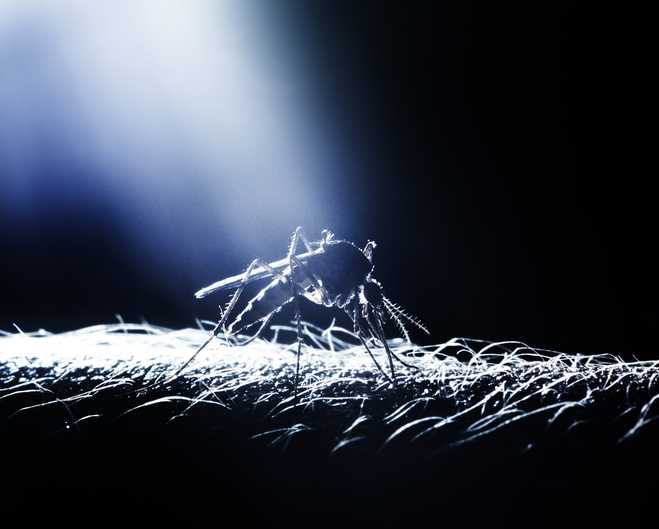
Malaria is typically transmitted to humans via one of a few species of mosquito. While research into some species has begun, little is known about the genetics of Anopheles funestus, one of the most prolific malaria-transmitting mosquitoes in sub-Saharan Africa.
“An. funestus is genetically complex and evolving fast under pressure from insecticide use,” said first author Marilou Boddé, PhD, a postdoctoral fellow formerly at the Wellcome Sanger Institute, now at Institut Pasteur de Madagascar and LIB Bonn, Germany.
An international team of researchers collaborated to better understand the current genetics of this widespread species and compare it to historic samples.
“For too long, An. funestus has been neglected despite its key role in malaria transmission across Africa. I am thus delighted that this continent-wide whole genome study of the genetic structure of An. funestus is now published,” said co-author Charles Wondji, PhD, professor at the Liverpool School of Tropical Medicine and based at the Centre for Research in Infectious Diseases in Cameroon.
Their study was published in Science in a paper entitled, “Genomic diversity of the African malaria vector Anopheles funestus.”
The team tested 656 samples collected since 2014 and obtained 45 historical samples collected between 1927 and 1967. They underwent whole-genome sequencing to establish a broad genetic foundation for further analysis.
The data, which spanned a 4,000 km range over 17 geographic regions, showed many genetic similarities across equatorial regions, suggesting a large, interconnected population. However, there were also two genetically distinct groups and some subgroups that appear to diverge in response to insecticide use in the regions where those samples originated.
“We find some mosquito populations readily sharing variation across the African continent, while others are close neighbors but genetically distinct,” said senior author Mara Lawniczak, PhD, senior group leader at the Wellcome Sanger Institute. “This is a challenge for vector control. Even if the Gambiae Complex disappeared today, malaria would still rage through Africa until An. funestus is also effectively targeted.”
Comparison of modern and historic samples highlighted the evolutionary dynamic ability of An. funestus, especially regarding pesticide resistance. Modern samples showed two independent sources for mutations in Gste2, which confer resistance to the insecticide DDT. None of the historic samples contained these mutations, even though resistance to the insecticide was reported as early as the 1950s.
“This work is progress in generating a foundational genomic understanding of An. funestus,” said Boddé.
These data and their insights provide a foundation for the development of strategies for controlling disease spread by these mosquitoes. The authors highlight the nuance of the population genetics of An. funestus, explaining that the genetic diversity and fluidity of the population, coupled with a few isolated populations, add a distinct challenge to vector control.
“We hope the greater understanding of the high levels of genetic diversity and the complex population structure we uncover here will underpin smarter surveillance and targeted vector control,” Lawniczak said.
Boddé added: “The insights from this study are crucial for designing future tools that need to work across entire continents for the benefit of those living in countries affected by malaria.”
The team is hopeful that the study will enable additional work to positively impact efforts at vector control and reduce the spread of infectious diseases.
“My team is proud to have contributed to this major milestone that will facilitate the implementation of future control interventions against this major vector,” concluded Wondji.
