

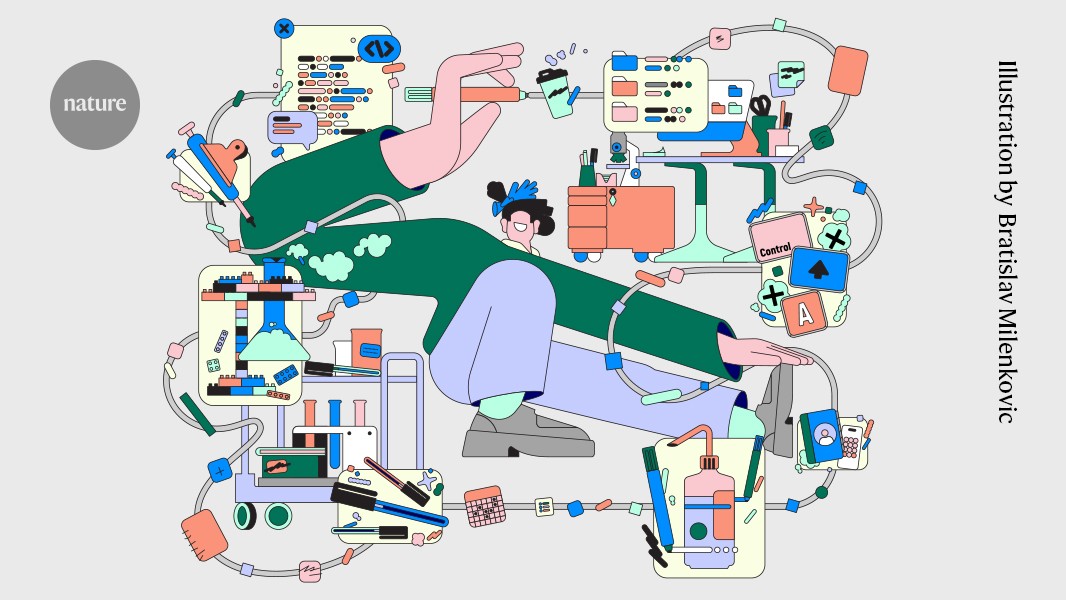
Over the past 12 months, Nature’s Careers team has been tapping into its global community of readers, writers, friends and colleagues to compile a list of laboratory hacks to help make scientists’ working lives easier.
To mark the start of a new academic term in many parts of the world, we are sharing what we gleaned. Some ‘hackers’ submitted several tips on how to save time, stay tidy, slash admin tasks and find new uses for old objects; others supplied just one technique that makes a huge or even modest difference in their work.
Some tricks date back years. They reached us through conference conversations, lab visits or over coffee with the many scientists who cross our path each year. Others were spotted in many of the 500 or so career columns that we’ve published since 2017. And a few came from articles published elsewhere. We know that our community will face many challenges in the next academic year, so perhaps one or two of these tips will make life easier.
Some you’ll love, some you’ll hate, some you’ll greet with a “meh”. But if you’ve got any more to share, e-mail us at naturecareerseditor@nature.com.
1. Embrace AI products
I use the Google Labs notetaking tool NotebookLM to create a ‘podcast’ of research articles that I can listen to on my commute, using its Audio Overview summary feature; I create pictures for presentations with text-to-image models from artificial intelligence (AI) firm OpenAI, and I use the large language model Claude to code simple games or simulations to use when I teach. — Carsten Lund Pedersen, digital transformation and AI researcher at the IT University of Copenhagen
AI for research: the ultimate guide to choosing the right tool
2. Automate stuff
Use the hour-a-week rule: if each week you’re spending more than one hour on a boring task, think about how to automate it. And if an action is repeatable, try to automate it. This doesn’t apply just to digital tasks. For example, I often perform polymerase chain reactions for DNA sequencing, so I’ve created a function in Microsoft Excel that will do all the buffer and dilution calculations for me. — Camila Souza Beraldo, ecology and evolution researcher at the University of Kansas in Lawrence.
3. Commit to GitHub
Use the code-sharing platform to maintain a version history — not just of code, but also of data files and text files. My lab even uses it for project management and administrative housekeeping. — Bradley Voytek, cognitive neuroscientist at the University of California, San Diego
4. Add a date to notices
Noticeboards get clogged up with ancient scraps of paper. Date every notice so that, in the future, you can tell whether one was put up eons ago. — A lesson from campus
5. Hot things can look cold
‘Thinky think’ before ‘grabby grab’. — A chemist who’s been burnt before
6. Keep a list of fixed problems
If your Ubuntu operating system hasn’t recognized your Windows-style-formatted external drive once, it’ll fail to do it 100 times. By keeping a list of fixed problems and maintaining it, you’ll avoid wasting time on solving the same issues over and over again. — Mirko Treccani, ‘omics scientist at the University of Parma, Italy
7. Name code and scripts sequentially
Include a sequential number in the filename of your code or scripts to clarify the order in which they should be run. This is invaluable when revisiting workflows or sharing them with others. — Laura Veschetti, bioinformatician at the San Raffaele Scientific Institute in Milan, Italy
8. Get some fresh air
Are you feeling sleepy during lectures at a conference? It might be because the topic is boring — but you could also be low on oxygen in a badly ventilated room. Prop open a door or step outside for a while. — A conference pro

9. Learn keyboard shortcuts
Whatever system you’re using, get to know the ones you’ll use most. Press Alt + 0176 for the degree symbol, °; Alt + 230 for the µ (on a 10-key numeric pad on a Microsoft device). On a Mac, hold down a letter to get a version of the letter with diacritics. — Raven Hinkel, stem–cell researcher at the Indiana Biosciences Research Institute in Indianapolis
10. Use AI to search the literature
The ‘answer engine’ Perplexity and the research search engine Consensus can help to collect papers during literature reviews. ChatGPT’s Deep Research generates cited reports by browsing sources from across the Internet. — Candice Chu, veterinary clinical pathologist at Texas A&M University in College Station
11. Map out your team’s project goals
For projects and personal-development discussions, our group draws an apple tree to visualize our goals as low- or high-hanging fruits. We organize them in branches, such as for articles, teaching and skill development. The tree hangs on the wall, and we colour the apples according to how close they are to completion. Once finished, we mark the apple as picked. — Tuuli Toivonen, geographer and geoinformatician at the University of Helsinki
12. Gamify your deep work
If you’re a gamer like me, you’ll get this instantly. I track focused hours as if they were experience points in a role-playing game, building a narrative around ‘unlocking’ an achievement. To hit the goal, I need to push through a certain number of hours each day. Fortunately, there are plenty of apps out there that help you to do this. — Babak Zolghadr-Asli, hydroinformatics researcher at the University of Exeter, UK, and the University of Queensland, Brisbane, Australia
13. Learn what AI can teach you
To learn some skills, I switched from watching YouTube videos and books to chatting with AI tools, such as ChatGPT and Claude. It didn’t click until I asked it to teach me how to code. Using AI for self-teaching works well for me because it’s much closer to the margins of my existing knowledge and experience. — Hannah Hackney, organic-materials chemist at McGill University in Montreal, Canada
14. Build your own lab equipment
I’ve built my own magnetic racks, pH meter and rotating mixer, and have shared instructions online.— Jason Limberis, infectious-disease researcher at the University of California, San Francisco

15. Use bulldog clips to hold pipettes
Clip a large bulldog clip to the shelf above your bench to make an easy pipette holster. You can also use long-armed monkey toys with magnetic hands. — Alice Denton, immunology researcher at Imperial College London
16. Never fight pigs
If you’re going to fight online trolls or dispel myths on the Internet, set boundaries so it doesn’t take over your life. Or, as playwright George Bernard Shaw said, “Never wrestle with pigs. You both get dirty, and the pig likes it.”’ — A Career Feature
17. Music might help you to stay focused
Music or background sound can be great for writing and creative work. But it can also be really distracting. Experiment to see what works. — A Career Feature
18. Use labware to lighten your travel load
The 100-millilitre plastic cylindrical lab tubes with screw caps are handy. They are wonderful for carrying liquids or gels in your hand luggage. — Matthew Betts, founder of MJB Consulting in Berlin
19. Layer up
For cold-room experiments, wear long underwear, a thermal hat and fingerless gloves. This offers more dexterity than putting on the giant, bulky shared coat and mittens hanging outside the door. — Kendall Powell, senior careers editor at Nature and cold-lab survivor
20. Share, but label
Share equipment with other labs to better economize on expensive reusable materials. But label your equipment to maintain ownership records. — A thrifty interviewee
21. Rookie lab leader? Design like a chef.
Home kitchens are often designed around their three most-visited places: the sink, the cooker and the bin. If you ever need to start a new lab, or find yourself wishing for a new layout, sketch out where you’re planning to put equipment and draw the route you’d take to carry out a typical experiment. If there’s too much moving around, change the layout. — Learnt from a lab visit
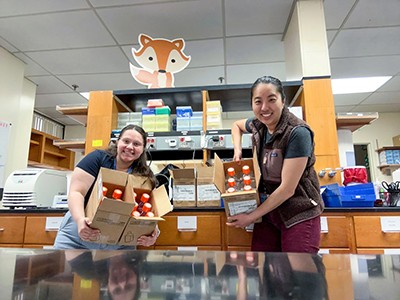
How to set up your new lab space
22. Give your lab meetings a consistent structure
Schedule regular project updates at lab meetings, including challenges and successes. This structure encourages open communication and collaboration, allowing team members to share their experiences and learn from one another. — Violeta Rodriguez, health-equity researcher at the University of Illinois Urbana–Champaign
23. A clicker can make you slicker
Always pack a presentation clicker for conferences. Gliding through slides with a tool you actually know how to use makes you look more professional. And more like you have your life together. — Lan Nguyen Chaplin, researcher in children’s consumer behavior and branding at Northwestern University in Evanston, Illinois
24. Use downtime productively
When you’re doing an experiment, use long incubation periods to check your e-mails, read an interesting paper or grab a cup of coffee. — William Mills, a biologist at Mount St. Mary’s University in Emmitsburg, Maryland
25. Keep personal stuff private (and accessible to you)
It’s tempting to keep your CV, employment contracts, headshots and other personal data in shared work folders. Don‘t: you’ll need them when you’ve quit your job and have lost access to company data storage. — Awkward e-mail from a former colleague
26. Need to keep track of lab equipment? Wristband reminders can help.
Every time a lab member uses a piece of equipment, have them wear a wristband to signify their accountability. It’s a fast, eye-catching reminder: before they can remove it, they have to complete a task related to that equipment. If someone gets home and realizes they’re still wearing one, then they know they need to take action. — Anne Hart, neuroscientist at Brown University in Providence, Rhode Island
27. Guard your time with Todoist and Google Calendar
I still use a strategy that I first adopted as a PhD student to plan how I’ll spend every hour at work, using the task-management tool Todoist alongside Google Calendar. I build this plan after our Monday-morning meetings, in which the team discusses goals for the week and divides up action items. Once a month, I look back at how I’ve spent my time and evaluate whether to make any adjustments. — Maya Gosztyla, chief scientific officer at BrainStorm Therapeutics, based in San Diego, California
28. Set up on- and offboarding rules
Set up standard practices for bringing new lab members onboard — and for offboarding those who are leaving. Work out what will happen to their data: is everything documented, stored or discarded? — Jeffrey Perkel, technology editor, Nature
29. Hoard (a little)
Keep a back-up supply of the most essential supplies at your bench. Rather than depending on your lab’s communal stores and lab orders arriving on time, keep some spares aside, so you have a buffer between you and empty shelves if an order is delayed. — Mills

30. Know who to call
Keep a list of key phone numbers and contact details for all lab members, emergency contacts and so on. Leave it somewhere obvious — such as on the noticeboard or in a shared office space. Who should be called if the freezer dies over the weekend? — Lab managers everywhere
31. Keep your lab documentation consistent
Make sure everyone in the lab is using the same system. You don’t want everyone to be taking notes in an electronic lab notebook except for one postdoc, who uses loose-leaf paper. — Perkel
32. Get scrubbing
Organize periodic lab clean-up days — discard old Petri plates, clear out the freezer, wipe down the lab benches and record your glassware supplies and other materials. Make a list of the tasks done that day, so it can serve as a to-do list later on. — Nature editor who left the lab
33. Invest in a personal, portable dry-erase board
It will be a companion on which you can clarify your thoughts and share ideas in an easy-to-reach spot. — Treccani
34. Create tomorrow’s to-do list today
Draft your to-do list before leaving the lab: it will save time next morning. — Treccani
35. Print a plan of action
When renting time on expensive or limited equipment, draft and print a plan of action — so you’re never wasting valuable minutes working out what to do next. — Learnt in the lab
36. Use open-source tools to extract data from graphs
The most helpful tool I have used is WebplotDigitizer, a computer-vision-assisted piece of software that extracts data from data visualizations such as graphs or plots. — Sourav Patnaik, biomedical engineer at the University of Texas Southwestern Medical Center, Dallas
37. Use a label maker
Old-school label makers are fun and the second-easiest way to label something — after permanent marker pens. — Overheard at a conference
Five reasons why researchers should learn to love the command line
38. Don’t rely on your memory — write stuff down
Never, ever, ever, ever trust your memory when working in the lab or during a meeting. Take notes as soon as possible. — Souza Beraldo
39. Use stickers for your 96-well plates
When using plastic 96-well plates, get stickers that look like them. You can find these online, and some reagent suppliers include them with the plates. Keep the stickers with your lab notebook. Whenever you are preparing a plate, put a matching sticker in your notebook. Then, label each well on the sticker with a description of the corresponding sample in the plate. It’s a nice visualization that helps you to keep track of what you have on the bench. — Souza Beraldo
40. Keep an organized, up-to-date freezer record
Keeping a record of what’s in your freezer at any one time is eminently sensible. — Several of those Nature asked for advice
41. Have a grease pencil handy
You can never have enough marker pens or digital timers. But it’s also worth having a grease pencil — also called a chinagraph pencil — for writing on things that will go in ethanol or other tricky solvents. The wax from the pencil will survive much longer than ink will. — John Tregoning, immunologist at Imperial College London
42. Fold your tape to help loosen your labels
Fold autoclave tape over, much like how you’d fold the end of a piece of sticky tape on the roll, before putting it on a bottle that you are labelling. It will be much easier to remove later on. — Tregoning

43. Mark the outside of spray bottles
Label the side of your spray bottle of 70% ethanol with one fill line for ethanol and a second for water, so you don’t need to use a measuring cylinder each time you refill it. The same trick applies to any standard solution that doesn’t require perfect precision. — Denton
44. Ask conference organizers — and publishers — about waivers
Many societies and foundations offer travel or diversity, equity and inclusion grants for conference attendance to encourage members of under-represented groups in science, or those who simply cannot afford to pay, to come. Some publishers offer waivers for publishing fees. It’s worth asking. — A tip from our pages
45. When travelling, check out digital debit cards and eSIMs
While travelling, using debit-only cards from digital banks, such as Monzo or Revolut, can save you money by automatically exchanging currencies at good rates with no or low foreign-transaction fees. If you don’t want to use one of those, it’s cheaper to convert enough money to cover your expenses to the local currency all at once than to do it bit by bit. Another travel tip is to use a digital eSIM card to obtain a foreign phone number, which can save you money on your phone bill. — Souza Beraldo

46. Add comments to your code
If you can’t recall what you had for lunch yesterday, you probably won’t understand your code a week after you’ve written it — so leave proper comments explaining your choices. — Veschetti
47. Shop locally for poster tubes
Instead of purchasing poster tubes for conferences, look for a local poster shop, which can often give you poster shipping tubes for free if they have extra. — Katherine Bradley, graduate of the Geisel School of Medicine at Dartmouth, Hanover, New Hampshire
48. Look at the glass half full, with the help of a wine ferry
If your presentation is during drinks or a networking session, have a trusted colleague or friend ferry you wine (or your drink of choice — and snacks) while you stand by your poster. — Denton
49. Think ‘headline’ when talking to a journalist
One way to set realistic expectations when you’re doing a press interview or chatting to a journalist at a conference is to ask yourself, “If this statement was taken out of context and made into a headline, would it still accurately represent the research?” This exercise helps to identify overly broad or optimistic phrases, which should be replaced with precise, contextual language such as ‘early-stage research’ or ‘preclinical findings’. — Kisha Greer, scientific storyteller at Syneos Health Communications, in Richmond, Virginia
50. Do your research before ‘cold e-mailing’ a future boss
People who write very generic e-mails disqualify themselves from a job before they even get to the interview. If they’re not going to research my group, they’re probably not going to research other things very well either. — Andreas Laustsen-Kiel, biotechnology entrepreneur at the Technical University of Denmark in Kongens Lyngby
51. And tell potential employers what excites you
What people often don’t share in cold e-mails is what makes them tick. What excites them. What makes them want to stay in academia, when industry offers better salaries. These are the e-mails that I will respond to. — Eileen Parkes, oncology researcher at the University of Oxford, UK
52. Take a stool to your poster session
Carry a little folding stool or wear supportive shoes to your poster session. Standing for hours on hard conference floors is brutal. — Olivier Pourret, geochemist at UniLaSalle in Beauvais, France

53. Take a pen everywhere you go
They always get lost, so keep one nearby: on your lanyard; in your lab coat; on your lab bench; in your bags; by your computer. — Mano Nakamura, clinical research manager at King’s College London
54. Check out your new boss before you sign on the dotted line
Before accepting a new job, tactfully contact current and former lab members to ask them what they made of their experiences. — A Career Feature
55. Track your goals to use your time more efficiently
Tracking goals on various timescales can help scientists to make the most of their days. I track time at a grand, big-picture scale, then at the scale of the academic term, then finally at a daily or weekly level. I use these goals to plan my hours and thus stay on track. — Gosztyla
56. Stay nourished when working long hours
If you must work late or overnight, perhaps for an experiment, remember to plan meals — you need calories and water, not just caffeine, to stay focused and awake, even when your body clock decides you’re not hungry. — Chronic overnighter
57. Apply the ‘friends and family’ science-communication test
It might sound obvious, but talking to your friends and family about your science can help you to get better at explaining your research. Even if the process feels forced, their questions or confusion can reveal assumptions you’ve made that might need clarification. — Pedersen
58. Buy a desktop riser
These are also known as a standing-desk convertor. They’re cheap, easy to install and really effective. I switch from sitting to standing throughout the day to relieve pressure on my back and legs. And it helps me to stay awake, too. — Brandon Brown, public-health and medical-ethics researcher at the School of Medicine at the University of California, Riverside
59. Celebrate the wins
In my lab, if we get a ‘revise and resubmit’ decision on a paper, that means doughnuts. — Elizabeth Tenney, management researcher at the David Eccles School of Business, University of Utah, Salt Lake City
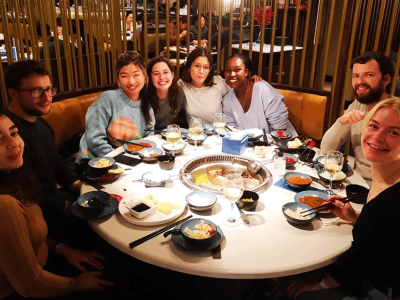
How to thank your lab mates: eight ways to show gratitude at the end of year
60. Explore beyond the conference venue
When travelling for a conference, try to take a few days off to explore the city or country you are in. Also, plan for recovery days and periods of rest to combat jet lag. — Souza Beraldo
61. Keep two sets of chargers
Keep one set of chargers for your phone, headphone, laptop or other electronics at the lab and another set at home. You’ll inevitably forget them if you rely on bringing them with you. — Personal experience with running out of battery
62. For break’s sake: take a mindful one
When you take a brief break from the day’s work, you don’t need to fuel an addiction: you can skip the coffee, vape, texting or social-media scrolling. If you’re tired and need to pause, make sure you stay mindful. — A zen scientist
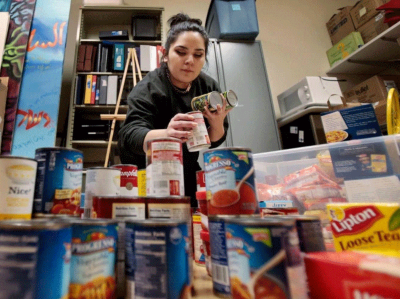
Hunger on campus: why US PhD students are fighting over food
63. Set start- and end-of-day routines
Set your ‘good morning’ and your ‘good night’ routines: these could include watering your plants, closing the windows and cleaning your workstation. Whatever you do, it will signal to your brain to start or end the working day. — Treccani
64. Move around to spark creativity
Some spaces lend themselves better to creativity. If the lab is feeling stifling, take your laptop outside, into a cafe or somewhere you’ve never worked before. I often do my best thinking at music gigs.— Tregoning
65. Don’t waste a chance for free food
Make sure you have your e-mail notifications on, so you see the announcement from the department administrator that there is food left over from the afternoon seminar. If your administrator doesn’t send such e-mails, gently ask them to set one up. – Mills
66. Gloves make great hair ties
Cut the wrist end of the end off a glove for a nifty and convenient hair tie. — Denton

67. Social events don’t have to be boozy
Some colleagues, particularly those who don’t drink, might find alcohol-focused events off-putting or intimidating. Organize and support some social events that are alcohol-free to be more culturally inclusive. People will thank you for it. — Pourret
68. Set clear expectations
Set clear, written expectations and goals for trainees at the start of your collaboration. Maintain regular check-ins to discuss progress and challenges. This will help to foster a supportive environment and help less-experienced colleagues feel more engaged and motivated. — Rodriguez
69. Turn your lectures into podcasts
Record and release your lectures as podcasts using recording apps such as Voice Memos (on Apple devices), Sound Recorder (for Windows) or Recorder (on Android). They’ll reach further afield and will help your students, giving them more ways of engaging with course material, perhaps when they’re travelling. — Mills
70. Keep your door open (sort of)
I want to work in solitude, but I worry about looking unfriendly. To address this, I leave my office door open so that I seem approachable, but slap on headphones so no one actually approaches. Is this silly? Yes. But does it help me to get over my worries and be more productive? Also yes. — Nguyen Chaplin
71. Rotate meeting responsibilities
During lab meetings, rotate who takes minutes and leads discussion: it gives quieter team members a platform, and splits responsibilities fairly. — Pourret
