
Close Menu
My Blog

    Subscribe to Updates

    Get the latest creative news from FooBar about art, design and business.

    What's Hot

    Nautilus debuts Voyager platform in push toward next-gen proteomics

    March 1, 2026

    First-in-Human Success for Prenatal Stem Cell Therapy in Spina Bifida

    February 28, 2026

    Pressure-Driven Pathway Links Liver Congestion to Fibrosis and Cancer

    February 28, 2026
    Facebook X (Twitter) Instagram
    X (Twitter) YouTube
    My BlogMy Blog
    Sunday, March 1
    • Home
    • About Us
    • Healthy Living
    • DNA & Genetics
    • Podcast
    • Shop
    My Blog
    Home»DNA & Genetics»Epigenetic Mechanisms Explain Inheritance of Longevity Markers in C. Elegans
    DNA & Genetics

    Epigenetic Mechanisms Explain Inheritance of Longevity Markers in C. Elegans

    adminBy adminSeptember 25, 2025No Comments3 Mins Read
    Facebook Twitter Pinterest LinkedIn Tumblr WhatsApp VKontakte Email
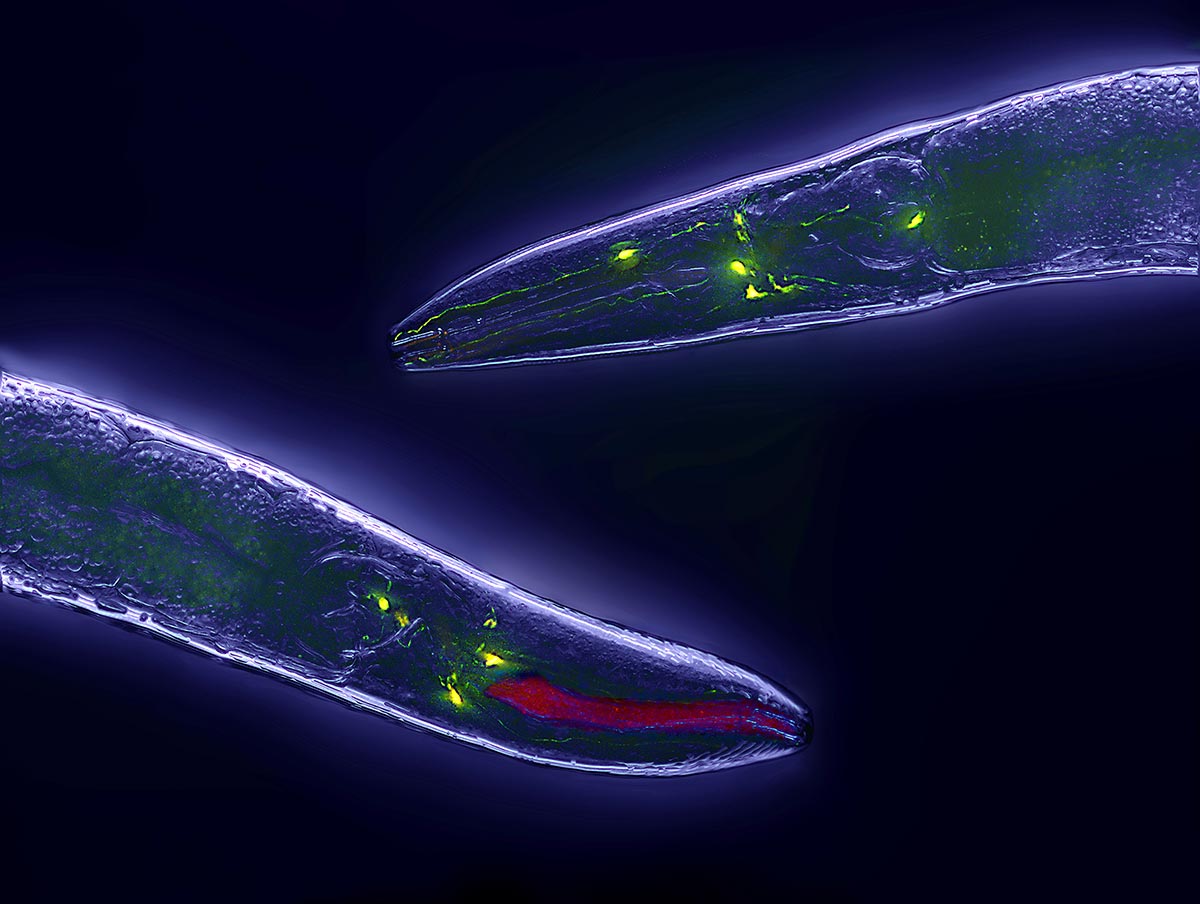
    Caenorhabditis elegans
    Share
    Facebook Twitter LinkedIn Pinterest Email

    New research in C. elegans from scientists at Howard Hughes Medical Institute (HHMI) helps explain how changes in the parents’ lysosomes that promote longevity are transferred to their offspring. Their findings are detailed in a new Science paper titled “Lysosomes signal through the epigenome to regulate longevity across generations.” 

    The work comes out of the laboratory of Meng Wang, PhD, a senior group leader at HHMI’s Janelia Research Campus. Previous research from the Wang lab showed that overexpressing a particular enzyme in C. elegans lysosomes extended its life by up to 60 percent. Surprisingly, offspring from these worms that did not have the genetic modification as their parents also lived longer than normal. And when these long-lived worms were crossed with wild-type worms that did not have the same modification, offspring from those unions also lived longer. 

    Based on these findings, the researchers hypothesized that the longevity markers were somehow being transferred across generations. Their latest study in Science sheds some light on how this might be happening. According to the paper, Wang and her team found that the changes in C. elegans lysosomes are transferred to its reproductive cells via histones. In reproductive cells, these histone messengers modify the worm’s epigenome, enabling the lysosomal changes to be passed through the generations without changing the underlying DNA. 

    “You always think that your inheritance is in the nucleus, within the cell, but now we show that the histone can go from one place to another place, and if that histone carries any modification, that means you are going to transfer the epigenetic information from one cell to another,” Wang said. “It really provides a mechanism for understanding the transgenerational effect.”

    Specifically, the scientists identified a specific histone modification was elevated in the worms that lived longer compared to those with normal lifespans. Then using a combination of tools including transcriptomics and imaging, they found that changes in lysosomal metabolism, which are activated during fasting, kick off a series of processes in the cells which triggers an increase in a specific histone variant. That histone is then transported to the reproductive cells via proteins, where it is modified in a way that allows the lysosomal information to enter the germline where it can be transferred from parent to offspring. 

    Besides conferring longevity across generations, the team believes that this mechanism could help explain how other types of inherited information is passed from parent to offspring in C. elegans. For example, the findings could help researchers better understand previously observed transgenerational effects like the malnutrition of a parent affecting its offspring, or how epigenetic modifications for coping with environmental stress can be passed from parents to offspring. 

    Elegans Epigenetic Explain Inheritance longevity Markers Mechanisms
    Share. Facebook Twitter Pinterest LinkedIn Tumblr WhatsApp Email
    Previous ArticleCan A Keto Diet Help Beat Brain Cancer? This Study Says Yes
    Next Article When life gets in the way of your meticulously-planned career in science
    admin
    • Website

    Related Posts

    A Video Report from AGBT

    February 27, 2026

    Novo Nordisk, Vivtex Ink Up to $2.1B Deal to Develop Oral Biologics for Metabolic Conditions

    February 27, 2026

    Increasing Rice Yields with Gene-Informed Selective Breeding

    February 27, 2026

    Mutant p53 Selective Reactivation Demonstrated in Advanced Solid Tumors

    February 27, 2026
    Leave A Reply Cancel Reply

    Our Picks

    9 Time-Saving Kitchen Gadgets for Fall at Amazon

    September 5, 2025

    Why Exercise Is So Important For Heart Health, From An MD

    September 5, 2025

    An Engineered Protein Helps Phagocytes Gobble Up Diseased Cells

    September 5, 2025

    How To Get Rid Of Hangnails + Causes From Experts

    September 5, 2025
    • Facebook
    • Twitter
    • Pinterest
    • Instagram
    • YouTube
    • Vimeo
    Don't Miss
    Longevity

    Nautilus debuts Voyager platform in push toward next-gen proteomics

    By adminMarch 1, 20260

    Company’s new benchtop system promises a clearer view of proteins following validation at a leading…

    First-in-Human Success for Prenatal Stem Cell Therapy in Spina Bifida

    February 28, 2026

    Pressure-Driven Pathway Links Liver Congestion to Fibrosis and Cancer

    February 28, 2026

    A cellular atlas of aging comes into focus

    February 28, 2026

    Subscribe to Updates

    Get the latest creative news from SmartMag about art & design.

    About Us

    At FineGut, our mission is simple: to enhance your self-awareness when it comes to your gut health. We believe that a healthy gut is the foundation of overall well-being, and understanding the brain–gut connection can truly transform the way you live.

    Our Picks

    9 Time-Saving Kitchen Gadgets for Fall at Amazon

    September 5, 2025

    Why Exercise Is So Important For Heart Health, From An MD

    September 5, 2025

    An Engineered Protein Helps Phagocytes Gobble Up Diseased Cells

    September 5, 2025
    Gut Health

    Nautilus debuts Voyager platform in push toward next-gen proteomics

    March 1, 2026

    First-in-Human Success for Prenatal Stem Cell Therapy in Spina Bifida

    February 28, 2026

    Pressure-Driven Pathway Links Liver Congestion to Fibrosis and Cancer

    February 28, 2026
    X (Twitter) YouTube
    • Contact us
    • Privacy Policy
    • Disclaimer
    • Terms and Conditions
    © 2026 finegut.com. Designed by Pro.

    Type above and press Enter to search. Press Esc to cancel.