

New certificate series aims to empower students to accelerate the translation of aging science through the power of AI.
Next month, Stanford University will launch a new program at the intersection of artificial intelligence and human longevity. The AI & Longevity Lab Certificate Series will explore how AI can be applied to healthspan science, aging biology, drug discovery, and predictive modeling, with the aim of giving participants both a foundation in longevity research and practical skills for building AI-powered tools.
Unlike traditional lecture-only courses, the program emphasizes hands-on creation; students will not only study the science of aging but also build prototypes of AI systems designed to educate, analyze data or even propose new interventions. Designed for learners of all backgrounds, the course aims to make cutting-edge longevity science and AI applications accessible to a broader audience, with the ultimate goal of accelerating innovation to benefit human health.
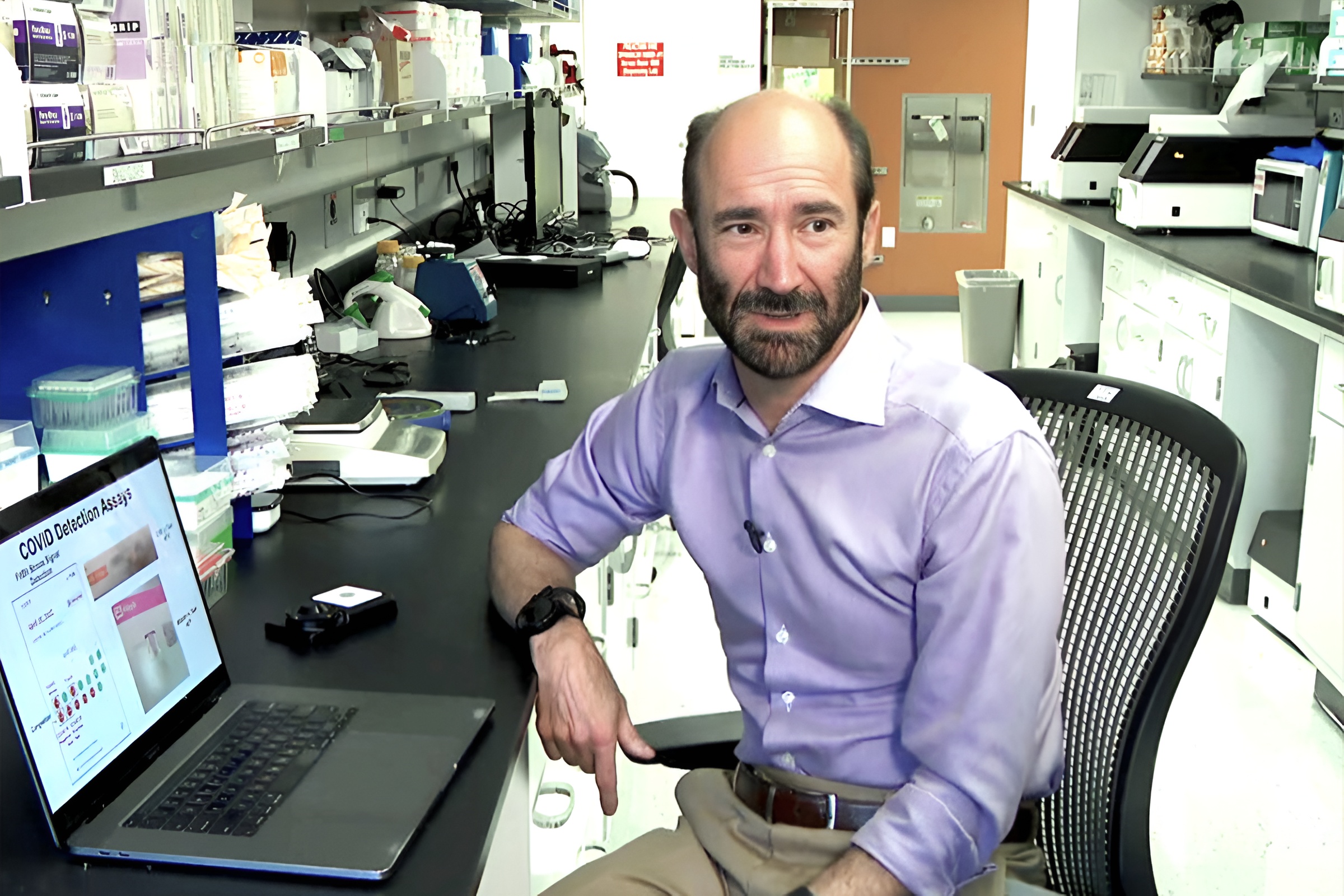
Longevity.Technology: It feels like Stanford’s new AI and longevity course has arrived at the perfect moment. Longevity science has long been rich in theory but slow to translate into real-world impact, while AI has recently matured into a technology that even non-specialists can use meaningfully. By bringing the two together, the new program can help democratize access to both fields – giving a wider community of thinkers, builders, and researchers the tools to contribute projects that go beyond academic silos. If successful, it won’t just educate; it could accelerate the pace of discovery, create a culture of collaboration, and help move longevity science from promise to practice. We sat down with the brain trust behind the new course: Professor Michael Snyder, director of Stanford’s Center for Genomics and Personalized Medicine, and Professor Ronjon Nag who teaches AI and longevity science.
Nag, also an investor in early stage longevity startups through his venture firm R42, says that AI is well-suited to dealing with complexity of human biology.
“The thesis of this course is that if you bring the two together, there’s huge potential,” he says. “AI has already been applied to drug discovery, for example, but here we want to apply it to the problem of aging.”
Longevity field is ‘exploding’
Snyder, widely known for his research in human longevity, concurs. “Longevity is really a data science now, and the field is exploding,” he says, reflecting on a key area of his research, which explores how individual biological differences lead to unique responses to diet, exercise, and other interventions, requiring personalized health strategies to promote healthspan and lifespan.
“Living a longer, healthier life requires many data inputs – lifestyle, nutrition, exercise – all of which are highly personalized,” he adds. “With wearables and other devices, we can now collect data at unprecedented levels, and now AI can help us make sense of that data. While academia often focuses on discovery rather than application, this is course is more applied.”
The program consists of three independent four-week modules – AI Longevity Explorer, AI Longevity Researcher and AI Longevity Futurist – that can be taken individually or as a full course. Topics span from the fundamentals of aging biology and generative AI, to AI-assisted literature mining, organ-specific aging, experimental design, and predictive models of healthspan. Costing around $500, each module culminates in a project, such as building an AI-powered explainer, designing a research assistant, or developing a longevity intervention roadmap.
“It’s not just lectures; it’s hands-on building as well,” says Nag. “Over about six months, students will cover the basics of aging science and AI in the first module. Then in modules two and three, we’ll go deeper, introducing more complexity and giving students the opportunity to actually build something rather than just listen. We want students to think critically about data, how to use it, and how to build useful tools.”
Opening up participation in longevity
In its inaugural year, the course hopes to attract around 100 participants, who don’t need to have prior experience in longevity science or AI.
“You can come in as a beginner and leave comfortable with AI tools and with a solid grounding in biology and longevity science – that’s the goal,” says Nag “We hope to generate 100 projects, so the aim isn’t just learning but also moving the field forward. Historically, academic research has been siloed and not always reproducible. You can’t always get the data or the code behind published results. We want to open that up.”
Snyder says the course echoes a shift in the longevity field, which used to be narrowly focused on basic science, but now lifestyle factors are recognized as critical to healthspan.
“At longevity conferences today, you’ll see practitioners, lifestyle researchers, and translational scientists alongside the basic researchers,” he explains. “Our lab does both – we spin off companies as well as basic science. That translational focus will give this course a unique flavor.”
According to Nag, the course is also reflective of Stanford’s reputation for experimenting with new ways of expanding access to education.
“Education is expensive, but we want to make it more accessible,” he says. “The course is designed to be affordable – not a $50,000 degree, but closer to $1,500, with discounts for students. By the end, students can apply to grad school, get jobs, or contribute to companies in this space. There’s a shortage of formally trained people in the field, and this course helps fill that gap. This is the first time we’re offering it, but the goal is to build an ecosystem.”
‘Interest is high’
Looking further ahead, the long term hope is that the course will generate thousands of projects and participants over time, all contributing to a community of people educated in both the basics of longevity and AI applications.
“With more people generating ideas and sharing knowledge, the field will move forward much faster,” says Nag.
“Collaboration will be key,” adds Snyder. “People will not only build tools but also share data, which will drive discoveries. We lack large-scale lifestyle data. That’s why studies on supplements, for example, are often controversial. There are small studies, but few large ones, so collecting and aggregating lifestyle data could change that.”
Sessions will be held at the Stanford School of Medicine’s Biomedical Innovations Building, with both in-person and online options available. Participants who complete all three modules with a passing grade will earn the Stanford Genetics Department AI & Longevity Lab Certificate, while each module also confers its own digital badge. Final projects will be published on the Snyder Lab’s Gene 229 website.
“The science is advancing, the technology is here, and the interest is very high,” says Snyder. “After all, we are an aging population.”
