

Close Menu
My Blog

    Subscribe to Updates

    Get the latest creative news from FooBar about art, design and business.

    What's Hot

    Nautilus debuts Voyager platform in push toward next-gen proteomics

    March 1, 2026

    First-in-Human Success for Prenatal Stem Cell Therapy in Spina Bifida

    February 28, 2026

    Pressure-Driven Pathway Links Liver Congestion to Fibrosis and Cancer

    February 28, 2026
    Facebook X (Twitter) Instagram
    X (Twitter) YouTube
    My BlogMy Blog
    Sunday, March 1
    • Home
    • About Us
    • Healthy Living
    • DNA & Genetics
    • Podcast
    • Shop
    My Blog
    Home»Gut Health»Want to do disruptive science? Include more rookie researchers
    Gut Health

    Want to do disruptive science? Include more rookie researchers

    adminBy adminSeptember 29, 2025No Comments3 Mins Read
    Facebook Twitter Pinterest LinkedIn Tumblr WhatsApp VKontakte Email
    Want to do disruptive science? Include more rookie researchers
    Share
    Facebook Twitter LinkedIn Pinterest Email

    Collaborations with a higher proportion of unpublished researchers can yield papers that present groundbreaking ideas.Credit: Stígur Már Karlsson/Heimsmyndir via Getty

    What characteristics drive scientific discovery? Experience is often seen as key, with success coming from years of knowledge building and collaboration. This is certainly true for most Nobel Prize laureates, who have an average age of 58.

    However, research teams with high fractions of beginners — authors with no prior publication history — tend to be more disruptive and innovative, found a study posted on the preprint server arXiv on 12 September1.

    Actively integrating beginners into research groups could boost the disruptive and innovative qualities of the work by having fewer collaborators who are burdened by knowledge, the authors say. “Beginner scientists have less loyalty to prevailing assumptions, and they can take more intellectual freedom,” says co-author Raiyan Abdul Baten, a computational social scientist at the University of South Florida in Tampa.
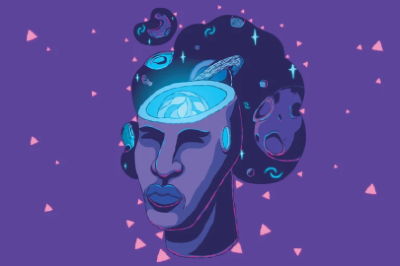
    Can creativity in science be learnt? These researchers think so

    Beginner’s charm

    This pattern was first noticed by researchers during a study of whether artificial intelligence can predict how innovative and disruptive a paper will be in its scientific domain2. In the new study, the team analysed more than 28 million articles from SciSciNet-v2, a data lake for the science of science research. These scientific papers spanned 146 fields and were published between 1971 and 2021.

    Disruption scores were calculated by comparing how many citations a paper has garnered compared with the papers that it referenced. A disruptive paper that was cited more times than were the papers it referenced could, for example, disprove an established theory and offer an alternative hypothesis.

    During the analysis, Baten and his colleagues noticed a link between a paper’s disruptiveness and the number of beginner authors, which led them to partition data by authors’ ‘career age’ — defined as the number of years since their first publication. Beginner authors were those with no prior publications.

    They were surprised to find that papers with a higher proportion of beginner authors tended to be more disruptive than were papers with more early-career or senior authors. Disruption scores were highest when beginners made up the entire team, but they were also high when beginners were paired with co-authors with track records of producing disruptive work. Papers with the highest ratio of beginner authors consistently showed a positive correlation between disruption and citation count.

    “As the fraction of beginners increases in teams, the disruptivity and innovation go up,” says Baten. “Across team sizes, decades and disciplines, we found these results to be robust,” he adds.

    What makes a good PhD student?

    Diversity boosts scientific progress

    Why do collaborations with more beginners tend to be more disruptive? The researchers speculate that these scientists offer new perspectives because they are less attached to previous theories and knowledge than are their more experienced colleagues. “Sometimes, it is difficult to unlearn the prevailing assumptions then adopt radically new ones,” says Baten. This could allow early-career scientists to be more receptive to new ideas and more likely to take risks by exploring experimental approaches, he says.

    disruptive Include Researchers rookie Science
    Share. Facebook Twitter Pinterest LinkedIn Tumblr WhatsApp Email
    Previous ArticleRise in Early Onset Cancer in U.S. Linked to Increased Diagnosis
    Next Article How Psychedelics Affect the Brain: What We Know, and What We Think We Know
    admin
    • Website

    Related Posts

    The ins and outs of the new Dietary Guidelines for Americans in light of the gut microbiome

    February 25, 2026

    Patrick Veiga – Gut Microbiota for Health

    February 17, 2026

    The gut microbiome puzzle and probiotics in primary care patients with IBS

    February 16, 2026

    Is Fish Meat? Science, Religion, Nutrition & Definitions

    February 14, 2026
    Leave A Reply Cancel Reply

    Our Picks

    9 Time-Saving Kitchen Gadgets for Fall at Amazon

    September 5, 2025

    Why Exercise Is So Important For Heart Health, From An MD

    September 5, 2025

    An Engineered Protein Helps Phagocytes Gobble Up Diseased Cells

    September 5, 2025

    How To Get Rid Of Hangnails + Causes From Experts

    September 5, 2025
    • Facebook
    • Twitter
    • Pinterest
    • Instagram
    • YouTube
    • Vimeo
    Don't Miss
    Longevity

    Nautilus debuts Voyager platform in push toward next-gen proteomics

    By adminMarch 1, 20260

    Company’s new benchtop system promises a clearer view of proteins following validation at a leading…

    First-in-Human Success for Prenatal Stem Cell Therapy in Spina Bifida

    February 28, 2026

    Pressure-Driven Pathway Links Liver Congestion to Fibrosis and Cancer

    February 28, 2026

    A cellular atlas of aging comes into focus

    February 28, 2026

    Subscribe to Updates

    Get the latest creative news from SmartMag about art & design.

    About Us

    At FineGut, our mission is simple: to enhance your self-awareness when it comes to your gut health. We believe that a healthy gut is the foundation of overall well-being, and understanding the brain–gut connection can truly transform the way you live.

    Our Picks

    9 Time-Saving Kitchen Gadgets for Fall at Amazon

    September 5, 2025

    Why Exercise Is So Important For Heart Health, From An MD

    September 5, 2025

    An Engineered Protein Helps Phagocytes Gobble Up Diseased Cells

    September 5, 2025
    Gut Health

    Nautilus debuts Voyager platform in push toward next-gen proteomics

    March 1, 2026

    First-in-Human Success for Prenatal Stem Cell Therapy in Spina Bifida

    February 28, 2026

    Pressure-Driven Pathway Links Liver Congestion to Fibrosis and Cancer

    February 28, 2026
    X (Twitter) YouTube
    • Contact us
    • Privacy Policy
    • Disclaimer
    • Terms and Conditions
    © 2026 finegut.com. Designed by Pro.

    Type above and press Enter to search. Press Esc to cancel.