

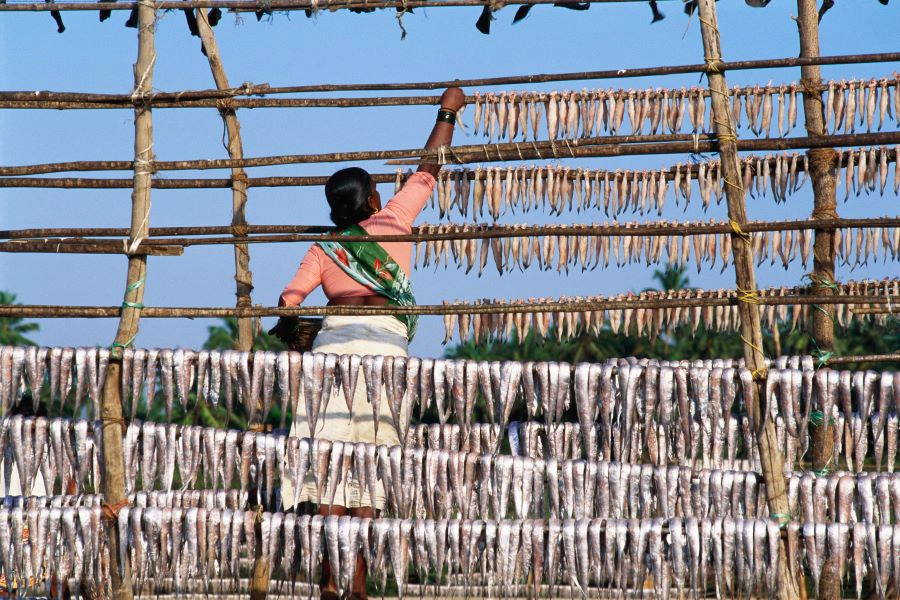
The ocean is a reservoir of nutrients; however, not everyone has equitable access to them. The World Trade Organization (WTO) recently reached an agreement on Fisheries Subsidies to prevent fish depletion and protect fishing communities’ livelihoods. By cutting subsidies, the landmark move curbs government support for illegal fishing and the exploitation of stocks and protects marine life.
Nutrition Insight speaks to an expert to explore how the deal could influence the nutrition industry and food security — particularly as fish remains a key component of many healthy diets.
Nicole Franz, research scholar at the Center for Ocean Solutions at Stanford University, US, underlines that the impact of subsidy cuts depends on their types and allocations, with high-income countries currently providing the most support, particularly to industrial fleets.
She calls for the effective management of fish stocks to balance availability and sustainability, emphasizing the need for data, governance, and fisher participation. However, this is especially challenging in the Global South.
According to Franz, the WTO rules may be insufficient to address the needs of small-scale fisheries. She also urges tailored approaches for sustainability.
She advises that a coherent policy framework integrating agricultural, fisheries, and social policies is essential for sustainable nutrition, focusing on fair access to nutritious food.
Who benefits from subsidy cuts?
Franz explains that subsidy cuts could benefit small fishing communities or big industrial fleets, depending on how the agreement is implemented — what is cut and how the subsidies are allocated.
 Reducing fish loss, improving management, and integrating fisheries with broader social and food policies are essential for sustainable nutrition and equitable access.“Previous analysis by Sumaila et al. has shown that most subsidies support industrial fleets, and the OECD Fisheries Support Estimate data estimated that from 2020 to 2022, six countries alone provided 85% of these support payments, all of them upper- or high-income countries.”
“It is therefore likely that, for example, cuts in fuel subsidies would impact the economic efficiency of industrial fleets in those countries that are better off. Fuel subsidies are often considered ‘harmful’ subsidies that play an important role in ‘fueling’ overfishing.”
Conversely, the subsidies may also enable governments to help smaller-scale operations during hardship, as seen during the COVID-19 pandemic, she notes.
“Subsidies affected by the agreement are those that support illegal fishing, fishing of overfished stocks, and fishing in the high seas without a shared management arrangement. It remains to be seen how the first two aspects will translate for small-scale fishing communities, which at times rely on fish stocks that are negatively impacted by industrial fishing, either directly or through food chain dynamics.”
Whether fish become cheaper or more expensive for consumers will depend on production costs and market adjustments.
“If some industrial fleets have to leave the market, there may be space for less fuel-intensive fleets to fill those gaps, at different prices. A lot will depend on the price elasticity for higher value species in particular,” explains Franz.
Lowering fish loss
According to Franz, one of the first ways to make fish more available while keeping stocks healthy is to reduce fish waste across the supply chain. In 2021, around 24 million metric tons — about 15% of global production — were lost.
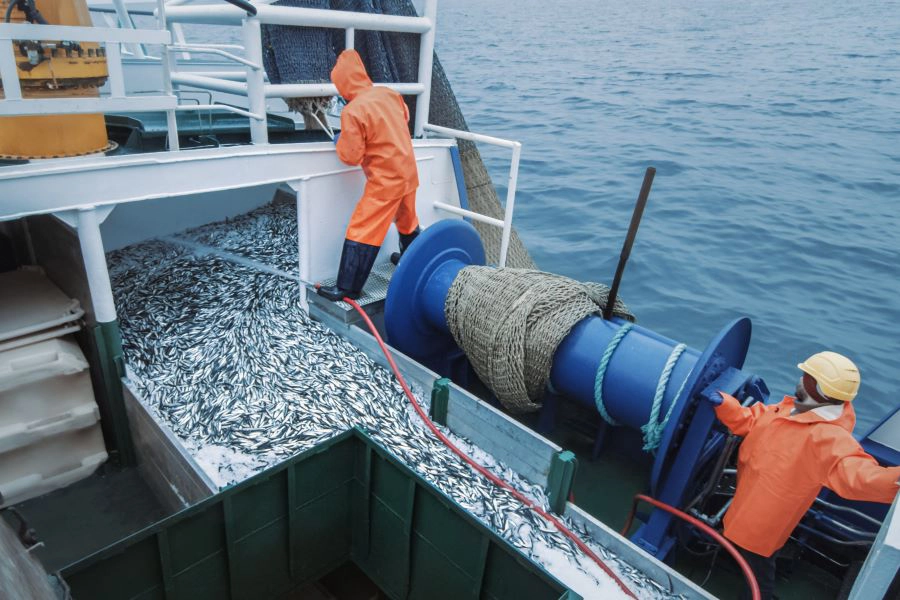 The WTO fisheries agreement cuts harmful subsidies to curb overfishing.“Understanding and addressing the underlying causes is crucial to ensure that what is produced actually reaches the final consumer, as a healthy, nutritious product.”
“Ensuring sufficient refrigeration after the catch and during transport, for example, is key. Proper processing and handling techniques that conserve food safety are equally important but often require investments in related infrastructure and capacity building,” she explains.
Aquaculture trade-offs
Aquaculture is often seen as a solution to illegal and unsustainable fishing. For the first time in 2022, it surpassed capture production in aquatic animal output, says Franz, citing data from the UN Food and Agriculture Organization (FAO). However, carnivorous fish rely on fish meals and fish oil from captured fish.
“This creates a potential trade-off between using a part of captured fish for fish farming, often for higher-value species such as shrimp or salmon, rather than for direct human consumption of highly nutritious, cheaper small fish like sardines and anchovies.”
Recent research highlighted that dried small African fish are a “hidden superfood” because drying and smoking concentrate their nutrients, making them more nutritionally dense than fresh fish. Another paper found that intake of small fish may reduce the risk of all-cause cancer and cancer mortality.
“The most crucial thing we can do is to better manage fisheries to avoid overexploitation,” states Franz.
“Managing fisheries is easier said than done. It requires, for example, data and knowledge about the status of the stock as well as governance mechanisms and institutions able to define the appropriate rules to use the resources and to ensure their application.”
 Nicole Franz, research scholar at Stanford University’s Center for Ocean Solutions.She explains that direct participation of fishers in governance aligns with established rules but such systems can take longer, requiring more resources than “so-called centralized top-down management.”
“But the global body of experiences with various forms of fisheries’ management and governance is growing, and relevant global frameworks increasingly recognize the value of local traditional knowledge and participation for biodiversity conservation (such as the new Kunming-Montreal Global Biodiversity Framework).”
Complexities of small-scale fisheries
Franz explains that the agreement aims to tackle illegal, unreported, and unregulated fishing and overfishing. However, small-scale coastal fisheries — especially in the Global South — face significant challenges. Here, the fisheries’ administrations and communities are not best-equipped to develop appropriate management plans.
“Scientific data on the stock status is often lacking, and local knowledge is not always considered sufficiently in decision-making processes.”
“The often remote and scattered location of coastal communities, as well as the use of multiple gear types to target multiple species, makes it even more challenging to manage these fisheries, which often provide the only or a critical source of income and food for communities in those areas,” notes Franz.
She adds that special and preferential treatment mechanisms will be essential to enable a transition toward sustainable fisheries while coordinating with other policy initiatives.
Wider policy changes
Franz underlines that a coherent policy framework should address agricultural, fisheries, forestry, and livestock policies to enhance sustainable nutrition. It should consider the intersections between production methods, environmental, and social policies to ensure fair distribution of benefits.
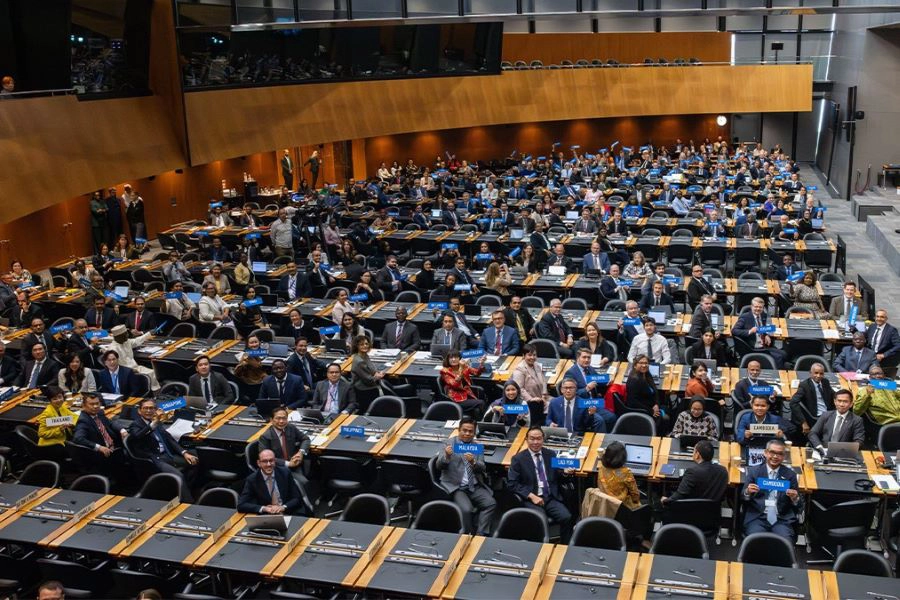 WTO Agreement on Fisheries Subsidies enters into force (Image credit: WTO).“Social policies, including in particular health policies but also gender policies, come into play in relation to the distributional aspect around nutritious food — it is not only about availability of food but also about the nuanced access to that nutritious food, e.g. for women or children.”
Research published in Nature under the Illuminating Hidden Harvests initiative highlights the multidimensional contributions of small-scale fisheries, says Franz, from nutrition, livelihoods, gender, and governance — all essential to sustainable nutrition.
She stresses the need for interinstitutional partnerships to understand, assess, and apply policy options required.
“This is particularly important for small-scale fisheries, which operate in complex realities, often characterized by socio-economic and political marginalization with limited access to alternative livelihoods or food sources.”
“The [FAO] Voluntary Guidelines for Securing Sustainable Small-Scale Fisheries in the Context of Food Security and Poverty Reduction acknowledge all of this, spanning across different policy domains,” says Franz.
In related news, Nutrition Insight previously examined how krill trawling regulations fall short, and greater international scrutiny is driving the demand for plant-based nutrition alternatives sourced from algae.
