

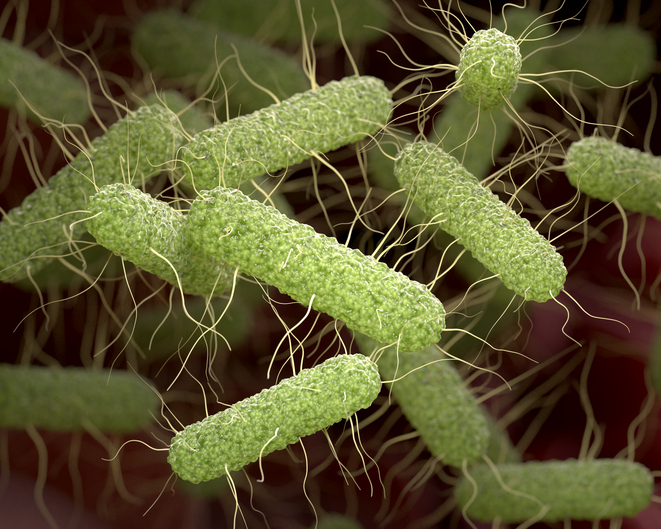
Researchers at the University of Liverpool have discovered how pathogenic bacteria construct protein-based compartments known as ethanolamine utilization (Eut) microcompartments, which are essential for breaking down ethanolamine (EA), a nutrient abundant in the gut. The research, published in Science Advances, details how the Eut microcompartments enable bacteria to digest ethanolamine to give them a competitive advantage over commensal microbes, fostering bacterial growth and virulence.
“It was known that bacteria build these compartments to safely and efficiently digest ethanolamine, but our research reveals the precise molecular steps involved,” said the study’s first author Mengru Yang, PhD, a researcher at the University of Liverpool’s Institute of Systems, Molecular and Integrative Biology (ISMIB). “It is exciting to observe in molecular detail how dynamic protein condensates contribute to organelle construction and function.”
For their research, the Liverpool team used a combination of super-resolution fluorescence microscopy, genetic engineering, electron microscopy, structural biology, biochemical assays, and computational modeling to map the roles of individual proteins that comprise Eut bacterial microcompartment (BMC) assembly in Salmonella typhimurium.
The study revealed that Eut BMC formation begins with the construction of the protein shell, led by EutM, which assembles at the bacterial cell poles. Enzymes needed for ethanolamine metabolism are later packed inside. The researchers discovered that an important player in this activity is the EutQ protein, which serves as a molecular linker. The N-terminal domain of EutQ connects the shell proteins EutM and EutL with the enzymes inside, ensuring correct compartmentalization. The researchers found that deletion of EutQ disrupts this process, leading to failure of Eut BMC assembly and significant impairment of bacterial growth.
Ethanolamine is derived from the breakdown of cell membranes and is plentiful in the mammalian gut. The ability to metabolize ethanolamine has long been associated with pathogenic bacteria’s ability to colonize and cause disease in the host. The current study builds on earlier transcriptomic and proteomic research that has suggested there are distinct expression patterns of Eut BMC-related proteins. Earlier work had also shown that the eut operon, the 17 genes that encode both structural and catalytic proteins, enables pathogens to catabolize ethanolamine, but the mechanisms of these actions had been poorly understood.
This new research, however, revealed that “Eut BMC undertakes the shell-initiated assembly pathway, distinct from the assembly pathways of Pdu BMCs in Salmonella. The biogenesis of Eut BMC structures begins with the initial assembly of shell proteins. These newly forming, incomplete shell structures then serve as structural frameworks, facilitating the attraction of cargo enzymes.”
This enzyme core inside the BMCs exhibits liquid-like properties, which suggests it plays a role in phase separation to aid in organizing the compartment. This behavior may enhance the metabolic efficiency of ethanolamine breakdown and demonstrate how the self-assembly of membrane-less organelles facilitates complex biochemical reactions in bacteria to promote their survival in hostile environments such as an inflamed gut.
The implications of this research extend to clinical microbiology. By targeting key structural proteins like EutQ or disrupting the shell-cargo interaction pathway, it may be possible to impair pathogen metabolism selectively, without affecting commensal gut flora. The researchers suggest that these findings could guide the development of targeted antimicrobial therapies that inhibit bacterial colonization or virulence in the gut.
Professor Lu-Ning Liu, PhD, corresponding author, said: “This work significantly advances our understanding of bacterial microcompartment assembly mechanisms, potentially offering new avenues to disrupt pathogen metabolism and infection. These insights could drive innovations in antimicrobial strategies as well as synthetic biology applications.”
The Liverpool researchers now plan to broaden their focus to find out whether similar assembly mechanisms operate in other human-relevant bacteria, and to more completely characterize atomic-level protein interactions within Eut BMCs. They also plan to explore ways to disrupt or re-engineer these compartments for potential therapeutic applications.
