

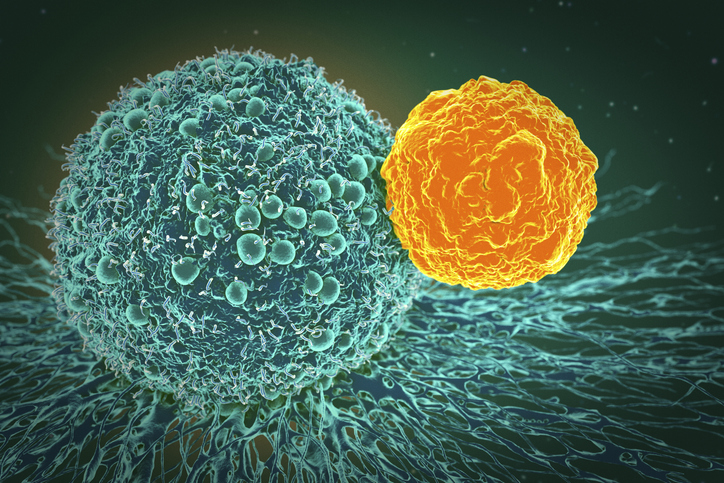
Three scientists shared the 2025 Nobel Prize in Physiology or Medicine for their contributions to the field of immunology. Earlier today, it was announced that Mary E. Brunkow, PhD, Fred Ramsdell, PhD, and Shimon Sakaguchi, MD, PhD, received this year’s award for fundamental discoveries relating to peripheral immune tolerance. The laureates identified and elucidated the activity of CD4+CD25+FOXP3+ regulatory T cells (Treg cells), which launched the field of Treg cell-mediated peripheral immune tolerance and forms the basis of efforts to develop new treatments for autoimmune disorders, cancer, and other applications.
The first key discovery was made by Sakaguchi in 1995, at a time when scientists believed that immune tolerance developed due to harmful immune cells being eliminated in the thymus through a process dubbed central tolerance. Working at the Aichi Cancer Center Research Institute in Nagoya, Japan, Sakaguchi revealed what at the time was a previously unknown class of immune cells that protected the body from autoimmune diseases. Specifically, he and his team showed that CD4+ T lymphocytes that expressed CD25 functioned as regulators of the immune systems.
Sakaguchi was inspired by earlier experiments which showed that mice that had their thymuses removed three days after birth had overactive immune systems that led to the development of various autoimmune diseases. Back in the 1980s, he had isolated and injected T cells into mice that lacked a thymus and observed that there appeared to be T cells that could protect from autoimmune diseases. In later experiments, Sakaguchi used helper T cells, which have CD4 protein on their surface, to try to wake up the mice immune system. Their failure to do so led Sakaguchi to believe that there had to be different types of CD4 bearing T cells. This led to the discovery described in his seminal 1995 paper of a new class of T cells—ultimately dubbed regulatory T cells—that carry both CD4 and CD25 proteins on their surface.
Brunkow and Ramsdell’s work offered supporting evidence of the existence of regulatory T cells. Working at the time in Celltech Chiroscience in Bothell, WA, they both became interested in studying the so-called scurfy mouse strain—male mice with a mutation that causes them to develop a particular autoimmune disease. Brunkow and Ramsdell were interested in the molecular mechanisms underlying the disease, believing it could provide insights into how autoimmune diseases arise. They were able to demonstrate that these mice have a mutation in a gene that they named the Forkhead box P3 (Foxp3) gene. In 2001, they published a Nature Genetics paper revealing that mutations in the human equivalent of this gene caused a rare autoimmune disease dubbed immunodysregulation polyendocrinopathy enteropathy X-linked (IPEX) syndrome and also explained the disease in scurfy mice.
Two years after Brunkow and Ramsdel published their work, Sakaguchi proved that Foxp3 was selectively expressed in CD4+CD25+ T lymphocytes and that using retroviruses to transfer Foxp3 converted conventional CD4+T cells to the T cells he had previously identified. His research showed that these cells, now known as regulatory T cells, act as security guards for other immune cells and prevent them from harming the body.
Today, there are more than 200 clinical trials involving regulatory T cells with the aim of treating diseases such as asthma, inflammatory bowel disease, skin disorders, and to improve organ transplantation outcomes. For example, by mapping tumors, scientists have shown how these cancerous cells can recruit regulatory T cells to protect them from the immune system, and they are exploring ways to block this activity so that the immune system can effectively attack tumors. Some efforts in the autoimmune disease space are focused on promoting the formation of regulatory T cells. In some pilot studies, patients are being given doses of interleukin-2 to help their regulatory T cells thrive, while others are exploring whether this same treatment can prevent organ rejection after transplantation. Lastly, the identification of CCR8 protein on tumor-infiltrating Treg cells has led to the development and testing of monoclonal antibodies capable of targeting them.
Brunkow is currently a senior program manager at the Institute for Systems Biology in Seattle, WA. Ramsdell is a scientific advisor for Sonoma Biotherapeutics in San Francisco, CA. Sakaguchi is a distinguished professor at the Immunology Frontier Research Center at Osaka University in Japan. During the announcement of the prize this morning, Thomas Perlmann, secretary general of the Nobel committee, said that he was unable to reach Brunkow and Ramsdell but had left messages for both to call him back. He also said that he had reached and spoken with Sakaguchi who he stated was “incredibly grateful and said it was a fantastic honor.”
