Creatine has long been popular in niche workout communities, but it’s getting more mainstream attention these days, and for good reason. “The benefits of creatine go well beyond just muscle and strength,” says Michael Ormsbee, PhD, director of the Florida State University Institute of Sports Sciences and Medicine in Tallahassee, Florida.
“Creatine is a naturally occurring compound made from three amino acids — arginine, glycine, and methionine,” Dr. Ormsbee says. Your muscles store a form of creatine and use it to make adenosine triphosphate (ATP), your body’s main energy source during high-intensity, short-duration activities like sprinting or lifting, he explains.
For high-intensity workouts like heavy weight lifting or sprinting, some people use creatine supplements to build muscle and improve stamina. But, a growing body of research suggests that creatine may support more than just muscles. It may also improve memory, focus, and overall brain function, since ATP fuels the brain as well. And emerging evidence suggests that it could support brain health, energy levels, and healthy aging.
How to Get Creatine Naturally: 8 Foods to Try
“We obtain creatine primarily from consuming it in food or supplement form, and the rest is produced by the liver and kidneys,” says Marita Radloff, RDN, a sports-focused dietitian in private practice in Omaha, Nebraska.
Your body naturally produces half, or 1 to 2 grams (g), of the creatine your body needs each day. Most people get the other half from their diet. There’s no official recommendation in terms of how much you should get from food or supplements (the Dietary Guidelines for Americans from the U.S. the Department of Agriculture does not recommend a minimum or maximum intake), but both Radloff and Ormsbee say that consuming between 3 and 5 g daily is the amount typically shown to enhance athletic performance.
Radloff points out that people who eat plant-based or lower-protein diets may benefit from creatine supplementation, since they don’t get as much of it in their diets.
But if you’re not a vegetarian and would rather boost your creatine intake through your diet, certain foods can help get you there faster. “Getting creatine from food means you’re also getting other nutrients — protein, B-vitamins, iron, zinc, and healthy fats, depending on the source,” Ormsbee says.
Here are eight foods to try if you’re trying to get more creatine.
1. Cod
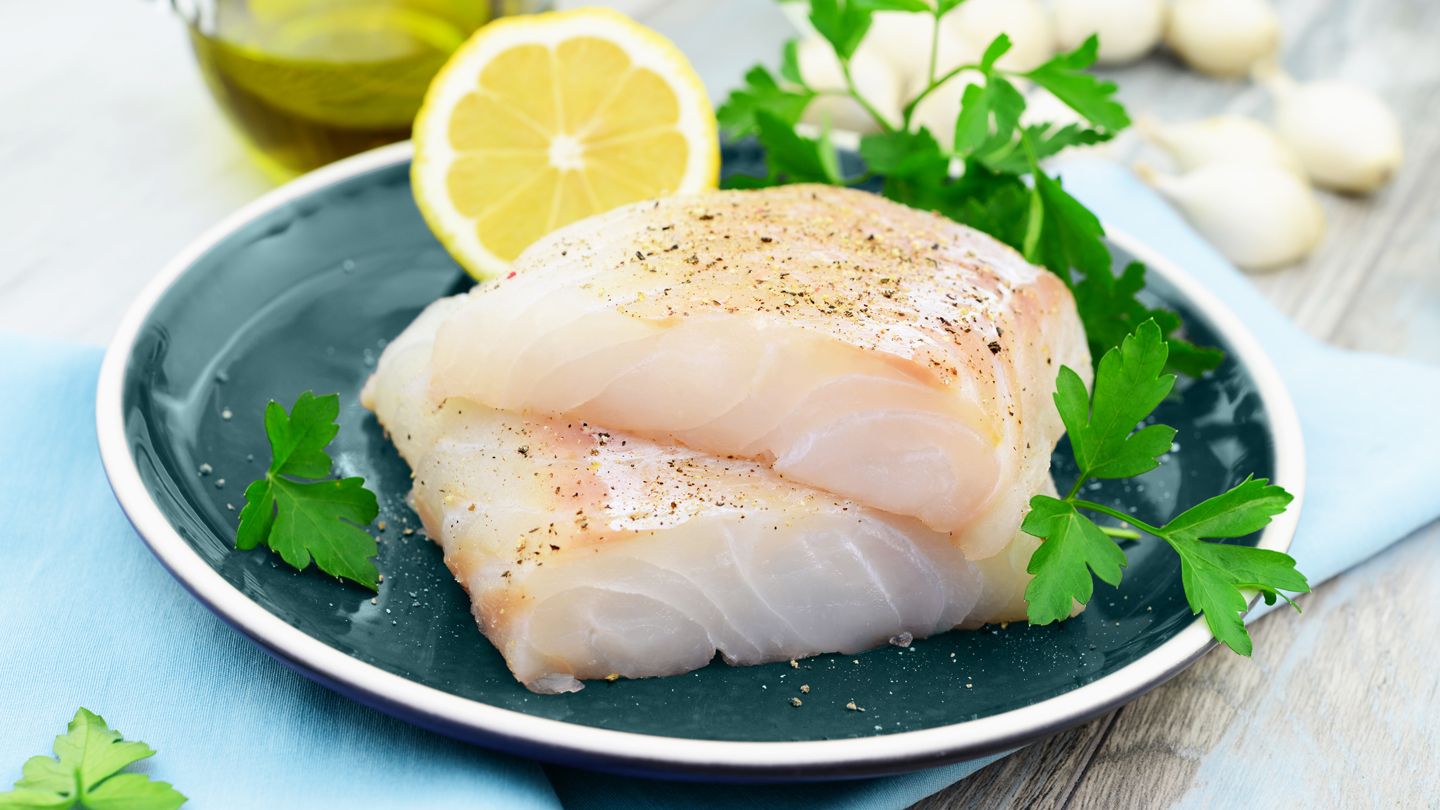
Cod contains 1.4 g of creatine per pound, so you’ll get roughly 0.35 g of creatine in a 4-ounce (oz) serving of cod. In addition to being a natural creatine source, cod is high in selenium, which supports thyroid function. It’s also high in protein, with 15.1 g per 3-oz serving.
Cod contains less mercury than some other types of fish. This makes it a healthy type of fish to eat regularly, according to the most recent dietary guidelines jointly published by the U.S. Department of Agriculture and the U.S. Department of Health and Human Services, since consuming too much mercury over a long period of time can damage the brain, kidneys, and nervous system.
2. Beef
With 2 g of creatine per pound and 0.5 g per 4-oz serving (measured raw), beef is a convenient way to boost your creatine intake.
It’s best to opt for lean cuts such as top round, sirloin, or tenderloin. Too much saturated fat is linked to an increased risk of heart disease, so the Dietary Guidelines for Americans recommends limiting your intake to no more than 10 percent of your daily calories. If you eat 2,000 calories per day, that’s around 22 g. A 4-oz lean sirloin steak with the fat trimmed off has 1.57 g of saturated fat, which makes it a healthy choice.
3. Herring
A small, oily fish that’s popular in Northern European cuisines and is often served pickled, herring is one of the best food sources when it comes to creatine. A pound of herring contains between 3 and 4.5 g of creatine.
“Herring are in the oily fish family, which means they are high in omega-3 fatty acids and are a good source of vitamin D,” Radloff says. Vitamin D content is especially helpful in the winter months, when decreased sun exposure means that the body produces less of the micronutrient on its own. And although herring is relatively high in fat, with 7.68 g per 3-oz serving, only 1.73 g are from saturated fat. The remaining amount is from unsaturated fat, which supports heart health.
4. Pork
Pork is a good source of thiamin (vitamin B1), which is important for the energy metabolism that supports cell growth and function, Radloff says.
A 4-oz serving also delivers about 0.58 g of creatine. Lean cuts like pork loin are low in saturated fat, with just 1.41 g per 4-oz serving.
5. Salmon
Salmon often gets touted as a great source of omega-3 fatty acids, which are known for supporting heart health, improving brain function, and helping the body manage inflammation. And it’s true — 3 oz of cooked Atlantic salmon contains a total of about 1.8 g of omega-3s, which is more than the minimum recommended daily intake.
Salmon is also a great dietary source of creatine, with a 4-oz serving packing 0.5 g. Because salmon is a low-mercury fish, the U.S. Food and Drug Administration (FDA) and the U.S. Environmental Protection Agency (EPA) recommend eating up to two or three servings per week.
6. Tuna
Sold raw or precooked in shelf-stable cans, tuna can be a convenient and budget-friendly way to include seafood in your diet. A 4-oz serving of raw tuna contains 0.45 g of creatine.
Tuna is high in selenium, which supports thyroid health, hormone metabolism, and reproductive health. It’s also got vitamin B12, which supports nervous system function and red blood cell formation. But it’s best to limit your tuna consumption to no more than one serving per week, due to its mercury content, according to the FDA and the EPA.
7. Chicken
Boneless chicken contains roughly 0.46 g of creatine per 4 oz of raw meat. In that same serving, you’ll also get 25.4 g of protein, along with just 2.96 g of fat, only 0.64 g of which are saturated.
“Including lean protein sources like chicken in your diet helps build muscle, supports your metabolism, aids red blood cell production, and protects your brain and heart,” Ormsbee says.
8. Plaice
A lean, flat fish commonly eaten in Northern European countries, plaice is another good source of creatine, with about 0.23 g per 4 oz. “High in protein and low in fat, this is a great option for those counting calories but looking to increase protein to preserve muscle,” Radloff says.
A serving of plaice (100 g of raw fish) contains 91 calories, 1.19 g of fat, and 18.84 g of protein. You can sauté, grill, or poach plaice for a fast meal, as it cooks quickly in about four to five minutes.
The Takeaway
Your body naturally produces about 1 to 2 g of creatine per day, and most people typically get another 1 to 2 g from their diet.
Adding a supplemental 3 to 5 g of creatine may provide some benefits in terms of muscle strengthening, muscle building, and cognitive improvements, but more research is needed to better understand how creatine benefits different groups of people.
Health experts say it’s better to increase your creatine consumption through your diet instead of with supplements, and they recommend eating cod, beef, herring, pork, salmon, tuna, chicken, and plaice to get more creatine.