

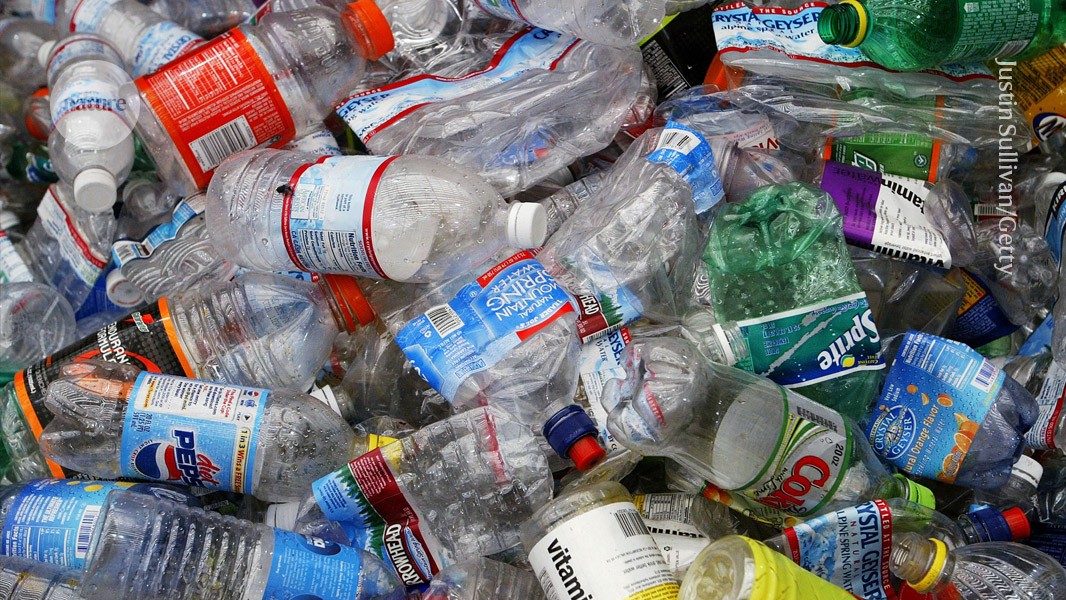
Global consumption of plastics is on the rise, but only a small percentage of plastic waste is recycled. Credit: Justin Sullivan/Getty
Crucial negotiations on what would have been the first ever global agreement to limit plastic pollution collapsed last month amid acrimony and distrust. This week, hopes for an agreement suffered another blow when Ecuador’s ambassador Luis Vayas Valdivieso resigned as chair of the intergovernmental negotiating committee (INC) for the treaty.
Plastics pollution is surging — the planned UN treaty to curb it must be ambitious
At the last INC meeting, held in Geneva in August, negotiations ran long into the night, but ended without success. It is unclear whether a new chair will convene another INC meeting, or opt to end the process ends without a treaty. The United Nations Environment Programme (UNEP) — the body overseeing negotiations — will meet in Nairobi in December to address this question.
Nature spoke to Samuel Winton, a researcher at University of Portsmouth, UK, who is studying the treaty’s progress, about what went wrong, and what can be done to salvage a process that aims to end one of humanity’s biggest blights on the planet.
Why do we need a global treaty to end plastic pollution?
Plastic is a global supply chain, and we see frequently in policy that when interventions target a single part of the supply chain in a single country, their impact is very minimal. For example, a plastic bag ban, whether it’s successful or not, is a relatively small impact. A global treaty gives countries the opportunity to work strategically together to take genuinely meaningful action. I am still convinced, despite the challenges of this process, that a plastics treaty is essential.
How significant is it that Ambassador Vayas Valdivieso resigned?
It’s a very big deal. The role of the chair in these processes is critically important because they set the work plan, they direct the discussions. Having a different person chairing the next meeting — assuming there is one — will have a big impact on how those talks progress.
So what would be the best case scenario now?
We have to be ambitious, but realistic. I don’t think it is realistic — and I’m not convinced it is necessary — to say we are going to cap plastic production at a certain level by a certain date. My ambition would be for there to be a globally enforced environment whereby, with the use of alternative business models or products, the market chooses to adopt those regardless of a ban on certain plastics. That could be regulations that encourage reuse and refill, or regulations that help businesses move to alternative models that reduce the amount of plastic that’s being used.

Samuel Winton is studying the development and outcomes of the UN treaty on plastic pollution.Credit: University of Portsmouth
Have the negotiations achieved anything positive so far?
There has been a lot of progress among the High Ambition Coalition of countries (a group that includes the European Union, United Kingdom and more than 50 other nations) in understanding where each other’s red lines are and how countries could work together. And we are seeing movement from countries like China to a more moderate position. But there are others, such as Saudi Arabia, Iran and Russia — the ‘like-minded group’ — whose positions haven’t moved at all.
Where a process works on consensus and you have a few countries refusing to move on certain things, it becomes very difficult to make progress. Another barrier to progress is a lack of more strategic efforts to move the process forward. The high ambition coalition, for example, have stated that they are not a negotiating block. A genuine negotiating block could have helped achieve some more progress than we’ve seen.
What now needs to happen to get a treaty over the line?
We need to get to a point where countries and the leadership of the process can work together to resolve the current deadlock. There will be many people that tell you that the way to do that is a voting mechanism, and that would be wonderful. However, a number of countries and UNEP themselves are strongly opposed to the introduction of voting, so that looks very challenging.
