

Collecting sperm from unexpected animals, this postdoc uncovers evolutionary insights that inform contraceptive development and reproductive health research.
Q | Write a brief introduction to yourself including the lab you work in and your research background.
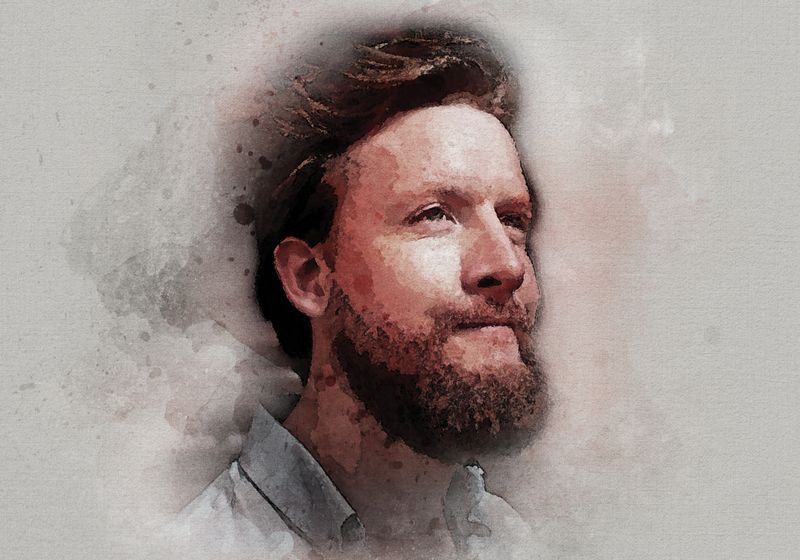
I’m David Skerrett-Byrne, a postdoc at Helmholtz Munich, exploring how a father’s life experiences can shape pregnancy and the health of the next generation through sperm epigenetics. From crocodiles to koalas, my work spans species, but the goal is clear: to understand sperm, improve fertility, and create fairer options for family planning.
Q | How did you first get interested in science and/or your field of research?
I grew up endlessly curious about how things worked, which drew me into biology and engineering. I started out studying cancer, and then, thanks to one of life’s career plot twists, found myself in Queensland face-to-face with an 800 kg crocodile…to check out his sperm. That moment opened the door to the wild and complex world of reproductive biology.
Since then, my central research has been a feminist endeavor: to shift the burden of reproductive responsibility, which has for too long fallen disproportionately on women, toward a shared model where men actively participate in family planning. To achieve this, I’m actively interested in developing male contraceptives, understanding what determines healthy sperm, and examining how our ever-changing environment and lifestyles affect sperm epigenetics, which in turn shapes the health trajectory of the next generation.
Q | Tell us about your favorite research project you’re working on.
My favorite project is developing a safe, reversible male contraceptive. Right now, the responsibility for family planning falls disproportionately on women, who bear most of the physical, emotional, and financial costs. Yet male-factor infertility accounts for over half of all cases, and sperm counts are in long-term decline, demonstrating that male reproductive health needs more attention.
Our approach starts with understanding the molecular switches that make sperm fertile, and how to temporarily turn them off without harming long-term reproductive potential. I envision, men will take a short-acting oral pill 1-2 hours prior to sex, effective “switching sperm off.” If we succeed, we’ll not only give men a seat at the reproductive health table, but we’ll help couples share responsibility more equally.
Q | What do you find most exciting about your research project?
Some of my most memorable days have been in the field, collecting sperm from animals you’d never expect, such as crocodiles, koalas, and echidnas, to name a few. These projects not only make for great stories, they also deepen our understanding of sperm biology across species, giving us new insights into human fertility and evolution.
Equally exciting is the moment in the lab when data click into place and you realize you’re seeing something for the first time. In my case, that’s been uncovering thousands of previously unknown sperm proteins, mapping their functions, and linking them to fertility potential.
Science has also taken me to conferences and collaborations around the world, where I’ve met people whose ideas and perspectives have shaped my own research. But the real thrill? Knowing our work could directly improve fertility care and create new contraceptive options, changes that would impact millions of lives.
Q | If you could be a laboratory instrument, which one would you be and why?
I would have to be a mass spectrometer, part detective, part storyteller. I take a chaotic mix of molecules and piece together their identities, uncovering hidden connections. Like me, a mass spec is curious, a bit obsessive, and has a knack for seeing what others miss.
It is also a bridge-builder, linking biology, chemistry, and medicine. While handling everything from pristine samples to the biochemical equivalent of swamp water. That versatility mirrors my own journey, from cancer biology to crocodile sperm.
Most importantly, mass spectrometers are the heart of my research. They turn invisible molecular marks on sperm into hard data, revealing how a father’s experiences might echo into the next generation. If I’m going to be any piece of equipment, I want to be the one that uncovers the stories biology doesn’t tell you outright.
Are you a researcher who would like to be featured in the “Postdoc Portraits” series? Send in your application here.
