

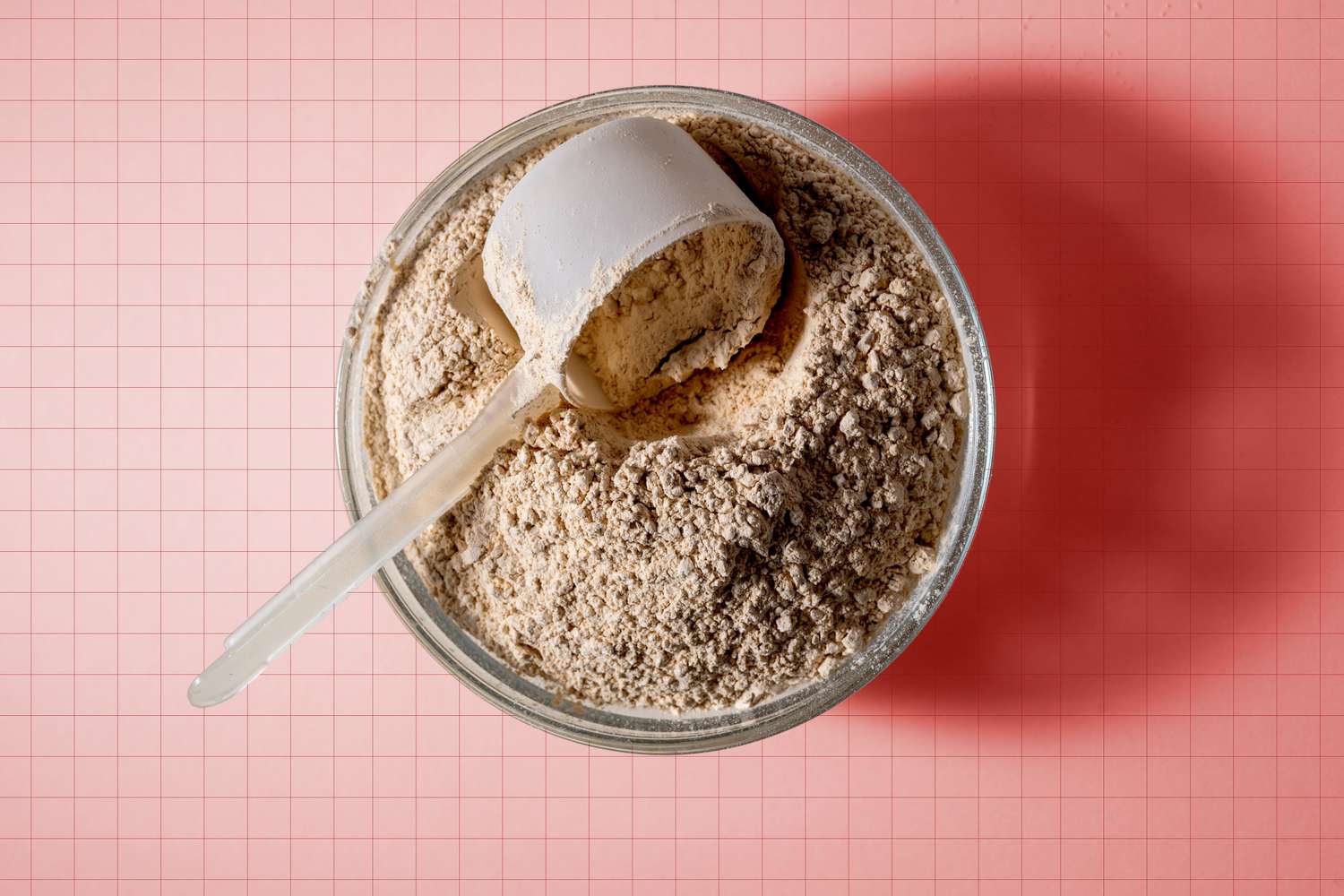
- Protein powder is a simple, convenient way to add protein to your day.
- Consumer Reports found that many brands of protein powder and drinks contain high levels of lead.
- Try to get most of your protein from whole foods.
Protein powder is an easy, convenient way to add more muscle-building protein to your day. It blends easily into smoothies, oatmeal and more. We add protein powder to our High-Protein Blueberry & Peanut Butter Chia Pudding, our High-Protein Orange-Mango Smoothie and our Chocolate-Strawberry Baked Oats. You can even turn dessert into a high-protein post-workout snack with our Lemon-Blueberry Cheesecake Jars.
Yes, protein powder is definitely convenient. But is it safe? After all, it’s not regulated by the Food & Drug Administration (FDA), at least not before hitting the shelves, since the FDA leaves it up to the manufacturers and distributors of protein powders and other supplements to do their own testing to evaluate the safety and integrity of ingredients. Consumer Reports decided to see for themself just how safe protein powders are—particularly regarding heavy metal content—and they just published their findings. Let’s break down what they found.
How Was This Study Conducted?
Chemists and food safety researchers for Consumer Reports collected two to three samples at different times of 23 different protein powders and ready-to-drink protein supplements. They purchased these samples from various retailers in New York and online between November 2024 and January 2025.
Each sample was placed into a brown polyethylene jar and blind-coded to protect its identity. They were then shipped to an independent, accredited lab for testing, where strict industry-standard guidelines were followed to prevent contamination and avoid bias in results.
Each sample was tested for total arsenic, cadmium, lead, mercury, aluminum, boron, barium, beryllium, calcium, cobalt, copper, iron, potassium, lithium, magnesium, manganese, molybdenum, sodium, nickel, strontium, thallium, vanadium and zinc.
Researchers were presented with a challenge in determining what a high level of heavy metal is, because U.S. governing agencies haven’t set safe upper limits for many of them. For example, the FDA has health-based exposure limits for lead, but only for children and women of childbearing age. There are no upper safety limits for male and female adults. So they used California’s Proposition 65 law, which sets maximum allowable dose levels (MADL) as the Consumer Reports benchmark for levels of concern for lead, which is 0.5 mcg/day.
Consumer Reports notes, however, that their results are meant to only provide guidance on which products have comparatively higher levels of lead, not to identify the point at which lead exposure will have measurable harmful health effects.
What Did This Study Find?
Out of the 23 protein powders and drinks analyzed, over two-thirds had levels of lead in just one serving that were higher than what Consumer Reports’ food safety scientists suggest anyone should be consuming in a day. (The Consumer Reports level of concern for lead was 0.5 mcg/day, based on California’s Proposition 65). They made the following recommendations based on their findings:
- Do not consume: Naked Nutrition’s Vegan Mass Gainer (1,572% higher levels of lead than Consumer Reports’ level of concern for lead) and Huel Black Edition (1,288% higher).
- Limit to one serving per week: Garden of Life Sport Organic Plant-Based Protein (564% higher), Momentous 100% Plant Protein (476% higher)
- OK to eat occasionally (limit to 2 ¾ to 6 ¼ servings per week): MuscleMeds Carnivore Mass (247% higher), Optimum Nutrition Serious Mass (202% higher), Jocko Fuel Mölk Protein Shake (199% higher), Vega Premium Sport Plant-Based Protein (185% higher), Quest Protein Shake (161% higher), Orgain Organic Plant-Based Protein Powder (143% higher), Optimum Nutrition Gold Standard Protein Shake (150% higher), Equip Foods Prime Protein (144% higher), Plant Fusion Complete Protein (140% higher), Ensure Plant-Based Protein Nutrition Shake (132% higher), Muscle Milk Pro Advanced Nutrition Protein Shake (128% higher), KOS Organic Superfood Plant Protein (112% higher)
- Better for daily consumption (limit to 1 to 4 servings daily): Owyn Pro Elite High Protein Shake (88% higher), Transparent Labs Mass Gainer (87% higher), Optimum Nutrition Gold Standard 100% Whey (56% higher), BSN Syntha-6 Protein Powder (46% higher), Momentous Whey Protein Isolate (30% higher), Dymatize Super Mass Gainer (25% higher)
The only protein powder tested to have no detectable lead was Muscle Tech’s 100% Mass Gainer.
It’s important to note that some of the companies have already changed their formulations, and at least two of the products tested are no longer available for sale; CR included them in the results since some people may still be using them. One of the brands is Vega, which changed the product name to Vega Protein + Recovery and now sources its pea protein from the U.S. instead of China. And Momentum did a major overhaul of its product line-up, claiming that they’re sourcing cleaner ingredients for their dairy- and plant-based formulations.
As with any study that tests food, there is always a possibility of contamination of the test samples, inaccuracies with test equipment and human error.
How Does This Apply to Real Life?
You may be surprised to see that even the plant-based and organic protein powders had high levels of lead. In fact, the lead levels in the plant-based products were, on average, nine times the amount found in those made with dairy proteins, like whey, and twice as much as beef-based ones. This is because plants absorb nutrients from the soil they’re grown in. If the soil contains lead, the plant will, too.
It’s worth noting that these protein powders have not been recalled. And many of the manufacturers of the brands that were tested refute the CR results, stating that they have their products independently tested for safety and purity. The Council for Responsible Nutrition, a trade organization for companies that produce supplements, suggested in a statement that consuming some heavy metals “does not equate” to a health risk. Still, some research suggests that regular exposure to high levels of lead can be detrimental to adults.
Ultimately, it’s up to you, as the consumer, to decide how much risk you’re willing to take with any product, taking all the information you’ve got into consideration. Regarding protein, it’s pretty easy to get enough of this muscle-building macronutrient through food, without using protein powder or drinks. Check out our 30-Day High-Protein Meal Plan for Beginners for some tasty inspiration.
Our Expert Take
A new study from Consumer Reports suggests that most protein powders contain some level of lead, with some of them coming in at extremely high levels. We recommend avoiding ones with the highest levels and limiting the others with lower amounts. You could also skip the store-bought protein powder and make your own with three simple ingredients: chia seeds, hemp seeds and raw pepitas. We also recommend trying to get your protein from whole foods as much as possible.
