

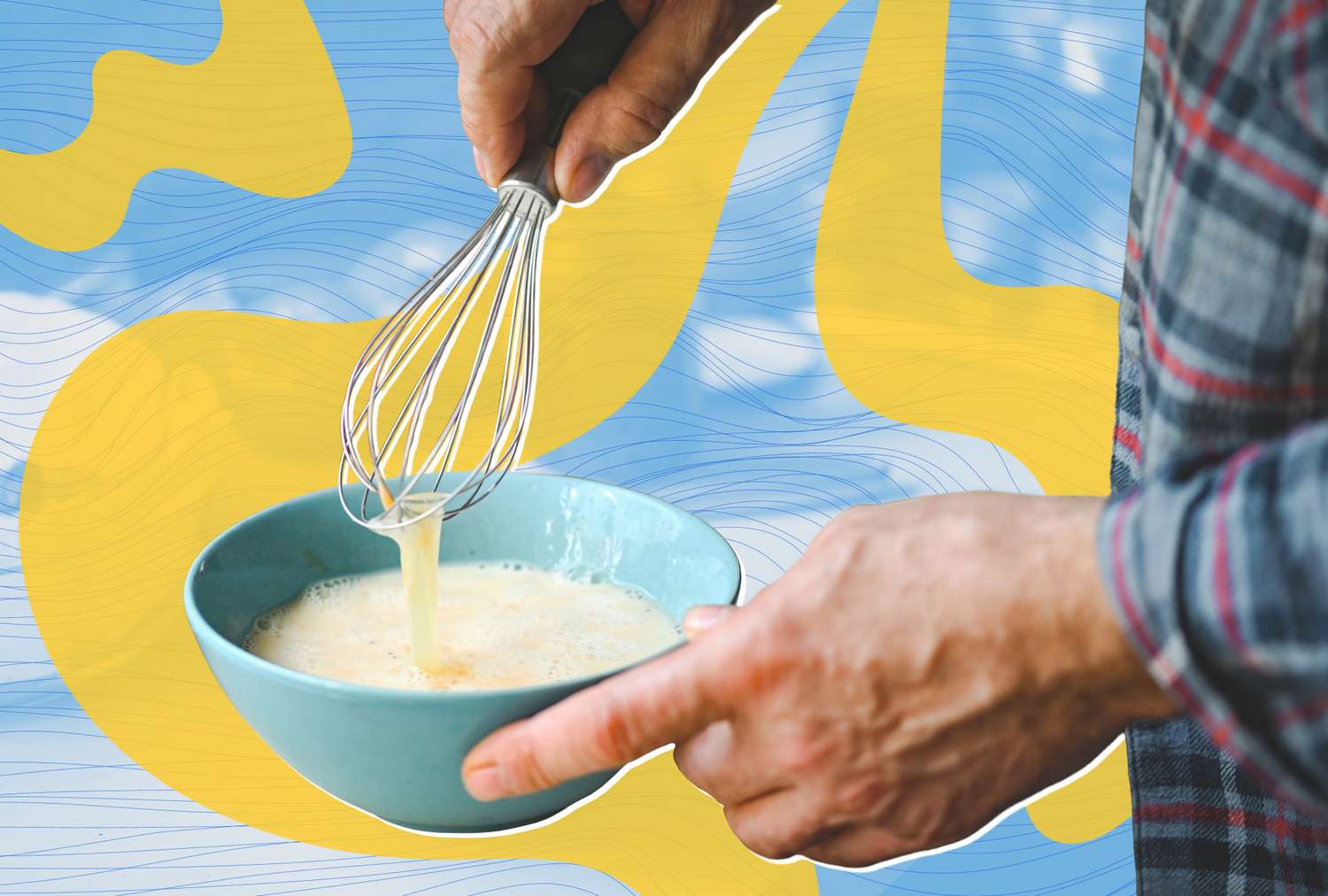
- Adding a small splash of water to scrambled eggs creates steam that makes them lighter, fluffier and more tender.
- Unlike milk or cream, water doesn’t dull the eggs’ flavor, letting their natural taste and golden color shine through.
- Use about 1 to 2 teaspoons of water per egg and cook gently over medium heat for soft, silky curds.
Scrambled eggs are one of those deceptively simple dishes that inspire strong opinions. Do you whisk them gently or vigorously? Cook them low and slow or fast and hot? Every cook seems to have a technique they swear by. For me, the best trick I can share came from my grandmother, a woman who knew how to make something out of nothing.
Born in Montgomery, Alabama, in 1924, Marjorie Teel was the oldest girl of 11 siblings. I knew her as a lover of Ralph Lauren whose signature scent was Oscar de la Renta’s namesake perfume. But having grown up during the Great Depression in a family where resources were tight and every bit of food had to stretch, she, like many of her generation, practiced a frugality with food that persisted throughout her life. “She didn’t like to admit this,” says my Great Aunt Cynthia, her youngest sister, “but we were poor.”
When it came to eggs, her secret to a guaranteed fluffy scramble was practically free: a splash of water straight from the tap.
Why Water Works So Well in Scrambled Eggs
For many, adding a splash of milk or cream when scrambling eggs is a standard practice, on the grounds that mixing them yields a rich scramble. But dairy doesn’t always do eggs justice. Milk and cream add fat and sugar, which dilutes the flavor (and color) of the eggs themselves and can yield a flabby, flat-tasting scramble.
Adding just a splash of water instead creates steam as the eggs cook. That steam expands inside the curds, yielding scrambled eggs that are lighter and more tender than those made without it. This technique is also favored by Dolly Parton, indicating that it could be a kitchen cheat code among glamorous Southern women who grew up poor.
For my grandmother, avoiding milk was at one time a matter of necessity, but as it turns out, her approach taps into some serious food science.
The Science of a Scramble
According to Harold McGee in On Food and Cooking: The Science and Lore of the Kitchen, egg whites are a combination of water (about 90%) and protein, while egg yolks are a mix of protein, lipids (fat) and water. Whisking them into a scramble yields a mix of all three.
When heated, the egg proteins begin to change, first unfolding and then solidifying into a webby matrix. Too much heat, and they lock up into a dense, rubbery mass of curds so tight they’ll continue to toughen, squeezing water out of suspension, even once out of the pan, leaving a puddle of water on the plate. That’s why so many recipes recommend cooking scrambled eggs gently, over low heat.
The idea behind adding milk, cream or even mayonnaise is that the added fat helps coat the proteins in the eggs, and McGee is clear that adding any liquid “will dilute the egg proteins and make the [scrambled] eggs more tender.” The act of diluting the proteins in the eggs creates a buffer that helps slow down the coagulation process so the proteins set into a tender network that can actually hold the inherent water in suspension and yield fluffy results. It’s the same principle that helps baked goods puff up when liquid in the batter or dough turns to vapor in the oven.
The drawback to using dairy is that it can dull the flavor of the eggs. As long as you’re cooking them with some fat in the pan and over low or medium heat, adding water on its own does much the same job, but with more steam, which means lighter, fluffier eggs. Plus, without dairy mixed in, eggs taste eggier and cook up more golden, the fat in the pan a foil to let their natural flavor shine.
How to Make the Fluffiest Scrambled Eggs
Marjorie’s technique is so simple I would hardly call it a recipe. Start by cracking a few eggs into a bowl. Add a splash of cool water, right from the tap, about a teaspoon or two per egg, but I’ve never measured it and she definitely didn’t either. Season the eggs with salt and pepper. Whisk them together (or, let’s be honest, beat them with a fork) until basically uniform, and then cook them over medium heat in whatever fat and whatever type of pan you like, stirring occasionally with a spatula to form juicy folds and fluffy curds. I like to pull them from the heat while they’re still shiny, so they don’t overcook.
This recipe is more about the ingredients than the technique, and I can vouch that it works whether you cook them low and slow in a nonstick pan or you prefer to heat up your cast-iron skillet or a stainless-steel pan to cook them hot and fast, though I wouldn’t recommend climbing above medium heat because of the aforementioned seizing of the proteins. Nobody likes a wet scramble.
Though I don’t think you should necessarily measure the water for your scramble, I do think it’s possible to overshoot it. More than a tablespoon per egg and your eggs may turn out soggy and insipid. Aim for a teaspoon or two per egg.
I use this method every time I make scrambled eggs, though I now like to add a couple of final flourishes. A drizzle of extra-virgin olive oil at the end lends a peppery richness, and a pinch of flaky sea salt on top makes them sing.
A Generational Lesson
As a cook, my tendency is to always do more, add more or try more, sort of a meal-maxxing approach to recipe development and cooking in general. This is precisely why I’m eager to share this little tip, gleaned not from a big showy meal but from sitting at the kitchen table while my grandmother cooked breakfast and updated me on the family gossip in her kitchen that, invariably, smelled of ripe cantaloupe, bacon grease and Oscar de la Renta.
The Bottom Line
If your scrambled eggs have ever turned out dense, rubbery or bland, skip the dairy and reach toward the tap instead. Adding a splash of water to your scramble costs practically nothing and makes scrambled eggs taste like the best version of themselves.
