
Close Menu
My Blog

    Subscribe to Updates

    Get the latest creative news from FooBar about art, design and business.

    What's Hot

    Nautilus debuts Voyager platform in push toward next-gen proteomics

    March 1, 2026

    First-in-Human Success for Prenatal Stem Cell Therapy in Spina Bifida

    February 28, 2026

    Pressure-Driven Pathway Links Liver Congestion to Fibrosis and Cancer

    February 28, 2026
    Facebook X (Twitter) Instagram
    X (Twitter) YouTube
    My BlogMy Blog
    Sunday, March 1
    • Home
    • About Us
    • Healthy Living
    • DNA & Genetics
    • Podcast
    • Shop
    My Blog
    Home»DNA & Genetics»CRATERs: Key Indicators Of Immunotherapy Success In Cancer
    DNA & Genetics

    CRATERs: Key Indicators Of Immunotherapy Success In Cancer

    adminBy adminOctober 17, 2025No Comments3 Mins Read
    Facebook Twitter Pinterest LinkedIn Tumblr WhatsApp VKontakte Email
    The Scientist Logo
    Share
    Facebook Twitter LinkedIn Pinterest Email

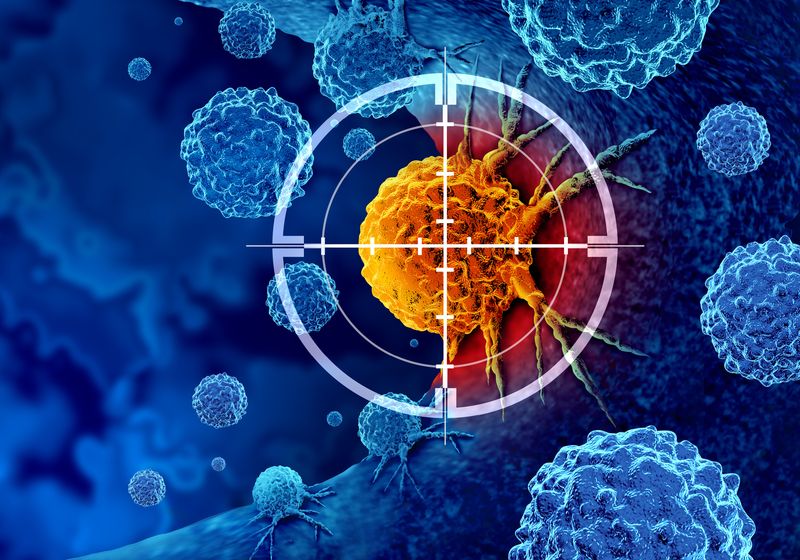
    Sites on melanoma tumors help T cells bind to the cancer cells to exert their cytotoxic effects.

    Image credit:© iStock.com, wildpixel

    Immune checkpoint blockade therapy relies on releasing a natural brake in the immune system to fight cancer. This therapy activates the body’s CD8+ cytotoxic T cells, which mount an attack against tumors. However, scientists did not fully understand what facilitates tumor killing by T cells.

    A 3D image of a melanoma tumor (red) growing between the scales of a zebrafish with T cells (green). The T cells home into the black pockets on the melanoma surface called CRATERs.

    Aya Ludin (Ludin et al. Zon)

    To investigate this, researchers led by Leonard Zon, a cancer and stem cell biologist at Harvard University, tracked T cells in a zebrafish model of melanoma. Their results, published in Cell, describe that T cells aggregate in certain pockets on the cancer cell surface to form prolonged interactions to kill the cells.1 These domains—that the researchers called Cancer Regions of Antigen presentation and T cell Engagement and Retention (CRATERs)—could be used to indicate immunotherapy success in patients.

    To examine the interaction between CD8+ T cells and melanoma, Zon and his team generated a zebrafish line wherein the immune cells expressed green fluorescent protein. They then introduced mutations that drove melanoma formation in these zebrafish.

    Continue reading below…

    Time-lapse microscopy revealed that CD8+ T cells gathered in specific regions on the melanoma surface. The researchers tracked the cellular dynamics in three dimensions over 15 to 20 hours and observed that the T cells lingered in these CRATERs and engaged with melanoma cells for many hours.

    High-resolution spatial transcriptomics helped Zon and his team characterize the genetic landscape of CRATERs. Compared to other cell surface areas, CRATERs showed elevated expression of a gene encoding a protein that helps CD8+ T cells recognize tumors and sustain interactions between the two cell types.

    Blue- and green-colored dots against a black background depicting a melanoma tumor with CRATERs on its surface, where T cells localize.

    A 3D image of a melanoma tumor (blue) growing between the scales of a zebrafish. T cells (yellow) aggregate inside pockets on the melanoma surface called CRATERs.

    Aya Ludin (Ludin et al. Zon)

    Next, the researchers treated zebrafish with an immunotherapeutic drug. Compared to controls, immunotherapy significantly increased the cell surface area covered by CRATERs, and consequently CD8+ T cell localization on cancer cells. Assaying DNA fragmentation, a hallmark of apoptosis, revealed that immunotherapy-treated tumors exhibited an increased number of apoptotic cells within CRATERs, indicating that CD8+ T cells gather in these pockets and promote cell death.

    Finally, Zon and his team investigated the clinical relevance of their findings. They examined human melanoma tumors using immunofluorescence and observed similar CRATER-like pockets on the cell surface. These regions contained more CD8+ T cells, indicating that the immune cells cluster within CRATERs. Samples from patients who responded well to immunotherapy had a higher CRATER density compared to those from non-responders, suggesting that the extent of CRATERs correlated with immunotherapy success.

    “Pending thorough clinical verification and taken together with other measurements, CRATERs may serve to more accurately assess the efficacy of an ongoing treatment and improve treatment outcomes,” said Zon in a press release.

    Cancer CRATERs Immunotherapy Indicators key success
    Share. Facebook Twitter Pinterest LinkedIn Tumblr WhatsApp Email
    Previous ArticleUnfulfilled At Your Corporate Job? Make The Switch To This Health-Centric Career
    Next Article What Not to Cook in a Cast-Iron Pan
    admin
    • Website

    Related Posts

    First-in-Human Success for Prenatal Stem Cell Therapy in Spina Bifida

    February 28, 2026

    Pressure-Driven Pathway Links Liver Congestion to Fibrosis and Cancer

    February 28, 2026

    A Video Report from AGBT

    February 27, 2026

    Novo Nordisk, Vivtex Ink Up to $2.1B Deal to Develop Oral Biologics for Metabolic Conditions

    February 27, 2026
    Leave A Reply Cancel Reply

    Our Picks

    9 Time-Saving Kitchen Gadgets for Fall at Amazon

    September 5, 2025

    Why Exercise Is So Important For Heart Health, From An MD

    September 5, 2025

    An Engineered Protein Helps Phagocytes Gobble Up Diseased Cells

    September 5, 2025

    How To Get Rid Of Hangnails + Causes From Experts

    September 5, 2025
    • Facebook
    • Twitter
    • Pinterest
    • Instagram
    • YouTube
    • Vimeo
    Don't Miss
    Longevity

    Nautilus debuts Voyager platform in push toward next-gen proteomics

    By adminMarch 1, 20260

    Company’s new benchtop system promises a clearer view of proteins following validation at a leading…

    First-in-Human Success for Prenatal Stem Cell Therapy in Spina Bifida

    February 28, 2026

    Pressure-Driven Pathway Links Liver Congestion to Fibrosis and Cancer

    February 28, 2026

    A cellular atlas of aging comes into focus

    February 28, 2026

    Subscribe to Updates

    Get the latest creative news from SmartMag about art & design.

    About Us

    At FineGut, our mission is simple: to enhance your self-awareness when it comes to your gut health. We believe that a healthy gut is the foundation of overall well-being, and understanding the brain–gut connection can truly transform the way you live.

    Our Picks

    9 Time-Saving Kitchen Gadgets for Fall at Amazon

    September 5, 2025

    Why Exercise Is So Important For Heart Health, From An MD

    September 5, 2025

    An Engineered Protein Helps Phagocytes Gobble Up Diseased Cells

    September 5, 2025
    Gut Health

    Nautilus debuts Voyager platform in push toward next-gen proteomics

    March 1, 2026

    First-in-Human Success for Prenatal Stem Cell Therapy in Spina Bifida

    February 28, 2026

    Pressure-Driven Pathway Links Liver Congestion to Fibrosis and Cancer

    February 28, 2026
    X (Twitter) YouTube
    • Contact us
    • Privacy Policy
    • Disclaimer
    • Terms and Conditions
    © 2026 finegut.com. Designed by Pro.

    Type above and press Enter to search. Press Esc to cancel.