

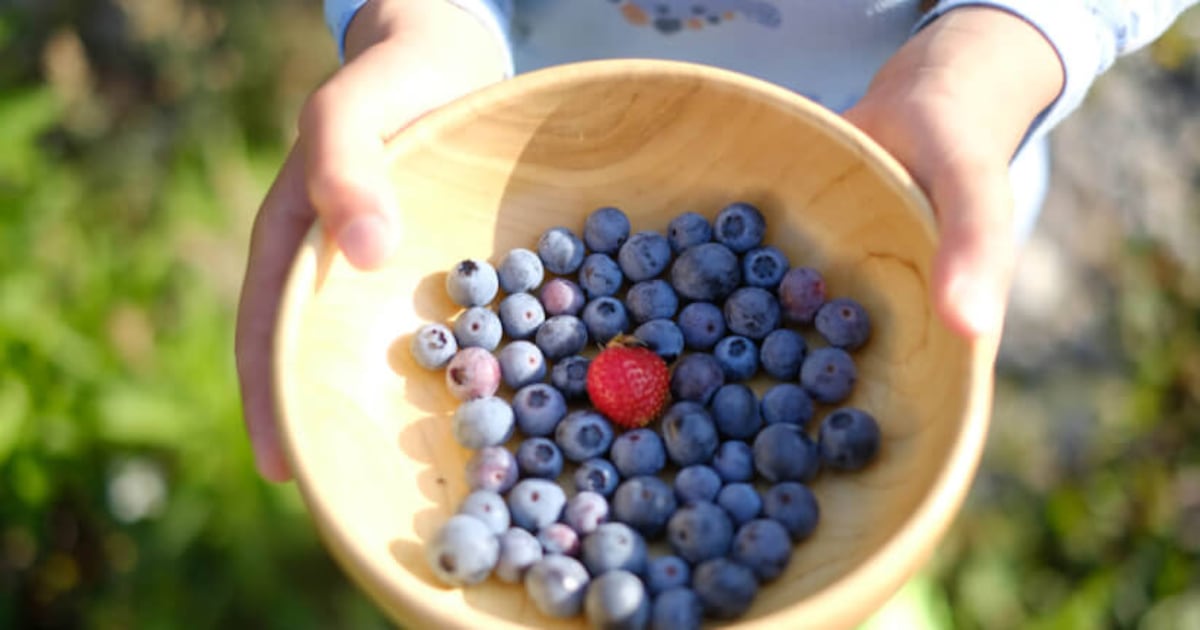
Presenting at the Berry Health Benefits Symposium in Philadelphia earlier this month, a group of international researchers explored how various berries interact with numerous body systems, particularly the microbiome, to confer these benefits.
“When we characterize the gut microbial community, we’re really trying to understand who is there and what they are doing,” said Johanna Lampe, PhD, RD, professor at the Public Health Sciences Division at the Fred Hutchinson Cancer Center. “The concentration and bioactivity of berries is actually highest in the gastrointestinal tract.”
Berry bioactivity is attributed to polyphenols called anthocyanins, which give fruits and vegetables their red, purple and blue pigments and have antioxidant properties that can support brain and heart health.
Research in mice has already shown that blueberry extract can significantly alter gene expression due to its anthocyanin content. In the future, genetic tools may be used to fine tune this gene expression to regulate anthocyanin levels in the body.
Massimo Iorizzo, PhD, professor at North Carolina State University, said modulation is important because the differences in gut microbial function among individuals is a major contributor to people’s inter-individual response to diet.
“This is why somebody seems to receive a benefit from a particular diet and another person doesn’t,” he said.
Berries and the brain
Presentations also indicated that gene expression induced by anthocyanins can invariably impact the brain.
“We can see a complex network of interactions regulating the brain function,” said Dragan Milenkovic, PhD, associate professor at the Plant for Human Health Institute at North Carolina State University. “It could be an underlying mechanism of action of a neurovascular cognitive protective effect of anthocyanins. We also can use these differentially expressed genes to identify the diseases associated with these genes.”
The association analysis carried out by Dr. Milenkovic’s team identified genes modulated by anthocyanins that are involved in Alzheimer’s, Parkinson’s and other cognitive disorders.
“This suggests that changes in the expression of genes induced by anthocyanins is opposite to what happens in the patient with Alzheimer’s, which strongly [indicates] that we are talking about an effect that will lead to less development of Alzheimer’s disease,” he said.
Notwithstanding, generalizing the effects of anthocyanins on the body, including cognition, is complicated by individual variations among people. One possible solution to understanding this variability lies in genomic data, which can identify key genes to target through precision nutrition, especially since bacterial consortia differ from person to person.
Berries play a larger role beyond increasing beneficial bacteria or even decreasing harmful ones. They may contribute to the sustained operation of vital physiological functions.
Berry scientists are pursuing this line of research, as well as investigating why some people may have bacteria considered beneficial, whereas others carry bacteria that science has yet to identify as helpful.
Understanding that microbial picture further may require examining the earliest stages of human life.
Berries in early life
Most of the variation that occurs in the gut microbiome happens during an infant’s first two years of life, said Minghua Tang, PhD, professor at the Department of Food Science and Human Nutrition at Colorado State University. By the age of three, a child’s gut microbiome more closely resembles that of an adult. Conducting nutrition interventions to promote optimal growth and development in infants during the first 24 months is essential, she said.
“Why do we care about what infants eat?” Dr. Tang asked. “The short answer is because what happens during infancy doesn’t stop there.”
Her team conducted a double blind, randomized controlled placebo trial, where breastfed infants in the experimental group consumed 10 grams daily of freeze-dried blueberry powder. The objective was to explore how consuming blueberry as first food would affect the gut microbiota.
During the intervention, the researchers collected blood, stool, urine and breastmilk samples, as well as dietary records and health histories. They found that infants in the blueberry group increased their alpha diversity—the amount and variety of microbes in the gut—where greater diversity is linked to better overall health which may follow them later in life.
Allergy and immune responses also improved among the infants. Commenting on her team’s ongoing research, Dr. Tang said: “We know that blueberry is high in dietary fiber and polyphenols, but we also want to know if there are other compounds in there that could further associate with the health outcomes.”
Berries in older adults
Berries alone may not be enough to achieve desired effects in all populations. For example, data from sedentary adults consuming blueberries showed minimal improvements in overall health. Exercise, however, may provide the needed boost. Research by Dr. Mary Ann Lila, PhD, director at the Plants for Human Health Institute at North Carolina State University, and her team found that about 45 minutes of regular walking by older adults who ate berries stimulated flavonoid metabolites through the microbiome that would then surge in the bloodstream.
Participants experienced improvements in gait, endurance and distance to the point that some people who started walking with canes stopped using them, Dr. Lila added.
Establishing a social network through group walking and stretching activities was also a key component of the three-year Eat, Move, Think study she conducted.
“Part of what makes cognition turn on for older folks is socialization,” she said. “The worst problem with dementia is when you’re lonely, when you become a widow and you’re all alone and you lose your friends group.”
One of the most profound results of the research was the improvement in processing speed for participants.
“Just a 59-millisecond improvement in visual processing doesn’t sound like anything, but that could be the difference between recognizing a stop sign or not being able to keep your driver’s license,” Dr. Lila said, noting that her team was able to link blueberry supplementation as a significant factor contributing to the study outcomes. “It was very exciting because it was a huge increase in a benefit for older folks due to a simple dietary intervention.”
Berries and gut-brain-vascular interactions
Ninety-five percent of cardiovascular health concerns occur in middle age and in older adults, and as people age, these issues become more prevalent.
Individuals who consume less fruit face a higher risk of cardiovascular disease and diabetes, and only 20% of Americans meet the recommended fruit intake—with consumption falling short across all age groups, said Shirin Hooshmand, PhD, RD, professor of nutrition at San Diego State University.
She shared that consuming one or more servings of strawberries per week has been shown to decrease the risk of dementia.
“Eighty percent of us are also worried about dementia and getting older, and we are preoccupied with that concept,” she added. “Dementia and cardiovascular disease are conditions pretty much correlated with each other, and that’s because they really have shared risk factors and common pathophysiology.”
These factors include triglycerides, a kind of fat found in the bloodstream that at high levels can increase the risk of heart disease and stroke. A study by Dr. Hooshmand and her team found triglycerides increased among participants in the control group but did not change for the experimental group consuming strawberries.

“Also, we saw changes in total antioxidant activity,” she said. “You can see that the total antioxidant activity decreased in our control group but increased in our strawberry group. We also saw changes in systolic blood pressure, which only decreased in the strawberry group.”
Hypertension, intestinal microbiota and cognitive function are interconnected through vascular, metabolic and inflammatory pathways, said Rafaela Feresin, PhD, associate professor of nutrition at Georgia State University.
“Hypertension can alter gut perfusion intestinal permeability leading to gut dysbiosis,” she said. “Gut dysbiosis can promote systemic inflammation, oxidative stress and impaired production of neuroactive metabolites. We know that gut-brain-vascular interactions form a key link between hypertension and cognitive impairment.”
Chin-Kun Wang, MD, PhD, professor at Chung Shan Medical University (CSMU) in Taiwan, noted that a combination of berries, including blueberries, may have an even greater effect on keeping dementia at bay.
