

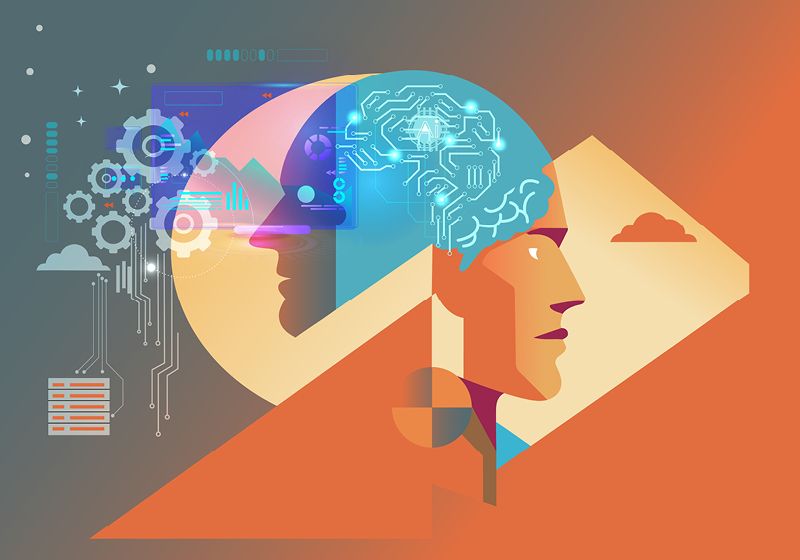
AI systems, if made more accessible and intuitive, can help scientists further their research.
Biotech research is getting more competitive by the day. The world is wrestling with climate-linked pathogens, drug-resistant microbes, and the needs of aging societies, all of which require fast, reliable answers. With questions piling up at a pace at which manual labor simply cannot keep up with, scientists need to embrace automation and AI. Most big pharmaceutical companies and reputable academic labs are engaging in this automation culture already with liquid handlers, imaging robots, or machine learning, data driven models. It is common to hear nervous jokes about machines one day pushing humans out entirely. However, robots aren’t competition; they are partners that take over the tedious parts, letting people focus on deeper, more creative thinking.1
From Scripts to Smart Labs: How Automation Evolved
Looking back even a couple of decades shows just how quickly things have changed. In the early 2000s, lab teams relied on simpler bioinformatics scripts to process sequencing data after experiments were done. By the mid-2010s, those scripts were directly linked to plate handlers, which let synthetic-biology groups run the design-build-test loop on autopilot. Today, something new is in play. Closed-loop automation with large language models (LLMs) can sift through fresh results, propose the next hypothesis in everyday language, translate it into code, and hand off the instructions to a robot. These results then flow straight back, feeding the next learning round, so what once took weeks can now happen in a single afternoon.
Apart from the relentless speed, scientists find the precision and accuracy of AI systems lucrative for clinical-stage work. For example, these continuous feedback loops can test thousands of variants overnight, while ultra-precise dispensers and inline spectrometers slice human error nearly in half. Every dispense, motion, voltage change, and software modification gets logged, which ends up providing an audit trail of the highest standard. While this can be a big investment, cloud lab concepts can give small research teams the power to rent an entire automated system just for a weekend, offering industrial muscle without the associated costs.
The Lab Bottleneck: Why Automation Isn’t Plug-and-Play
However, let’s turn our lenses and zoom in on what’s happening inside a lab really. Most of these systems today are still designed for software engineers rather than for everyday scientists. They are encrypted behind proprietary code or rely on rigid menus that break if protocols change even a little bit. The time needed to make modifications, verify accuracy, and make it fully walk-away might not pay off in terms of deadlines and effort. Especially in discovery-heavy labs, where yesterday’s methods might be old news today, spending weeks reprogramming a robot can erase any time savings. Vision systems can spot a single misshapen colony in a sea of wells, and machine learning can catch subtle anomalies invisible to the eye. But these tools demand clean training data and constant calibration, which is a tough ask for already stretched teams who are still getting used to these changes. Regulatory pressures aren’t easing up either. The FDA’s 2025 draft guidance now pushes for “predetermined change control plans” with machine-readable documentation of every tweak in hardware and code, making compliance nearly impossible without digital logs.
Another challenge is the cost and accessibility of these tools, which creates a massive gap between the rich and poor in biotech. Even in academia, for instance, well-funded labs that can adopt closed-loop automation publish faster, drawing even more funding, and the gap widens. Without shared resources, affordable modular systems, and better access to training, smaller labs and companies risk falling irreversibly behind.
Speaking the Scientist’s Language: Making Automation Accessible
Where do researchers go from here? Making platforms that speak the lab users’ language is key. Tools that take a simple sentence like “prepare a seven-step dilution series for a standard curve in a 96-well format” and turn it into a vendor-neutral code do exist in prototype form, but they should become the standard. Modularity also needs attention. The responsibility for creating user-friendly platforms lies with the technology developers and automation vendors who currently have proprietary scripting lock-ins. Swappable tool heads can help a robot switch between tasks, moving from gene editing to single-cell work without a major rewrite. Next, making training more accessible is vital. If graduate training keeps wet-lab work and data science in separate silos, young scientists will end up using tools they are ill equipped to troubleshoot.
We are at the cusp of a massive opportunity. Imagine three people mapping protein-protein interactions at a pace that used to require an entire pharma campus, or a small group generating millions of data points to train a model for actual drug discovery. Robots deliver precision, reproducibility, and round-the-clock output; people remain critical for forming questions, handling changes, and deciding when to step in if the algorithm goes astray.
Already, code and hardware take up the night shift. By morning, the answers are ready, with patterns waiting for discovery, like fish caught in a net. The AI scientist kept the lab running; now the real work is making sense of the catch.
