

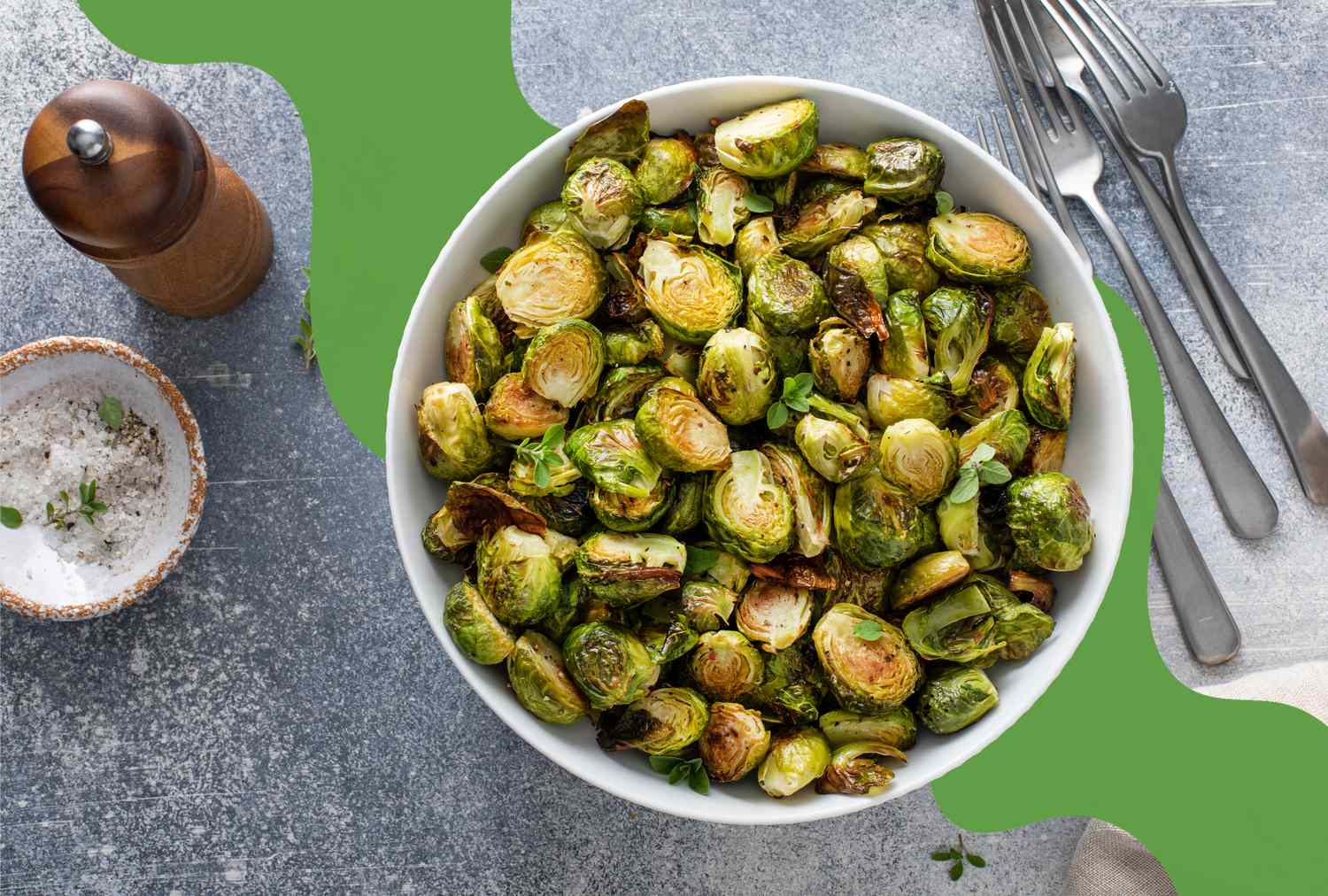
- Modern Brussels sprouts are less bitter and more flavorful, thanks to smart breeding that improved both taste and texture.
- Chefs choose frying as the best way to cook Brussels sprouts because it makes them perfectly crispy, caramelized and nutty.
- For the best flavor, fry unseasoned sprouts in fresh oil, then toss them in a sweet, salty or tangy sauce right before serving.
Brussels sprouts aren’t just having a moment. They’re having a whole era. Not only have we gotten better at cooking them but we’ve also gotten better at growing them. In fact, few vegetables have better benefited from an agricultural and culinary glow-up than Brussels sprouts.
In the 1990s, a Dutch scientist identified the chemicals that made sprouts bitter and bred them out. Today’s sprouts are the result of first creating a hybrid strain with what were once predominant varieties and older ones with naturally lower glucosinolate levels, then cross-breeding them with newer types selected for disease resistance and higher yields, making them both tastier and more readily available to consumers. And good thing, since they’re one of the best high-fiber vegetables dietitians think we should be eating!
So yes, gone are the days of crucifying this crucifer and accusing it of stinking up the kitchen. Goodbye to the literally bitter memories of cute greens with a pungent punch. And hello to their place as a chef’s darling side and restaurant must-order dish, their outer leaves cooked to a perfect crisp, the edges singed or charred, and their hearts roasty and toasty.
But have you ever wondered how pros get them to that same consistent result across culinary genres, kitchen types and cooking styles? And how they make them So. Darn. Good. no matter how they’re dressed?
Chances are, it’s because they’re fried.
Why Frying Works
Not only is frying a quick, easy and mostly hands-off approach for a chef to take, it also scientifically boosts the flavor of the vegetable in several ways. Deep-frying “brings out a deep caramelization that amplifies their flavor, drawing out their natural sugars to create a nutty, rich flavor baseline that makes them a great foil for any number of other ingredients,” says John Martinez, chef-owner of Tito & Pep in Tucson, Arizona, a James Beard Award semifinalist.
Sean Park, executive chef and co-owner of the Michelin-recognized tsukemen and ramen concept Okiboru, with locations in Georgia and New York, says, “When I fry Brussels sprouts, the outer leaves develop a delicate, crackling crispness, while the core retains a rich, meaty texture. It’s that interplay of light crunch and hearty bite that makes Brussels sprouts so distinctive! And frying also opens up natural crevices in the sprout—perfect for catching sauces or dressings.”
Plus, “The caramelization and browning that happens on the leaves and the slight bitterness of the sprouts pairs exceptionally well with something tangy and sweet,” adds Jason Hall, executive chef of The Ashford on Dresden in Brookhaven, Georgia.
Patric Good, executive chef of wine bar and cooking school Vino Venue in Brookhaven, Georgia, prefers flash-frying over deep-frying, vouching that you’ll still get that nuttiness from this technique, too. “Flash-frying crisps them well, too, which is another layer of texture and flavor.”
How to Prep, Season and Sauce
To prep Brussels sprouts for frying, you would follow the same guidelines as for any other method. A neat trick for rinsing Brussels sprouts for frying, according to Handoko Lee, chef-owner of Atlanta’s Win—Taste of Bali, is to use salt water, which acts as a gentle cleaning agent.
When selecting your sprouts, Hall recommends staying away from any larger than a Ping-Pong ball, “as bigger ones tend to have a much larger, more rigid stem core.”
Good reminds us to “trim the cut ends, which always look dry and brown, and trim a few of the outer leaves off before cooking.” Then cut them into halves or quarters, depending on size, Martinez says, since you want them to be relatively uniform for equal cooking time and resultant texture. “Cutting them allows for a quicker cooking time and creates more surface area to caramelize,” he notes.
Next, you’re ready to fry, using the freshest oil you can. “Brussels sprouts will soak up a lot of grease, so unless the fryer oil is fresh, it will pick up other, potentially unappealing flavors,” cautions Daniel Boling, executive chef at Katharine Brasserie in the historic Kimpton Cardinal Hotel in Winston-Salem, North Carolina.
“Wait! What about seasoning?” you might ask in a panic. But according to the pros, when you’re frying Brussels sprouts, that’s actually the last thing you do.
Since sprouts are not typically battered or coated before frying, there is no protective barrier to keep the seasoning attached. Therefore “Any dry seasoning you do before frying will get lost or burn in the oil,” Park says, making it a waste of time and ingredients.
For this reason, dressing the cooked Brussels sprouts in a sauce is typically the go-to for professional chefs. “I like to pair the bitter, earthy flavor of Brussels sprouts with something sweet and salty … with light flavors like fruit or honey, rich ingredients like bacon or cheese, or bright acidity from citrus or vinegar, and chile for some heat,” Park says.
“You can never go wrong with adding some salty swine,” like bacon, Boling says. “I also like to add a sweet element to balance the natural bitterness and salt … but not too sweet! This can be just a dash of maple or honey in the sauce.” A good example is what Hall does at The Ashford: tossing them in a mixture of honey and sambal chile paste, then adding caramelized onions, grated ginger and the bacon pieces.
Martinez also swears by contrasts, combining deep roasted flavor with acidity and smoothing it with something sweet. He encourages, “Think dried fruits and a splash of sherry vinegar and a handful of your favorite tree nut to give it texture and depth. Or complementing that deep flavor with something a little smoky and rich, maybe garlic cloves and a sprinkle of Spanish paprika, coins of chorizo and topping with olive oil-toasted breadcrumbs just before serving.”
But you’ll want to do it off the heat, cooking the sauce separately if it needs to be warm and then tossing before serving, as not all sauces can stand up to the high heat required for cooking the sprouts. For example, “At Vino Venue, we do a Korean galbi-type sauce that would not stand up to flash0frying,” Good says.
Other Ways to Cook and What to Avoid
Boling confesses that “although deep-frying Brussels sprouts has become very popular, I’m not a huge fan.” Personally, he prefers to use high-heat roasting or air-frying to “control the amount and type of fat you use for flavor and dietary reasons.” These dry methods also allow you to season the sprouts before cooking for one-step ease.
Martinez points out that roasting also can allow dishes like roast chicken or pork to do double duty. “Adding them to the roasting pan with root vegetables beneath the meat gives them a chance to soak up the pan drippings.” But for other types of wet flavoring, you’ll still want to sauce after the fact to control proper caramelization. “If you sauce before, they’ll end up steaming and you won’t get the desired color,” Boling says.
Good also likes roasting as a secondary option since “it helps to eliminate the sulfurous compounds you get from wet cooking methods”—the least preferred and perhaps most despised way to cook Brussels sprouts, our chefs unanimously agree.
“I had boiled Brussels sprouts as a kid and was almost scarred for life!” Boling laughs. Good recalls having them that way in his elementary school’s cafeteria and says, “While I have many fond memories of that time in my life, stinky Brussels sprouts smothered in chunky, broken cheese sauce is not one of them!”
There’s solid science behind these reactions, too. Martinez explains, “Water is the enemy of flavor, and the tight, layered leaves of Brussels sprouts grab that water and draw it in.” That can make the sprouts chewy, as Lee points out. Park adds, “It just doesn’t add anything to the flavor or texture; the sprouts just turn soft and flat.”
Cooking the sprouts in water also unlocks the “methane smell” that Hall and many others find so unappealing. “Boiled sprouts simply pale in comparison to the caramelized, roasted and crispy flavors and textures achievable through deep-frying, air-frying or oven-roasting,” he says. And that’s a full stop.
The Bottom Line
To cook Brussels sprouts like a professional chef, frying is best to bring out the natural sugars and nutty richness of the vegetables. Do it with fresh oil using a deep-fry or flash-fry method, unseasoned, then sauce in a way that counters the slight bitterness with a balance of salt, sweet and acid. Make sure you do that only after cooking so that your efforts aren’t burnt off. Follow these tips and you can enjoy restaurant-quality sprouts anytime.
