
Close Menu
My Blog

    Subscribe to Updates

    Get the latest creative news from FooBar about art, design and business.

    What's Hot

    Nautilus debuts Voyager platform in push toward next-gen proteomics

    March 1, 2026

    First-in-Human Success for Prenatal Stem Cell Therapy in Spina Bifida

    February 28, 2026

    Pressure-Driven Pathway Links Liver Congestion to Fibrosis and Cancer

    February 28, 2026
    Facebook X (Twitter) Instagram
    X (Twitter) YouTube
    My BlogMy Blog
    Sunday, March 1
    • Home
    • About Us
    • Healthy Living
    • DNA & Genetics
    • Podcast
    • Shop
    My Blog
    Home»Gut Health»China seeks self-reliance in science in next five-year plan
    Gut Health

    China seeks self-reliance in science in next five-year plan

    adminBy adminOctober 24, 2025No Comments3 Mins Read
    Facebook Twitter Pinterest LinkedIn Tumblr WhatsApp VKontakte Email
    China seeks self-reliance in science in next five-year plan
    Share
    Facebook Twitter LinkedIn Pinterest Email

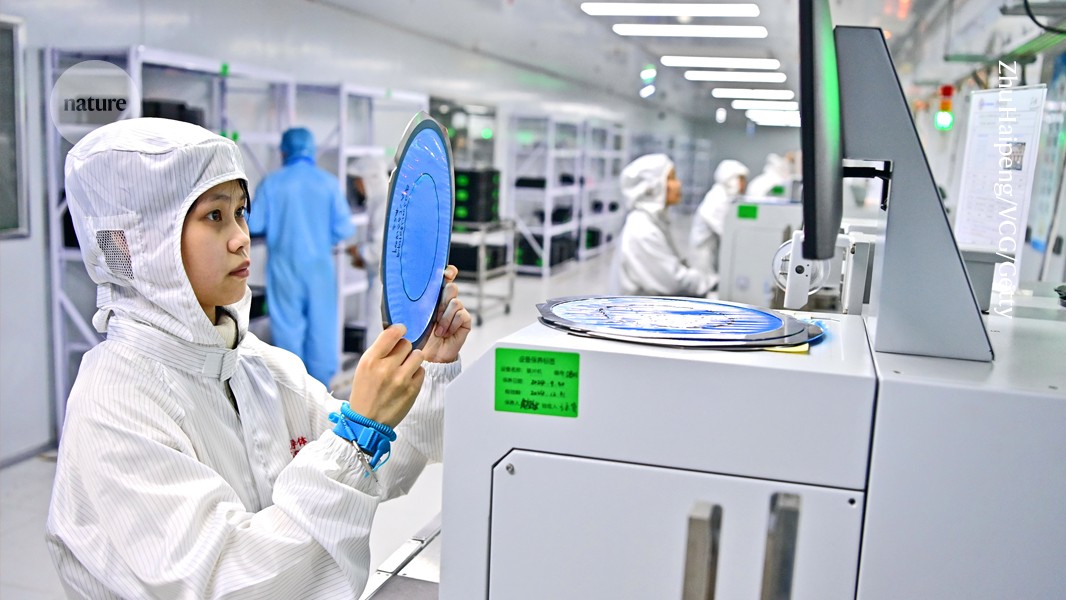
    The Chinese government will boost support for the development of advanced semiconductor technologies. Credit: Zhu Haipeng/VCG/Getty

    China’s top leaders convened in Beijing this week for a high-level political meeting to map out the country’s next five-year plan (FYP), which runs from 2026 to 2030.

    During this period, the country aims to achieve greater self-reliance in science and technology, develop innovation-driven industries and “key core technologies”, notes a communique released after the meeting on Thursday. The plan — the 15th in China’s history — is expected to be released early next year.

    The government intends to increase its support for advanced semiconductor technologies, artificial intelligence (AI) and basic research, said Yin Hejun, the Chinese minister for science and technology, at a press conference in Beijing on Friday. Researchers say this is part of China’s effort to overcome technological bottlenecks.

    Huang Baorong, a researcher of sustainable development policies at the Chinese Academy of Sciences in Beijing, expects China will increase its science-related investments over the next five years. This could help to offset some of the impact of the US government’s anticipated budget cuts to science, particularly in areas such as climate change and public health, Huang says.

    China’s annual research and development (R&D) expenditure has skyrocketed over the past two decades. Last year, it spent more than 3.6 trillion yuan (US$505 billion), up 8.9% from 2023 and a sixfold jump compared with 2009. The Chinese government is the world’s biggest R&D spender.

    China’s five-year plans are a comprehensive policy blueprint aimed at guiding the country’s economic and social development. The plan is a guide for the various levels of government to design policies for the short to medium term.

    Chip independence

    Significant resources will probably be devoted to addressing bottlenecks in the making of advanced semiconductors, says Hu Guangzhou, an economist at the China Europe International Business School in Shanghai.

    Semiconductor chips, which power electronic devices, crucial infrastructure and military systems, are at the heart of an ongoing US–China ‘tech war’. The United States has blocked China’s direct and indirect access to its advanced chips as well as related technology and tools, citing national security risks.

    Chinese scientists consider the years between now and 2035 crucial for the country’s chip independency. “We can hopefully leapfrog the west in the chip sector with another five or ten years of effort,” Dou Qiang, chief scientist at Phytium Technology, a chipmaker in Tianjin, China, told state-run China National Radio last week.

    Focus on AI

    Advanced chips lay the foundation for another industry expected to feature heavily in China’s 15th FYP: AI. “As one of the most transformative general-purpose technologies in recent history, AI will undoubtedly continue to receive robust policy backing,” Hu says.

    Yin said the government plans to draft a top-level policy framework for AI, which will focus on the development of new models and advanced computing chips.

    China is focusing on integrating AI models and applications into its economy, says Philipp Boeing, an economist specializing in innovation at ZEW–Leibniz Centre for European Economic Research in Mannheim, Germany. The country launched in August an ‘AI+’ campaign to accelerate the deep integration between AI and key sectors through to 2035. This is a different strategy to the United States, which is also seeking to be global leader in AI. “In the US, companies want to have the best AI models possible,” Boeing says. Humanoid robots, 6G communications and clean tech are also expected to be priorities for the 15FYP, he adds.

    China FiveYear Plan Science seeks selfreliance
    Share. Facebook Twitter Pinterest LinkedIn Tumblr WhatsApp Email
    Previous ArticleWalking for Fitness Could Help Older Women Reduce the Risk of Heart Disease and Early Death
    Next Article Medical training in England needs major overhaul, says landmark review
    admin
    • Website

    Related Posts

    The ins and outs of the new Dietary Guidelines for Americans in light of the gut microbiome

    February 25, 2026

    Patrick Veiga – Gut Microbiota for Health

    February 17, 2026

    The gut microbiome puzzle and probiotics in primary care patients with IBS

    February 16, 2026

    Is Fish Meat? Science, Religion, Nutrition & Definitions

    February 14, 2026
    Leave A Reply Cancel Reply

    Our Picks

    9 Time-Saving Kitchen Gadgets for Fall at Amazon

    September 5, 2025

    Why Exercise Is So Important For Heart Health, From An MD

    September 5, 2025

    An Engineered Protein Helps Phagocytes Gobble Up Diseased Cells

    September 5, 2025

    How To Get Rid Of Hangnails + Causes From Experts

    September 5, 2025
    • Facebook
    • Twitter
    • Pinterest
    • Instagram
    • YouTube
    • Vimeo
    Don't Miss
    Longevity

    Nautilus debuts Voyager platform in push toward next-gen proteomics

    By adminMarch 1, 20260

    Company’s new benchtop system promises a clearer view of proteins following validation at a leading…

    First-in-Human Success for Prenatal Stem Cell Therapy in Spina Bifida

    February 28, 2026

    Pressure-Driven Pathway Links Liver Congestion to Fibrosis and Cancer

    February 28, 2026

    A cellular atlas of aging comes into focus

    February 28, 2026

    Subscribe to Updates

    Get the latest creative news from SmartMag about art & design.

    About Us

    At FineGut, our mission is simple: to enhance your self-awareness when it comes to your gut health. We believe that a healthy gut is the foundation of overall well-being, and understanding the brain–gut connection can truly transform the way you live.

    Our Picks

    9 Time-Saving Kitchen Gadgets for Fall at Amazon

    September 5, 2025

    Why Exercise Is So Important For Heart Health, From An MD

    September 5, 2025

    An Engineered Protein Helps Phagocytes Gobble Up Diseased Cells

    September 5, 2025
    Gut Health

    Nautilus debuts Voyager platform in push toward next-gen proteomics

    March 1, 2026

    First-in-Human Success for Prenatal Stem Cell Therapy in Spina Bifida

    February 28, 2026

    Pressure-Driven Pathway Links Liver Congestion to Fibrosis and Cancer

    February 28, 2026
    X (Twitter) YouTube
    • Contact us
    • Privacy Policy
    • Disclaimer
    • Terms and Conditions
    © 2026 finegut.com. Designed by Pro.

    Type above and press Enter to search. Press Esc to cancel.