
Close Menu
My Blog

    Subscribe to Updates

    Get the latest creative news from FooBar about art, design and business.

    What's Hot

    Nautilus debuts Voyager platform in push toward next-gen proteomics

    March 1, 2026

    First-in-Human Success for Prenatal Stem Cell Therapy in Spina Bifida

    February 28, 2026

    Pressure-Driven Pathway Links Liver Congestion to Fibrosis and Cancer

    February 28, 2026
    Facebook X (Twitter) Instagram
    X (Twitter) YouTube
    My BlogMy Blog
    Sunday, March 1
    • Home
    • About Us
    • Healthy Living
    • DNA & Genetics
    • Podcast
    • Shop
    My Blog
    Home»DNA & Genetics»This AI method could turbocharge the hunt for new medicines
    DNA & Genetics

    This AI method could turbocharge the hunt for new medicines

    adminBy adminOctober 24, 2025No Comments3 Mins Read
    Facebook Twitter Pinterest LinkedIn Tumblr WhatsApp VKontakte Email
    This AI method could turbocharge the hunt for new medicines
    Share
    Facebook Twitter LinkedIn Pinterest Email

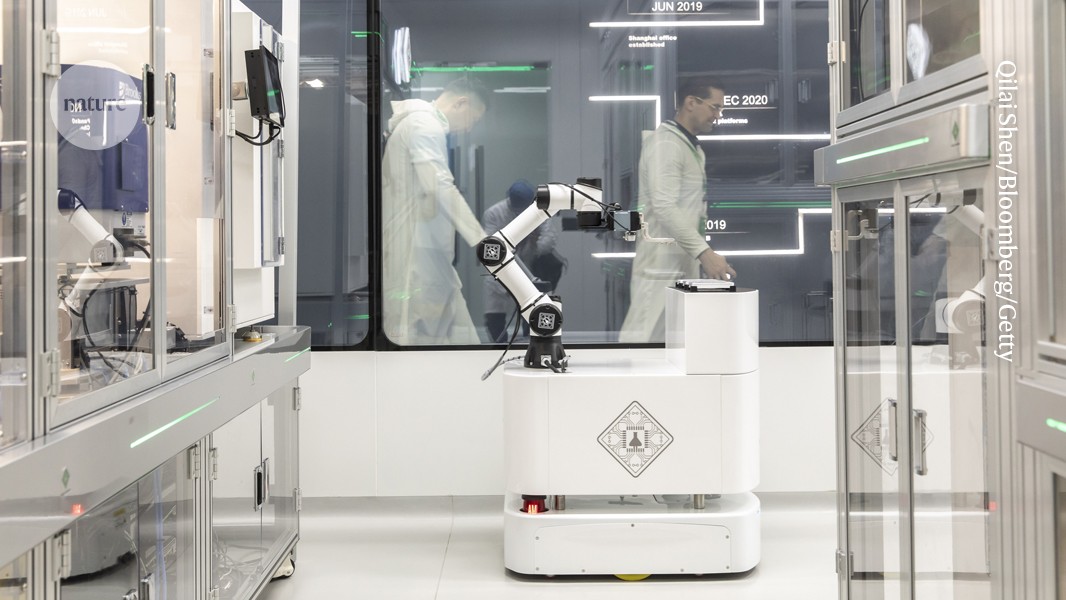
    An artificial-intelligence method that incorporates gene-expression data could help to speed up drug discovery.Credit: Qilai Shen/Bloomberg/Getty

    An artificial intelligence (AI) model trained on complex data from human cells could provide a shortcut in the race to develop new drugs1.

    The approach, published on 23 October in Science, builds on a trend that is sweeping the field of drug discovery: the use of AI to speed up the tedious process of trawling through massive collections of chemical compounds in search of those that could become the next big therapy.

    “It’s a powerful blueprint for the future,” says Hongkui Deng, a cell biologist at Peking University in Beijing, who was not involved in the work. “It creates a ‘smart’ screening system that learns from its own experiments.”

    Tedious method

    For decades, researchers have searched for drugs by working their way through large chemical libraries, testing each compound’s effect on cells that are grown in the laboratory. The approach has had success, identifying drugs that kill cancer cells, for example.

    Increasingly, researchers are dreaming of more complex screening methods that could harness the past decade’s explosion in genomic data collected from individual cells. Such methods could, in theory, evaluate how compounds perturb entire networks of gene activity — a test that could open new avenues for drug discovery.

    But, researchers typically screen tens of thousands of compounds or more for drug discovery, says Alex Shalek, a biomedical engineer at the Massachusetts Institute of Technology in Cambridge. And it would be too expensive and laborious to integrate such large screens with complex assays, he says.
    Powerful antibiotics discovered using AI

    To find a tractable way of harnessing newly available genomic data, Shalek teamed up with other researchers and Cellarity, a biotechnology company in Somerville, Massachusetts. (Shalek is also a paid consultant for the company.) Together, the team trained a deep-learning model called DrugReflector on publicly available data about how each of nearly 9,600 chemical compounds perturbs gene activity in more than 50 kinds of cells.

    They used DrugReflector to find chemicals that can affect the generation of platelets and red blood cells — a characteristic that could be useful in treating some blood conditions. They then tested 107 of these chemicals to determine whether they had the predicted effect.

    Overall, the team found that DrugReflector was up to 17 times more effective at finding relevant compounds than standard, brute-force drug screening that depends on randomly selecting compounds from a chemical library. And when the researchers circled back to incorporate the data from their first round of screening into the model, its success rate doubled.

    hunt medicines Method turbocharge
    Share. Facebook Twitter Pinterest LinkedIn Tumblr WhatsApp Email
    Previous Article15+ Cozy Casseroles You Can Make with Rotisserie Chicken
    Next Article We need more than good science to fight infectious disease
    admin
    • Website

    Related Posts

    A Video Report from AGBT

    February 27, 2026

    Novo Nordisk, Vivtex Ink Up to $2.1B Deal to Develop Oral Biologics for Metabolic Conditions

    February 27, 2026

    Increasing Rice Yields with Gene-Informed Selective Breeding

    February 27, 2026

    Mutant p53 Selective Reactivation Demonstrated in Advanced Solid Tumors

    February 27, 2026
    Leave A Reply Cancel Reply

    Our Picks

    9 Time-Saving Kitchen Gadgets for Fall at Amazon

    September 5, 2025

    Why Exercise Is So Important For Heart Health, From An MD

    September 5, 2025

    An Engineered Protein Helps Phagocytes Gobble Up Diseased Cells

    September 5, 2025

    How To Get Rid Of Hangnails + Causes From Experts

    September 5, 2025
    • Facebook
    • Twitter
    • Pinterest
    • Instagram
    • YouTube
    • Vimeo
    Don't Miss
    Longevity

    Nautilus debuts Voyager platform in push toward next-gen proteomics

    By adminMarch 1, 20260

    Company’s new benchtop system promises a clearer view of proteins following validation at a leading…

    First-in-Human Success for Prenatal Stem Cell Therapy in Spina Bifida

    February 28, 2026

    Pressure-Driven Pathway Links Liver Congestion to Fibrosis and Cancer

    February 28, 2026

    A cellular atlas of aging comes into focus

    February 28, 2026

    Subscribe to Updates

    Get the latest creative news from SmartMag about art & design.

    About Us

    At FineGut, our mission is simple: to enhance your self-awareness when it comes to your gut health. We believe that a healthy gut is the foundation of overall well-being, and understanding the brain–gut connection can truly transform the way you live.

    Our Picks

    9 Time-Saving Kitchen Gadgets for Fall at Amazon

    September 5, 2025

    Why Exercise Is So Important For Heart Health, From An MD

    September 5, 2025

    An Engineered Protein Helps Phagocytes Gobble Up Diseased Cells

    September 5, 2025
    Gut Health

    Nautilus debuts Voyager platform in push toward next-gen proteomics

    March 1, 2026

    First-in-Human Success for Prenatal Stem Cell Therapy in Spina Bifida

    February 28, 2026

    Pressure-Driven Pathway Links Liver Congestion to Fibrosis and Cancer

    February 28, 2026
    X (Twitter) YouTube
    • Contact us
    • Privacy Policy
    • Disclaimer
    • Terms and Conditions
    © 2026 finegut.com. Designed by Pro.

    Type above and press Enter to search. Press Esc to cancel.