

Close Menu
My Blog

    Subscribe to Updates

    Get the latest creative news from FooBar about art, design and business.

    What's Hot

    Nautilus debuts Voyager platform in push toward next-gen proteomics

    March 1, 2026

    First-in-Human Success for Prenatal Stem Cell Therapy in Spina Bifida

    February 28, 2026

    Pressure-Driven Pathway Links Liver Congestion to Fibrosis and Cancer

    February 28, 2026
    Facebook X (Twitter) Instagram
    X (Twitter) YouTube
    My BlogMy Blog
    Sunday, March 1
    • Home
    • About Us
    • Healthy Living
    • DNA & Genetics
    • Podcast
    • Shop
    My Blog
    Home»Longevity»Science Corp eye implant restores vision in AMD patients
    Longevity

    Science Corp eye implant restores vision in AMD patients

    adminBy adminOctober 28, 2025No Comments3 Mins Read
    Facebook Twitter Pinterest LinkedIn Tumblr WhatsApp VKontakte Email
    Science Corp eye implant restores vision in AMD patients
    Share
    Facebook Twitter LinkedIn Pinterest Email

    Company is first to demonstrate restoration of vision in clinical trial of BCI tech in patients with geographic atrophy.

    A clinical trial published in The New England Journal of Medicine has demonstrated that Science Corporation’s brain-computer interface (BCI) retinal implant can restore functional central vision to patients with an advanced form of age-related macular degeneration (AMD), one of the leading causes of blindness worldwide. The publication is the first peer-reviewed confirmation that patients with geographic atrophy regained so-called “form vision” – the ability to perceive shapes, letters and words – through a wireless retinal prosthesis.

    It is estimated that more than 5 million people globally suffer from geographic atrophy, a late-stage form of AMD that destroys the photoreceptors responsible for sharp, detailed vision. Until now, no treatment has been able to restore lost sight in patients with the condition. The technology is based on the work of Stanford professor of ophthalmology Daniel Palanker.

    “All previous attempts to provide vision with prosthetic devices resulted in basically light sensitivity, not really form vision,” said Palanker, a co-senior author of the paper, in a statement. “We are the first to provide form vision.”

    The multi-center trial enrolled 38 patients at 17 sites across five countries, evaluating the safety and effectiveness of the device. Participants in the trial had severe central vision loss due to geographic atrophy. After implantation and visual training, most patients were able to read letters, numbers, or words, restoring a level of functional vision previously thought unattainable for this population.
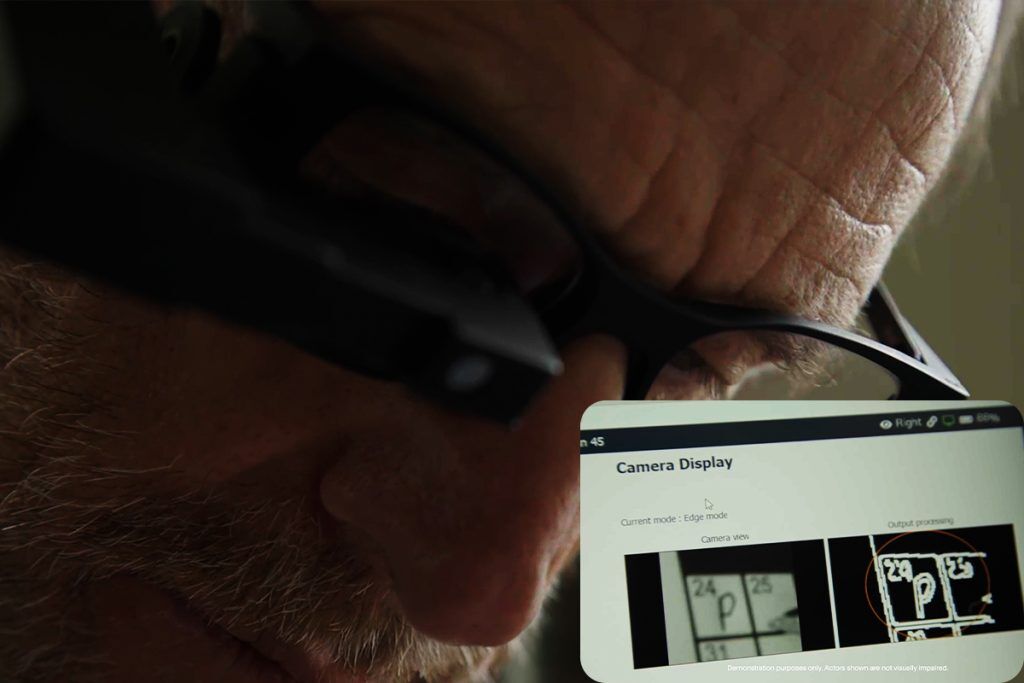
    “It’s the first time that an attempt at vision restoration in these cases has achieved results – and in such a large number of patients,” said University of Pittsburgh professor of ophthalmology José-Alain Sahel, senior co-author of the paper. “More than 80% of the patients were able to read letters and words, and some of them are reading pages in a book. This is really something we couldn’t have dreamt of when we started on this journey together with Professor Palanker more than a decade ago.”

    The PRIMA system was refined by Science Corp, a California-based company specializing in neural engineering and BCI technologies. The implant consists of a 2-by-2-millimeter photovoltaic chip that replaces the function of lost photoreceptors, coupled with a pair of glasses that project infrared light patterns onto the retina. These patterns are converted into electrical signals that stimulate the remaining retinal cells, which then relay visual information to the brain.

    PRIMA’s design leverages the transparency of the eye to transmit visual information wirelessly. The implant, just 30 microns thick, operates as a miniature solar panel, powered by near-infrared light emitted from the glasses. Patients can adjust contrast and magnification, and the system allows prosthetic central vision to integrate with their natural peripheral vision, enabling users to read text and navigate their surroundings.
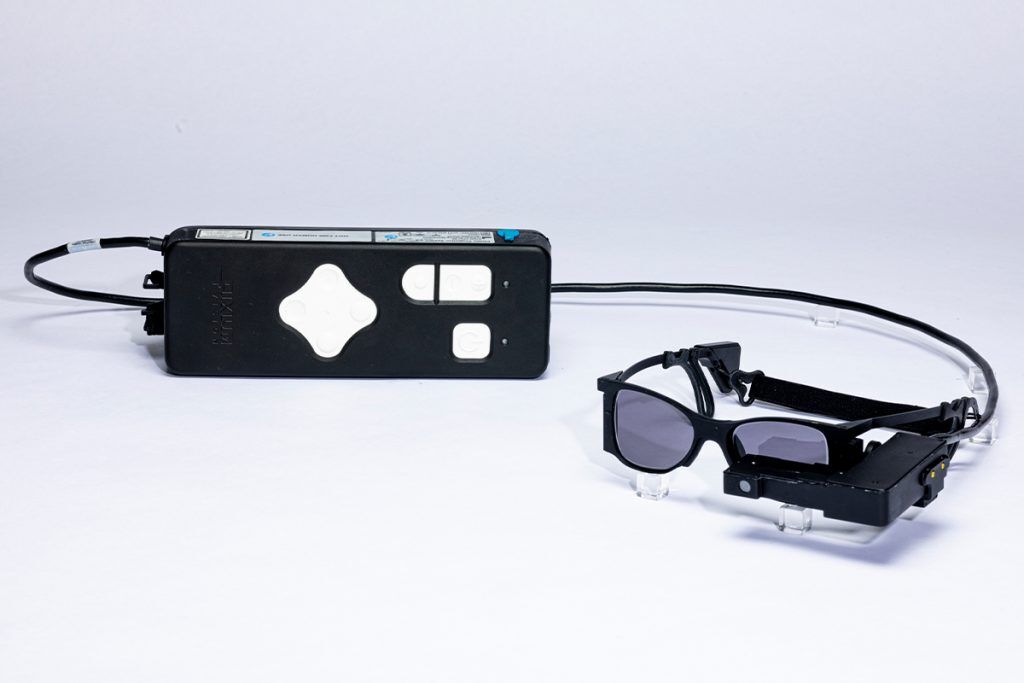
    Current PRIMA devices deliver black-and-white vision, although Science Corp. says development is underway to introduce grayscale perception and higher resolution through smaller pixels and enhanced image processing.

    The trial also confirmed that the implant could be safely placed beneath the atrophic macula. The Data Safety Monitoring Board concluded that the therapeutic benefits outweighed the risks, recommending PRIMA for European regulatory approval. Science Corp. has now submitted its application and expects the device to become available to patients in Europe next year, while the US FDA review process continues.

    READ MORE: Science Corp lands big funding round to advance BCI technology

    Photographs courtesy of Science Corporation

    AMD Corp Eye Implant Patients Restores Science Vision
    Share. Facebook Twitter Pinterest LinkedIn Tumblr WhatsApp Email
    Previous ArticleWhat now for the global plastics treaty?
    Next Article Eating Nuts May Lower Your Mortality Risk
    admin
    • Website

    Related Posts

    Nautilus debuts Voyager platform in push toward next-gen proteomics

    March 1, 2026

    A cellular atlas of aging comes into focus

    February 28, 2026

    Measuring intrinsic capacity at scale

    February 28, 2026

    How billionaires die

    February 27, 2026
    Leave A Reply Cancel Reply

    Our Picks

    9 Time-Saving Kitchen Gadgets for Fall at Amazon

    September 5, 2025

    Why Exercise Is So Important For Heart Health, From An MD

    September 5, 2025

    An Engineered Protein Helps Phagocytes Gobble Up Diseased Cells

    September 5, 2025

    How To Get Rid Of Hangnails + Causes From Experts

    September 5, 2025
    • Facebook
    • Twitter
    • Pinterest
    • Instagram
    • YouTube
    • Vimeo
    Don't Miss
    Longevity

    Nautilus debuts Voyager platform in push toward next-gen proteomics

    By adminMarch 1, 20260

    Company’s new benchtop system promises a clearer view of proteins following validation at a leading…

    First-in-Human Success for Prenatal Stem Cell Therapy in Spina Bifida

    February 28, 2026

    Pressure-Driven Pathway Links Liver Congestion to Fibrosis and Cancer

    February 28, 2026

    A cellular atlas of aging comes into focus

    February 28, 2026

    Subscribe to Updates

    Get the latest creative news from SmartMag about art & design.

    About Us

    At FineGut, our mission is simple: to enhance your self-awareness when it comes to your gut health. We believe that a healthy gut is the foundation of overall well-being, and understanding the brain–gut connection can truly transform the way you live.

    Our Picks

    9 Time-Saving Kitchen Gadgets for Fall at Amazon

    September 5, 2025

    Why Exercise Is So Important For Heart Health, From An MD

    September 5, 2025

    An Engineered Protein Helps Phagocytes Gobble Up Diseased Cells

    September 5, 2025
    Gut Health

    Nautilus debuts Voyager platform in push toward next-gen proteomics

    March 1, 2026

    First-in-Human Success for Prenatal Stem Cell Therapy in Spina Bifida

    February 28, 2026

    Pressure-Driven Pathway Links Liver Congestion to Fibrosis and Cancer

    February 28, 2026
    X (Twitter) YouTube
    • Contact us
    • Privacy Policy
    • Disclaimer
    • Terms and Conditions
    © 2026 finegut.com. Designed by Pro.

    Type above and press Enter to search. Press Esc to cancel.