
Close Menu
My Blog

    Subscribe to Updates

    Get the latest creative news from FooBar about art, design and business.

    What's Hot

    Nautilus debuts Voyager platform in push toward next-gen proteomics

    March 1, 2026

    First-in-Human Success for Prenatal Stem Cell Therapy in Spina Bifida

    February 28, 2026

    Pressure-Driven Pathway Links Liver Congestion to Fibrosis and Cancer

    February 28, 2026
    Facebook X (Twitter) Instagram
    X (Twitter) YouTube
    My BlogMy Blog
    Sunday, March 1
    • Home
    • About Us
    • Healthy Living
    • DNA & Genetics
    • Podcast
    • Shop
    My Blog
    Home»DNA & Genetics»Integral HIV Protein Structure Paves the Way for New Therapeutics
    DNA & Genetics

    Integral HIV Protein Structure Paves the Way for New Therapeutics

    adminBy adminOctober 30, 2025No Comments3 Mins Read
    Facebook Twitter Pinterest LinkedIn Tumblr WhatsApp VKontakte Email
    The Scientist Logo
    Share
    Facebook Twitter LinkedIn Pinterest Email

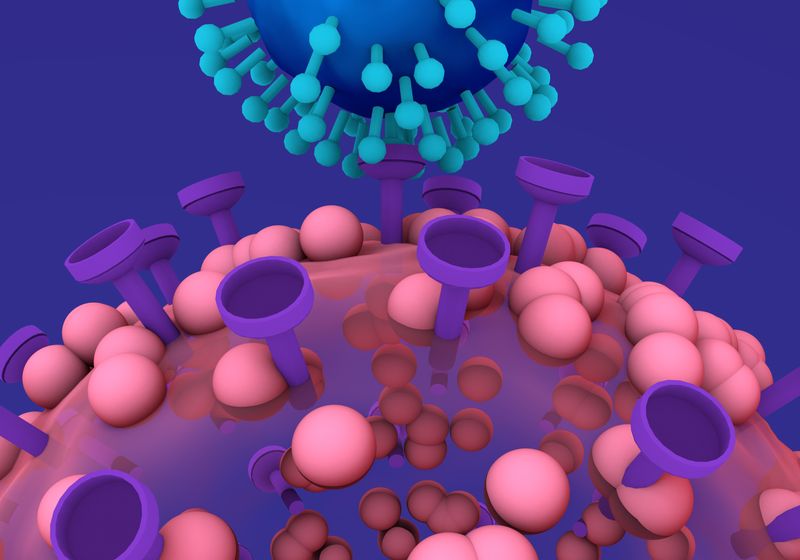
    Researchers revealed how HIV integrase assembles to integrate DNA into the genome and package RNA.

    Image credit:©iStock.com, Design Cells

    HIV is a lifelong infection that, without proper antiviral treatment, will kill cells of the immune system and leave individuals susceptible to infections and cancers. The longevity of this virus comes from its ability to integrate into the host genome with the help of the HIV protein integrase. Recently, researchers showed that integrase also binds HIV’s RNA during virion assembly, further highlighting the importance of this enzyme.1

    To exert these functions, individual integrase proteins coordinate into multimers. Prior research suggests that they assemble into tetramers and then into a 16-mer structure called the intasome.2-4 However, these suspected structures have not been confirmed in HIV. Because of the crucial role of integrase in HIV infection, many researchers are exploring inhibitors against this protein. Understanding its three-dimensional arrangements could aid these efforts.

    Dmitry Lyumkis, a structural biologist at Salk Institute for Biological Studies, and his team used cryo-electron microscopy (cryo-EM) to reveal the structure of HIV integrase assemblies when they were bound to either DNA or RNA.5 The findings, published in Nature Communications, can help researchers further explore integrase’s interactions with RNA and develop better HIV therapeutics.

    Continue reading below…

    “We’ve created the first blueprints for integrase’s structure during these crucial steps in HIV replication,” said Zelin Shan, a postdoctoral researcher in Lyumkis’s group and study coauthor in a press statement. “Now we can use those blueprints to design new drugs that suit this structure and disrupt the destructive HIV-1 invasion and replication process.”

    To express and isolate integrase tetramers, the researchers stabilized these structures with a host protein domain that binds them during viral DNA integration. Using cryo-EM, the team showed that the tetramer has two-fold symmetry and that the C-terminal domains of the individual integrase proteins hold the structure together through interactions between linkers, other C-terminal domains, and with N-terminal domains.

    The researchers then studied the formation of the intasome. They used a commercial integrase inhibitor to stabilize this structure and then cryo-EM to create a composite map of the complete intasome. They showed that four tetramers interact to form a 16-mer structure, in which connections between domains similar to those observed for the individual tetramers stabilize the intasome.

    Finally, the researchers investigated how stabilizing interactions between the domains promoted the formation of these assemblies and the role of integrase. They identified a salt bridge—hydrogen bond between two residues of opposite charge—between amino acids in the N- and C-terminal domains. When they mutated these sites to amino acids with the opposite charge, they saw reductions or complete abolition of the integrase tetramerization. This correlated with a decrease in the protein’s ability to promote DNA integration and RNA binding.

    Lyumkis said that researchers are continuing to explore these more recently observed functions involving RNA of integrase. “Determining how integrase interacts with RNA will help us better understand this new role and inform the design of novel and more effective HIV therapeutics,” Lyumkis said in the press release.

    HIV Integral paves Protein Structure therapeutics
    Share. Facebook Twitter Pinterest LinkedIn Tumblr WhatsApp Email
    Previous ArticleKatie Lee Biegel’s Easy Sheet-Pan Fish and Chips Recipe
    Next Article Age-Related T Cell Changes Weaken Vaccine Response in Older People
    admin
    • Website

    Related Posts

    A Video Report from AGBT

    February 27, 2026

    Novo Nordisk, Vivtex Ink Up to $2.1B Deal to Develop Oral Biologics for Metabolic Conditions

    February 27, 2026

    Increasing Rice Yields with Gene-Informed Selective Breeding

    February 27, 2026

    Mutant p53 Selective Reactivation Demonstrated in Advanced Solid Tumors

    February 27, 2026
    Leave A Reply Cancel Reply

    Our Picks

    9 Time-Saving Kitchen Gadgets for Fall at Amazon

    September 5, 2025

    Why Exercise Is So Important For Heart Health, From An MD

    September 5, 2025

    An Engineered Protein Helps Phagocytes Gobble Up Diseased Cells

    September 5, 2025

    How To Get Rid Of Hangnails + Causes From Experts

    September 5, 2025
    • Facebook
    • Twitter
    • Pinterest
    • Instagram
    • YouTube
    • Vimeo
    Don't Miss
    Longevity

    Nautilus debuts Voyager platform in push toward next-gen proteomics

    By adminMarch 1, 20260

    Company’s new benchtop system promises a clearer view of proteins following validation at a leading…

    First-in-Human Success for Prenatal Stem Cell Therapy in Spina Bifida

    February 28, 2026

    Pressure-Driven Pathway Links Liver Congestion to Fibrosis and Cancer

    February 28, 2026

    A cellular atlas of aging comes into focus

    February 28, 2026

    Subscribe to Updates

    Get the latest creative news from SmartMag about art & design.

    About Us

    At FineGut, our mission is simple: to enhance your self-awareness when it comes to your gut health. We believe that a healthy gut is the foundation of overall well-being, and understanding the brain–gut connection can truly transform the way you live.

    Our Picks

    9 Time-Saving Kitchen Gadgets for Fall at Amazon

    September 5, 2025

    Why Exercise Is So Important For Heart Health, From An MD

    September 5, 2025

    An Engineered Protein Helps Phagocytes Gobble Up Diseased Cells

    September 5, 2025
    Gut Health

    Nautilus debuts Voyager platform in push toward next-gen proteomics

    March 1, 2026

    First-in-Human Success for Prenatal Stem Cell Therapy in Spina Bifida

    February 28, 2026

    Pressure-Driven Pathway Links Liver Congestion to Fibrosis and Cancer

    February 28, 2026
    X (Twitter) YouTube
    • Contact us
    • Privacy Policy
    • Disclaimer
    • Terms and Conditions
    © 2026 finegut.com. Designed by Pro.

    Type above and press Enter to search. Press Esc to cancel.