

Existing oncology therapeutics are either so specific they can target only part of a tumor, or so generalized they kill healthy tissue.
A new “Tumor Activated Therapy™” in development at the small virtual company Seekyo Therapeutics seeks to target only the functional proteins that are always present in all solid tumors. Although still at the preclinical stage (including animal testing), this early work suggests it may be efficacious, relatively low-cost, and safe for multiple types of solid tumors. If those results hold true in further preclinical and eventual clinical studies, Tumor Activated Therapy may have the potential to become a breakthrough cancer therapeutic.
Targeting functional proteins
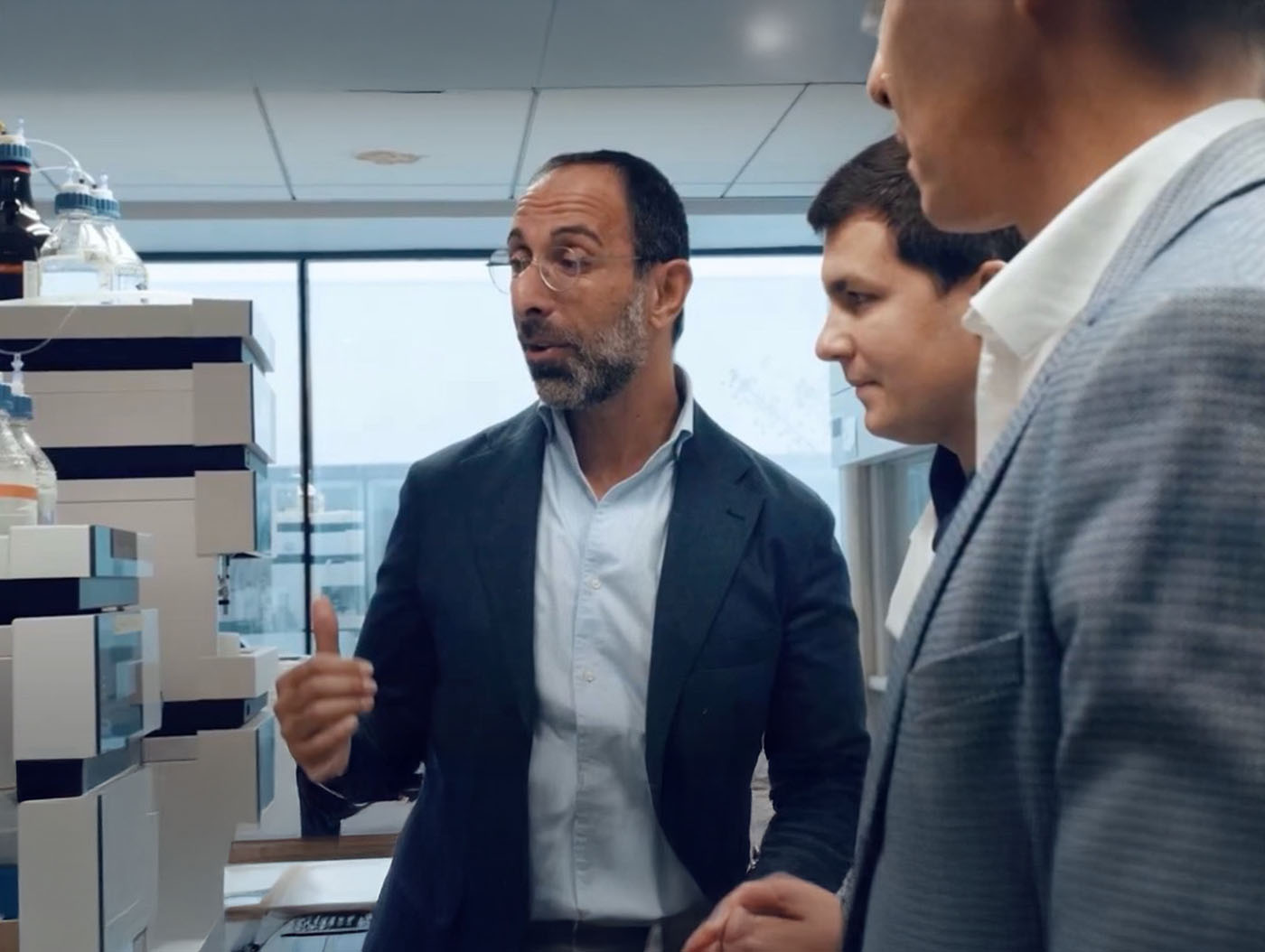
“In solid tumors, there are many kinds of different cancerous cells. We needed a strategy that would affect all types of cancerous cells at the same time,” Oury Chetboun, Seekyo’s CEO and co-founder, tells GEN.
To do that, Chetboun explains, Sébastien Papot, PhD, professor at the University of Poitiers and the French National Center for Scientific Research (CNRS), and Seekyo’s co-founder and chief scientific officer, developed a method that encompasses “the functional proteins present in the tumor microenvironment [TME] to destroy all the different cancer cells inside the same tumor.”
The company’s lead compound, SKY01, links to albumin in the patient’s blood stream and becomes a macromolecule. It uses the pharmacokinetics of albumin—which the tumor sees as a nutritional source—to draw the macromolecule to the tumor, and the beta glucuronidase within the TME to release monomethyl auristatin E, a cytotoxic payload that induces apoptosis. “Therefore, we don’t need to get inside the cell to be active,” Chetboun points out. “We just need to be inside the TME.”
In contrast, he says, “Antibody drug conjugates (ADCs) target a specific marker on the surface of tumor cells.” They must be transported inside the cells in order to destroy the cancer. ADC’s downside is that it targets only cells expressing specific markers, leaving other cancerous cells intact, which limits the effectiveness of the therapeutic.
At first glance, one may wonder if Seekyo’s Tumor Activated Therapy could eradicate tumors even before they are detected. That assumption would be erroneous, Chetboun says. “If a tumor hasn’t been detected, beta-glucuronidase isn’t accumulating and SKY01 can’t be activated,” he explains.
Although present in low concentrations inside healthy cells (specifically, the lysosome), “Beta-glucuronidase appears to be produced and accumulated at high concentration only at the tumor site,” Chetboun elaborates. Because SKY01 can’t penetrate the cell, it only encounters that enzyme in the tumor microenvironment.
The release mechanism is like an on/off switch, he emphasizes. “Either you have the enzyme (in the TME) and the payload is released, or you don’t have the enzyme (in the TME) and it can’t be released. That brings a high level of selectivity and safety for the patient…that could prevent any off-target activation.”
An earlier-stage program, SKY02, uses the same mechanism to deliver an immune system stimulant to tumors. He speculates that it may be possible eventually to administer SKY01 and SKY02 as a potent combination therapy.
“Patients, cancers, and stages are different from one another, so oncologists need several tools in their toolbox to win,” Chethboun points out.
The mechanism of action Chetboun describes is considerably simpler than those of most gene or immunotherapies. For example, unlike with CAR T therapies, “You don’t need to extract a patient’s blood, modify cells, and reinject them,” he points out. This simplicity may enable this therapeutic to overtake more advanced programs in terms of commercialization.
In terms of production, the product is lyophilized and reconstituted just before it is administered. This offers a potentially long shelf-life without the need for cold storage, which could eventually help lower costs, not only for production, but also for the hospital and patient.
Early results
Seekyo proved its concept using patient-derived xenografts implanted into humanized mice. Compared to the standard of care—gemcitabine and nab-paclitaxel—SKY01 dramatically shrank tumor volumes within only a few days. “That’s true for pancreatic, triple-negative breast, lung, and colorectal cancers,” he says, “and data is coming in now for glioblastoma cancer.”
Chetboun also cited data from an experiment in pancreatic cancer in which the cancerous cells were located in the head of the pancreas. After injecting SKY01 at one end of the pancreas, histopathology showed the cancer was eradicated. Then, when examining the body of the pancreas, “We saw no lesions,” Chetboun reports. “There was no accumulation of monomethyl auristatin E…no activation inside anything else, even in such a small organ.”
When it’s time to begin clinical trials, he says an umbrella trial may be possible, involving about 40 patients who have a mix of indications: pancreatic, triple-negative breast, lung, and colorectal cancers. Efficacy in that trial will dictate the focus of subsequent trials.
Now the goal is to lengthen the time between administrations beyond two to three weeks.
The company also is working on diagnostic tools to help monitor SKY efficacy. One approach involves the induced volatolomics technology developed by Papot to detect volatile cancer markers, such as those in the blood. “There’s a correlation between the concentration of those markers and the tumor size,” Chetboun says. Initial applications will be for patient stratification and, later, to inform personalized therapy.
CNRS collaboration
Seekyo Therapeutics was founded in 2018 based on two decades of drug targeting work by Papot.
The company has maintained a lean structure aimed at maximizing every Euro raised. Research, for example, is still contracted out to CNRS. Whatever it can’t do will be performed by a CRO or CDMO.
With this virtual company structure, Seekyo has worked with multiple biotech and big pharma companies to help optimize or widen the therapeutic window of drugs that those organizations are developing. “That shows the technology works and that we can manage such specific relationships,” he says.
Next steps
For this work to advance to human trials, Seekyo will need to produce GMP-grade product and increase the number of preclinical test subjects. “And that requires funding,” Chetboun stresses.
The company has raised some €2.5 million in financing from angel investors and the French Public Bank of Investment (Bpifrance) in the past seven years. Now Chetboun is looking further afield, searching out opportunities for strategic partnerships and other investments.
At the same time, he’s working to identify a top-quality CRO or CDMO. “For the next several years,” he says, “everything has to be outsourced, so we need to find the right partners.” That includes adding board members with expertise in translational medicine. “It’s a challenge to find the right people.”
At this early stage, Tumor Activated Therapy appears promising, but even if it scales perfectly, Chetboun cautions, “There will never be one drug for all cancers. There will always be a need for several therapeutic options.”
