
Close Menu
My Blog

    Subscribe to Updates

    Get the latest creative news from FooBar about art, design and business.

    What's Hot

    Nautilus debuts Voyager platform in push toward next-gen proteomics

    March 1, 2026

    First-in-Human Success for Prenatal Stem Cell Therapy in Spina Bifida

    February 28, 2026

    Pressure-Driven Pathway Links Liver Congestion to Fibrosis and Cancer

    February 28, 2026
    Facebook X (Twitter) Instagram
    X (Twitter) YouTube
    My BlogMy Blog
    Sunday, March 1
    • Home
    • About Us
    • Healthy Living
    • DNA & Genetics
    • Podcast
    • Shop
    My Blog
    Home»Microbiome»Weak Spot of Metastatic Melanoma Cells Identified
    Microbiome

    Weak Spot of Metastatic Melanoma Cells Identified

    adminBy adminNovember 6, 2025No Comments3 Mins Read
    Facebook Twitter Pinterest LinkedIn Tumblr WhatsApp VKontakte Email
    Weak Spot of Metastatic Melanoma Cells Identified
    Share
    Facebook Twitter LinkedIn Pinterest Email

    Credit: Christoph Burgstedt/Getty Images

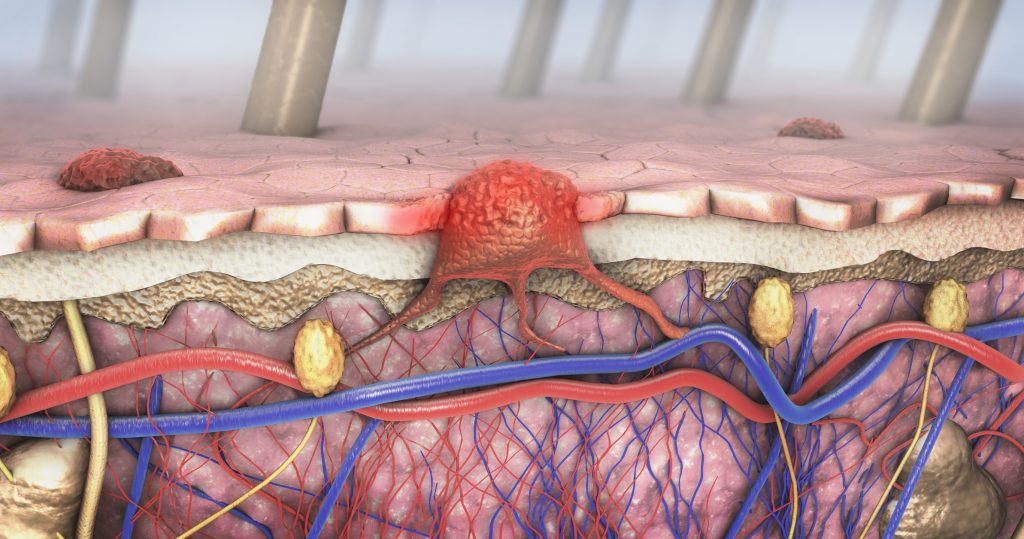
    A study published today in Nature reveals a unique weakness of metastatic melanoma cells that have spread to the lymph nodes. These cells were found to rely on the ferroptosis suppressor protein 1 (FSP1) to survive, opening the door for new therapeutic strategies against treatment-resistant and metastatic melanoma.

    Ferroptosis is a form of cell death caused by the accumulation of oxidized lipids on the cell membrane, eventually leading to its rupture. The study found that metastatic cells can adopt different strategies to protect themselves against ferroptosis depending on the location they are spreading to. In particular, metastatic cells traveling to the lymph nodes were found to become reliant on FSP1 to keep ferroptosis at bay, and inhibiting this protein significantly reduced tumor growth in a mouse model of melanoma. 

    “Our study shows that melanoma cells in lymph nodes become dependent on FSP1 to survive, and that it is possible to decrease melanoma cell survival in lymph nodes with novel FSP1 inhibitors,” said Jessalyn Ubellacker, MD, PhD, assistant professor of molecular metabolism at Harvard T.H. Chan School of Public Health. “These findings lay the foundation for potential new therapeutic strategies aimed at slowing cancer progression by targeting ferroptosis defense mechanisms.”

    Cancer cells that become treatment-resistant or metastatic have previously been reported to rely on glutathione peroxidase 4 (GPX4), a protein that suppresses ferroptosis. However, while melanoma cells that metastasize to the blood depend on GPX4 to survive, those that metastasize to the lymph nodes stop relying on this protein while remaining protected against ferroptosis. 

    Using a mouse model of melanoma, Ubellacker and colleagues studied how the lymph node environment affects the strategies metastatic cells use to protect themselves. They found that while expression of GPX4 was reduced in these cells, levels of FSP1 were significantly increased. Treating these mice with selective inhibitors of FSP1 suppressed melanoma growth in the lymph nodes but not in primary tumors, showcasing a unique vulnerability of metastatic cells that spread to the lymph nodes. 

    “Metastatic disease, not the primary tumor, is what kills most cancer patients. Yet little is understood about how cancer cells adapt to survive in organs such as lymph nodes,” said Mario Palma, PhD, postdoctoral research fellow in the Ubellacker Lab and first author of the study. “We discovered that niche features of the lymph node actively shape which antioxidant systems melanoma can use. That context-specific dependency had not yet been fully appreciated and suggests that, rather than trying to kill every tumor cell the same way, we can exploit the weaknesses that arise as cancer spreads.”

    In addition to revealing FSP1 as a promising new target against metastatic melanoma, these findings highlight the importance of studying complex processes like ferroptosis within their tissue context. Given the potential of ferroptosis as a target not just for cancer, but also for neurodegenerative and ischemic disease, further work to characterize tissue-specific changes could be instrumental for the development of a new generation of targeted therapies.

    Cells Identified Melanoma Metastatic Spot Weak
    Share. Facebook Twitter Pinterest LinkedIn Tumblr WhatsApp Email
    Previous ArticleFabricant on government shutdown, NMN, and 90 years of NPA
    Next Article Postdoc Portrait: Meryem Talbo | The Scientist
    admin
    • Website

    Related Posts

    First-in-Human Success for Prenatal Stem Cell Therapy in Spina Bifida

    February 28, 2026

    Pressure-Driven Pathway Links Liver Congestion to Fibrosis and Cancer

    February 28, 2026

    Genetic Biomarkers to Predict Efficacy of GLP-1 Therapies Uncovered

    February 28, 2026

    Mapping the Cellular Architecture of Aging Across 21 Organs

    February 28, 2026
    Leave A Reply Cancel Reply

    Our Picks

    9 Time-Saving Kitchen Gadgets for Fall at Amazon

    September 5, 2025

    Why Exercise Is So Important For Heart Health, From An MD

    September 5, 2025

    An Engineered Protein Helps Phagocytes Gobble Up Diseased Cells

    September 5, 2025

    How To Get Rid Of Hangnails + Causes From Experts

    September 5, 2025
    • Facebook
    • Twitter
    • Pinterest
    • Instagram
    • YouTube
    • Vimeo
    Don't Miss
    Longevity

    Nautilus debuts Voyager platform in push toward next-gen proteomics

    By adminMarch 1, 20260

    Company’s new benchtop system promises a clearer view of proteins following validation at a leading…

    First-in-Human Success for Prenatal Stem Cell Therapy in Spina Bifida

    February 28, 2026

    Pressure-Driven Pathway Links Liver Congestion to Fibrosis and Cancer

    February 28, 2026

    A cellular atlas of aging comes into focus

    February 28, 2026

    Subscribe to Updates

    Get the latest creative news from SmartMag about art & design.

    About Us

    At FineGut, our mission is simple: to enhance your self-awareness when it comes to your gut health. We believe that a healthy gut is the foundation of overall well-being, and understanding the brain–gut connection can truly transform the way you live.

    Our Picks

    9 Time-Saving Kitchen Gadgets for Fall at Amazon

    September 5, 2025

    Why Exercise Is So Important For Heart Health, From An MD

    September 5, 2025

    An Engineered Protein Helps Phagocytes Gobble Up Diseased Cells

    September 5, 2025
    Gut Health

    Nautilus debuts Voyager platform in push toward next-gen proteomics

    March 1, 2026

    First-in-Human Success for Prenatal Stem Cell Therapy in Spina Bifida

    February 28, 2026

    Pressure-Driven Pathway Links Liver Congestion to Fibrosis and Cancer

    February 28, 2026
    X (Twitter) YouTube
    • Contact us
    • Privacy Policy
    • Disclaimer
    • Terms and Conditions
    © 2026 finegut.com. Designed by Pro.

    Type above and press Enter to search. Press Esc to cancel.