

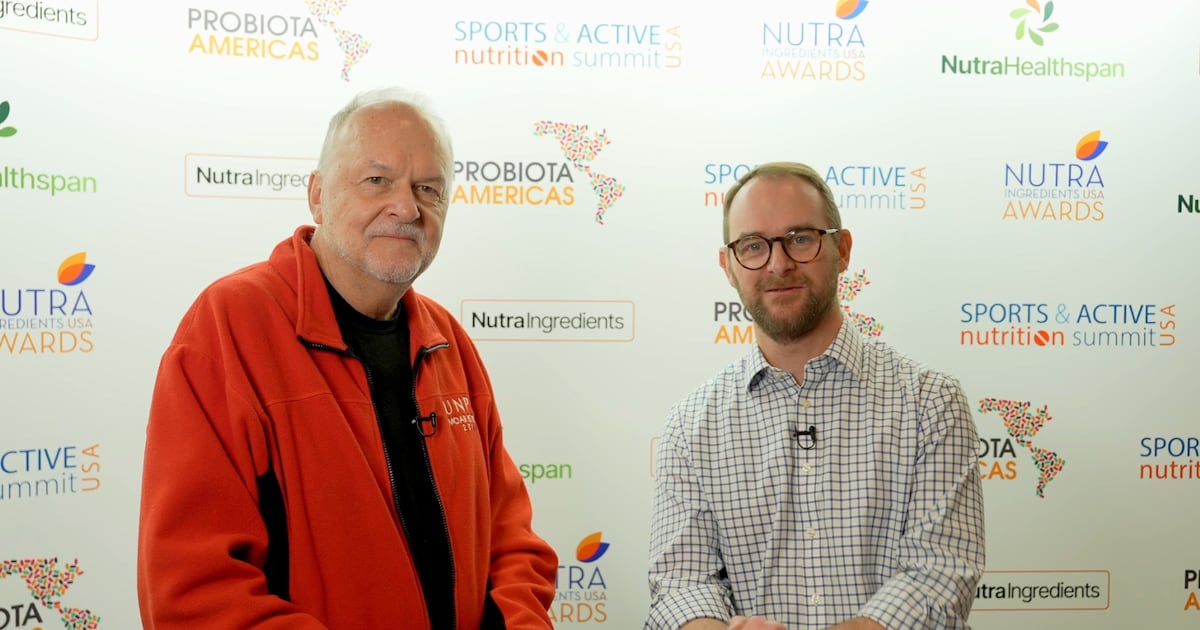
Speaking with NutraIngredients+ at the recent SupplySide Global, Israelsen, who was also one of the key architects of the Dietary Supplement Health and Education Act (DSHEA), explained the history of the new dietary ingredient (NDI) provision in the bill and the last-minute dilemma faced by the drafters.
“We got to a point [in the negotiations around DSHEA] where the question was asked by the opposition side, ‘What do we do with all these ingredients, and what about new things?’ And the trigger point was concern expressed by the pharma industry to the other side,” Israelsen said.
The pharma industry was looking for some measure of protection, he said, because they understood that there would be ingredients developed for supplements that could become competitive to pharmaceuticals.
“This all came very late in the game—it was Senator [Teddy] Kennedy and Congressman [Henry] Waxman that raised this issue […],” Israelsen said. “In the short time that we had, we decided that there would be a new dietary ingredient process on the belief that, going forward, our products have become more sophisticated and more like drugs. Turns out that was true.”
But this then raised the question about what to do with ingredients already on the market. From both a time and resource perspective, it was clear that any kind of safety review was not feasible and so the drafters settled on a grandfather provision and picked Oct. 15, 1994 as the key date. If an ingredient was on the market before this date, it would be considered an old dietary ingredient (ODI).
The original ODI list, which was produced with no guidance from FDA or from DSHEA itself, was based on catalogs from dietary supplement brands, commercial records, advertisements and sales lists at the time, Israelsen said.
“Pretty much just a straight down look at what we had at the time,” he said. “We did not go and look more broadly at the ethnic communities, what was being used either as a food that we would now call a dietary ingredient, in terms of its purpose, intended use. We didn’t look at recipe books. We didn’t look at all kinds of useful information. We didn’t go talk to the Ayurveda community or the TCM community, or anybody.
“In short, we talked to ourselves, and so what we have is an ODI list that is dated,” he added. “Entire categories are missing. Mushrooms are missing. All the prebiotics, many probiotics, just for starters. And now we have whole new generations of things like peptides. We could come up with a dozen areas where we have massive gaps.”
This led to the realization several years ago by UNPA that this needed to be rectified, and there has been encouragement from the FDA in recent months for a new ODI list, an ODI 2.0.
ODI, NDI and GRAS
The topic of the ODI list has come into sharp focus recently with the Citizen Petitions around NMN and the drug preclusion principle, combined with efforts by leadership at the U.S. Department of Health & Human Services to eliminate self-affirmed GRAS (General Recognized as Safe) for food ingredients.
In its response to the Citizen Petitions, the FDA provided a new interpretation of the NDI process, as it relates to drug preclusion, pertaining to the date of the investigational new drug (IND), Israelsen said.
The FDA stated in its response: “The relevant date for purposes of the race-to-market clause […] is the date the article in question was authorized for investigation as a new drug, antibiotic or biological. The relevant date is not the date that substantial clinical investigations were instituted or the date that the existence of such investigations was made public.”
“It’s like a numerator-denominator,” Israelsen said. “We need two dates to look at: The date that we see it as a dietary ingredient when it first entered the market and the date that the IND was authorized by FDA. FDA goes to great lengths to explain their process, and then they say, ‘And by the way, we can’t tell you what that authorization date is’ […] so we don’t have the two numbers. Consequently, it’s thrown the whole question of drug preclusion into even greater chaos.”
This new position from FDA and the possibility of closure of the self-affirmed GRAS pathway adds weight to the need for ODI 2.0, he said, noting that the end game would be for a much more substantial ODI list that is acknowledged by the FDA.
“We want FDA to recognize and use it and at least publicly say we acknowledge the existence and the utility of an ODI 2.0,” he said. “We want to encourage industry to adopt it as a living document. It will be a digitally produced product, so it’s amendable—a lot of work to do that, but we think that will be important to FDA.”
Watch the video for the full interview.
