
Close Menu
My Blog

    Subscribe to Updates

    Get the latest creative news from FooBar about art, design and business.

    What's Hot

    Nautilus debuts Voyager platform in push toward next-gen proteomics

    March 1, 2026

    First-in-Human Success for Prenatal Stem Cell Therapy in Spina Bifida

    February 28, 2026

    Pressure-Driven Pathway Links Liver Congestion to Fibrosis and Cancer

    February 28, 2026
    Facebook X (Twitter) Instagram
    X (Twitter) YouTube
    My BlogMy Blog
    Sunday, March 1
    • Home
    • About Us
    • Healthy Living
    • DNA & Genetics
    • Podcast
    • Shop
    My Blog
    Home»Probiotics»Astringency in flavanol-rich foods may be key to unlocking brain health benefits
    Probiotics

    Astringency in flavanol-rich foods may be key to unlocking brain health benefits

    adminBy adminNovember 9, 2025No Comments3 Mins Read
    Facebook Twitter Pinterest LinkedIn Tumblr WhatsApp VKontakte Email
    mainsitelogo
    Share
    Facebook Twitter LinkedIn Pinterest Email

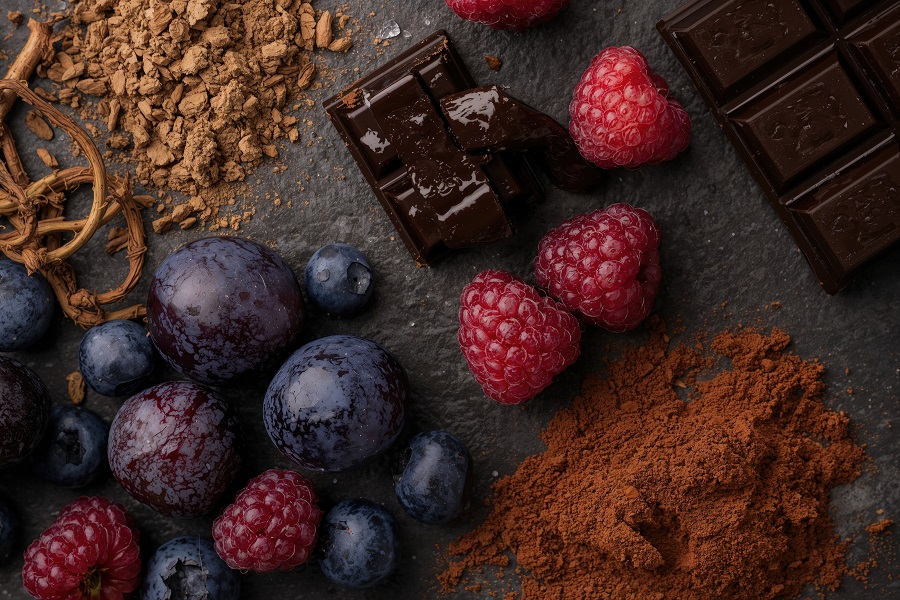
    A study by Japanese researchers from the Shibaura Institute of Technology highlights how the astringent taste of flavanols — found in cocoa, tea, grapes, and berries — may help activate brain function and the nervous system by stimulating the gastrointestinal tract, despite lower bioavailability.

    The authors note their insights suggest that foods’ sensory properties are important for promoting human health.

    The team determined that flavanol intake in mice can trigger wide-ranging physiological responses resembling those induced by exercise — functioning as a moderate stressor that activates the central nervous system and enhances attention, arousal, and memory.

    “Stress responses elicited by flavanols in this study are similar to those elicited by physical exercise. Thus, moderate intake of flavanols, despite their poor bioavailability, can improve the health and quality of life,” says lead researcher Dr. Yasuyuki Fujii.

    “Flavanols exhibit an astringent taste. We hypothesized that this taste serves as a stimulus, transmitting signals directly to the central nervous system (comprising the brain and spinal cord).”

    “As a result, it is thought that flavanol stimulation is transmitted via sensory nerves to activate the brain, subsequently inducing physiological responses in the periphery through the sympathetic nervous system.”

    Direct signal to the brain

    Astringency is a dry, puckering, rough, or sandpapery sensation in the mouth caused by plant-derived polyphenols. These bioactive compounds, including flavanols, are studied for their risk reduction in cardiovascular diseases.

    The scientists experimented on 10-week-old mice, administering flavanols orally at doses of 25 mg/kg or 50 mg/kg body weight, while control mice received only distilled water.

    Behavioral tests revealed that the flavanol-fed mice exhibited greater motor activity, exploratory behavior, and improved learning and memory compared to controls.

    Immediately after the administration, flavanols enhanced neurotransmitter activity across several brain regions. Levels of dopamine, its precursor levodopa, norepinephrine, and its metabolite normetanephrine rose in the locus coeruleus–noradrenaline network. In the brain system, these chemicals regulate motivation, attention, stress response, and arousal.

    Furthermore, enzymes that are critical for noradrenaline synthesis and transport were upregulated, which strengthened the signaling capacity of the noradrenergic system.

    Clearing out stress hormones

    Further biochemical analysis revealed flavanol administration led to higher urinary levels of catecholamines — hormones released during stress — as well as increased activity in the hypothalamic paraventricular nucleus (PVN), a brain region central to stress regulation.

    Flavanols also boosted the expression of c-Fos (a key transcription factor) and corticotropin-releasing hormone in the PVN.

    The findings have potential implications in the field of sensory nutrition. In particular, next-generation foods can be developed based on the sensory properties, physiological effects, and palatability of foods.

    The study findings are published in the journal Current Research in Food Science.

    Separate research on flavanols published last month by a team in Birmingham, UK, found that these compounds may protect men’s vascular health during prolonged sitting. However, external experts cautioned that the study’s small sample size, short duration, and focus on healthy men limit its implications.

    Astringency benefits Brain flavanolrich Foods Health key Unlocking
    Share. Facebook Twitter Pinterest LinkedIn Tumblr WhatsApp Email
    Previous Article20+ High-Fiber Breakfast Recipes That Aren’t Oats
    Next Article Longevity clinics converge to shape sector’s future
    admin
    • Website

    Related Posts

    Advanced Brain Cancer Survival Rates Double with LITT

    February 27, 2026

    Microbe Mix Key to Gut Health

    February 27, 2026

    YOU(th) lands funding for smartphone-based preventive health screening

    February 26, 2026

    Key Genetic Variants That Influence Disease Risk, Human Health Traits Identified

    February 26, 2026
    Leave A Reply Cancel Reply

    Our Picks

    9 Time-Saving Kitchen Gadgets for Fall at Amazon

    September 5, 2025

    Why Exercise Is So Important For Heart Health, From An MD

    September 5, 2025

    An Engineered Protein Helps Phagocytes Gobble Up Diseased Cells

    September 5, 2025

    How To Get Rid Of Hangnails + Causes From Experts

    September 5, 2025
    • Facebook
    • Twitter
    • Pinterest
    • Instagram
    • YouTube
    • Vimeo
    Don't Miss
    Longevity

    Nautilus debuts Voyager platform in push toward next-gen proteomics

    By adminMarch 1, 20260

    Company’s new benchtop system promises a clearer view of proteins following validation at a leading…

    First-in-Human Success for Prenatal Stem Cell Therapy in Spina Bifida

    February 28, 2026

    Pressure-Driven Pathway Links Liver Congestion to Fibrosis and Cancer

    February 28, 2026

    A cellular atlas of aging comes into focus

    February 28, 2026

    Subscribe to Updates

    Get the latest creative news from SmartMag about art & design.

    About Us

    At FineGut, our mission is simple: to enhance your self-awareness when it comes to your gut health. We believe that a healthy gut is the foundation of overall well-being, and understanding the brain–gut connection can truly transform the way you live.

    Our Picks

    9 Time-Saving Kitchen Gadgets for Fall at Amazon

    September 5, 2025

    Why Exercise Is So Important For Heart Health, From An MD

    September 5, 2025

    An Engineered Protein Helps Phagocytes Gobble Up Diseased Cells

    September 5, 2025
    Gut Health

    Nautilus debuts Voyager platform in push toward next-gen proteomics

    March 1, 2026

    First-in-Human Success for Prenatal Stem Cell Therapy in Spina Bifida

    February 28, 2026

    Pressure-Driven Pathway Links Liver Congestion to Fibrosis and Cancer

    February 28, 2026
    X (Twitter) YouTube
    • Contact us
    • Privacy Policy
    • Disclaimer
    • Terms and Conditions
    © 2026 finegut.com. Designed by Pro.

    Type above and press Enter to search. Press Esc to cancel.