

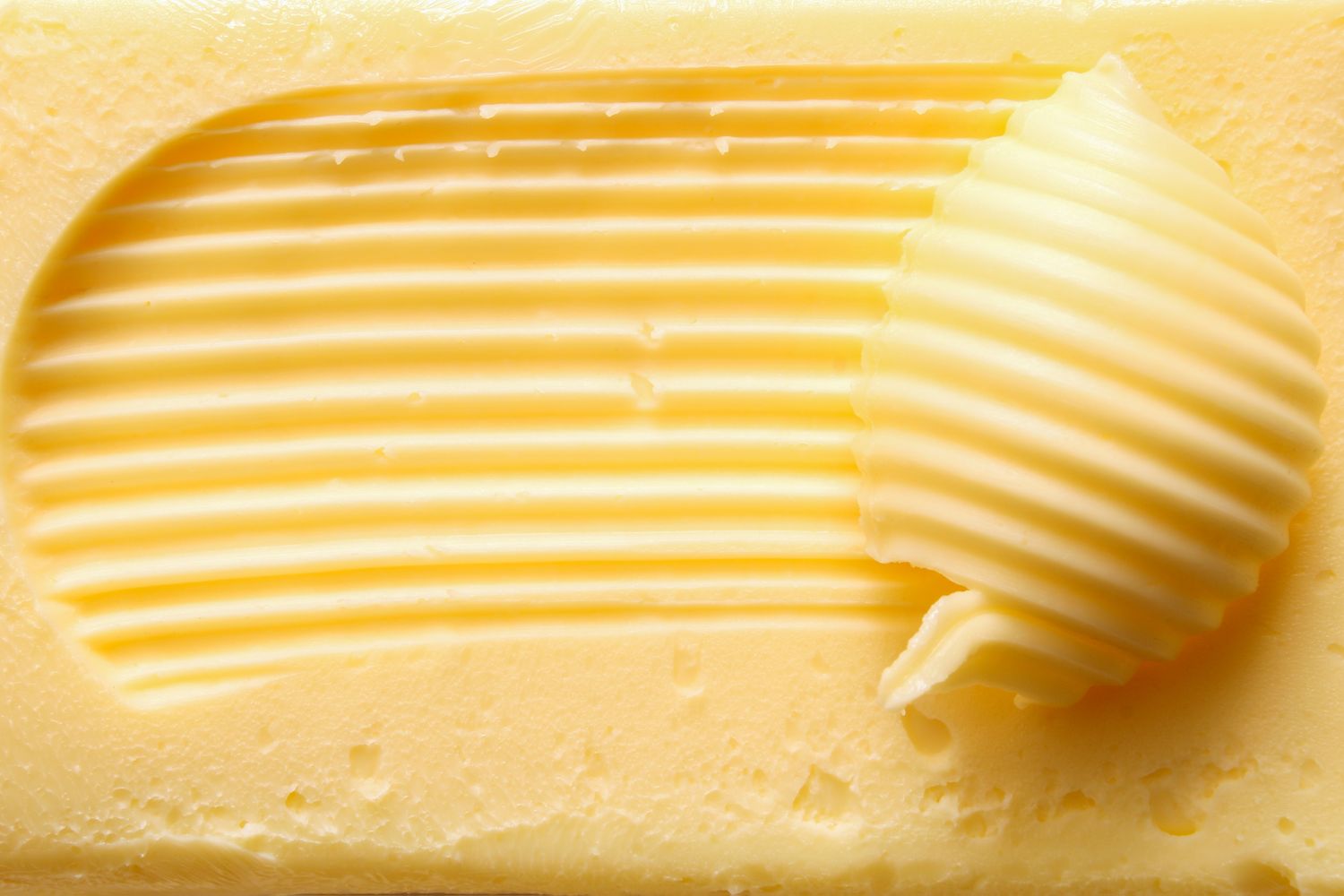
- Chefs choose high-fat, cultured butters for their flavor and texture.
- Fancy butter works best when used as a spread or in rich baked goods.
- Many chefs keep both premium and basic butters on hand for different uses.
You could see it as an occasional guilty pleasure. Conversely, you might view it as the component that perfects practically every dish born in the Western hemisphere. But either way, I’ll wager that you have at least a stick or two of butter in your refrigerator right now.
When I lived in Vermont and shopped mostly local brands, I was never without a paper-wrapped basket of Vermont Creamery’s 86 percent butterfat, European-style cultured butter. I used it sparingly enough in my pan sauces and spread on bread that it was a relatively sensible extravagance.
But I ended up moving to Texas, then Virginia, and marrying a very liberal user of butter. Losing my ties to the Green Mountain State and tightening my butter budget has meant that the Vermont Creamery days are mostly a thing of the past, replaced with Tillamook Extra Creamy, which is far less expensive. It has an 81 percent butterfat content, which is just over the USDA requirement of 80 percent that’s been in place since 1989.
I enjoy my Tillamook, but I recognize that it’s not the same as Vermont Creamery. With the holidays approaching, I’ve been thinking of bringing high-end butter back into my repertoire, at least for the sake of entertaining. And who cooks for guests every day? Chefs! I decided to ask some of the best ones in the country for their thoughts on what makes a butter worth its sea salt.
How Are “Fancy” Butters Different?
Chef, author and TV personality Judy Joo says that she buys exclusively artisan butter for her meals at home. “The higher fat and (often) cultured character make them taste better in every way, and they even look different—[a] deeper golden color thanks to beta-carotene from grass-fed diets,” she describes.
The term “cultured” butter refers to a spread that has live bacterial cultures added to it. The butter lightly ferments, much like yogurt, resulting in a tanginess that ranges from subtle to in-your-face, depending on how long it ages.
Joo goes on to explain that typically, the pricier butters she buys are around 82 percent butterfat and cost 10 to 40 percent more than conventional American butters. Her favorites? American-made, European-style Plugrá and Irish-born Kerrygold, both of which are 82 percent.
But there are American-made butters that climb as high as 87 percent. At two-Michelin-starred The Inn at Little Washington in Virginia, culinary director Julian Eckhardt says that there’s no such thing as too pricy or rich of a butter to serve his guests. “Our table butter [from Vermont’s Animal Farm Creamery] is very special,” he says. “It may also be one of the most expensive, but we believe it’s worth every penny.” The lightly funky, grassfed spread is indeed in a category of its own. But do all chefs rely on high-end butters?
Which Butters Are Chefs Buying?
At chef, TV personality and author Alex Guarnaschelli’s New York City restaurant Butter, her team makes their own version in-house using a mixture of cream, sour cream and herbs. At her restaurant Clara, they make another cultured butter recipe from scratch. But when it comes to cooking at home, Guarnaschelli says, “I have a classic American butter I use for baking and savory cooking and another salted butter for the table for bread.”
Though Guarnaschelli is no stranger to the indulgence of a good butter, she says that there are advantages to sticking to 80 percent butterfat. “I like American butter the most. It tracks well when cooking from American cookbooks and recipes and I love the taste,” she explains.
But even pragmatic, wallet-conscious Guarnaschelli isn’t above indulging. “Sometimes when I’m feeling fancy or nostalgic from my years of living in France, I buy a fancypants French butter and devour it on bread—and tell myself I’m never buying it again—and then I buy it again and again,” she jokes.
Geoffrey Zakarian, chef, TV personality and chairman of City Harvest Food Council, says that he prefers French Maison Lescure butter for his cooking. “I only use French 85 percent fat butter, salted and unsalted,” he says. “There is no taste or flavor comparison either raw or when cooking.”
He admits that he’s only ever cooked with high-end butters but defends the “significant” price difference with the fact that he typically needs less of it. “They are pure butter with no water whipped in, so a little goes a long way,” he says.
What To Do With “Fancy” Butter
The easy answer that our chefs shared is “everything,” but if you’re constrained by price, there are certain uses for which it may be more worthwhile to splurge. “It really depends on what you’re using the butter for,” says Joo. “When it comes to baking, less water means fewer steam pockets and a richer (sometimes greasier) finish. But sometimes you want those steam pockets (like in scones), and sometimes the result is too greasy.”
One time that it’s never too greasy? When using extra-creamy butter as a spread. “Premium European butters are best for just straight-up smearing across bread,” Joo says. “Whenever butter is the star, use your best.”
But she also recommends it for laminated doughs, such as flaky croissants, as well as shortcrusts and butter-finished sauces.
The Bottom Line
Yes, “fancy” butter can be expensive. But there are times that it may be a rewarding indulgence. As Guarnaschelli puts it, “I believe in always working within a budget. When possible, quality butter can really elevate the flavor of something.”
Whether you’re making a batch of kouign-amanns full of buttery crevices or serving up a homemade sourdough ready to be spread with something special, you’ll need to put your best foot forward. While there’s nothing wrong with 80 percent butterfat American sticks, I’m confident that at the first mouthful, you won’t regret your purchase of something a little more worthy of the occasion.
