

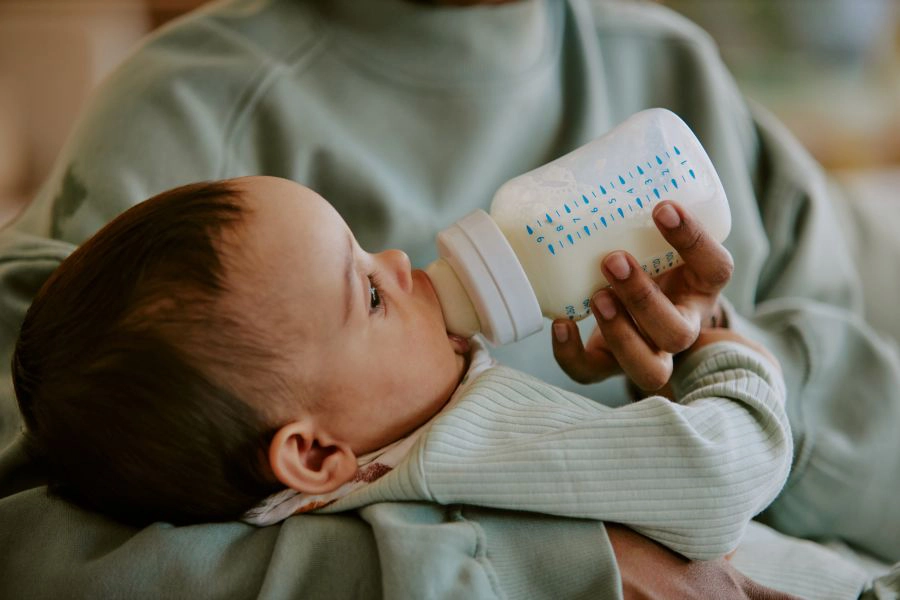
In its efforts to develop infant nutrition that is compositionally closer to breast milk, Valio highlights the potential of exosomes for innovative formulas. These nanosized vesicles are generated by nearly all cells and are increasingly recognized as critical messengers that influence cellular communication and development.
Valio notes that, in early life, human milk exosomes play a key role as mediators of mother-to-child interaction, supporting gut maturation, immune function, and nervous system development. However, the processing steps in infant milk formula production may impact their activity.
Ahead of the company’s webinar next week, “Exosomes in infant nutrition: Unlocking new insights,” Nutrition Insight meets with one of Valio’s expert speakers, Dr. Anu Turpeinen, senior research scientist.
Registration for the free webinar is now open. Attendees can join the webinar on November 25 at either 9:00 CET or 15:00 CET.
Turpeinen and professor Seppo Vainio from the Finnish University of Oulu will discuss the latest research on exosomes in early-life nutrition, their potential role in infant formula innovation, and future directions for milk science.
“The webinar will explore the fascinating world of exosomes — tiny vesicles once thought to be cellular waste but now known to play vital roles in early-life development and communication,” says Turpeinen.
“Professor Seppo Vainio will talk about the potential of milk exosomes in early life and how this knowledge can inspire innovations in infant formula.”
Exosomes in early life
Turpeinen says that the first discovery of exosomes in breast milk was fairly recent. “We’re still learning more every day about their crucial role in an infant’s early development.”
“Exosomes would represent an entirely new component in infant milk formula, as currently infant formulas contain negligible amounts of exosomes. As we continue striving to make formulas as close as possible to breast milk, exosomes are a key area to focus on.”
 Currently, infant milk formula contains negligible amounts of exosomes, making it an entirely new component, says Turpeinen.She explains that exosomes are programmed to transport and deliver their cargo — such as lipids, proteins, and genetic material — to specific cells and tissues that support early development. Moreover, the microRNAs in breast milk exosomes can regulate the expression of key genes, directly influencing gut maturation and immune responses.
“In addition, exosome proteins and lipids play a vital role in antimicrobial defense and immune modulation,” adds Turpeinen. “Exosomes also contribute to brain development by facilitating communication between neurons, supporting their function, and helping to establish proper neural connections.”
Infant nutrition challenges
The webinar next week will also explore how infant milk formula can be developed to retain or mimic the bioactivity of these naturally occurring vesicles, as pasteurization or homogenization in production may impact exosome activity.
“The production of infant milk formula involves several processing steps that significantly affect exosomes, leading to their degradation or reduced activity,” explains Turpeinen. “We need to focus on developing methods to isolate exosomes from milk early in the process and reintroduce them into the final formula solutions.”
Research is underway to investigate how bovine milk exosomes can be preserved or modified to better mimic human milk. However, Turpeinen notes that these exosomes differ slightly in their composition, which companies need to consider when aiming to mimic their functionality, signifying an additional challenge they need to overcome.
She adds that academic-industry collaboration, like Valio’s work with the University of Oulu, brings together the “deep academic understanding of exosomes with Valio’s expertise in cow’s milk fractionation and infant formula manufacturing.”
“We aim to develop, through strong collaboration, the solutions and technologies that will ultimately allow valuable exosomes to become a natural part of commercial infant formulas — bringing us closer to the unique functionality of human milk,” Turpeinen concludes.
