

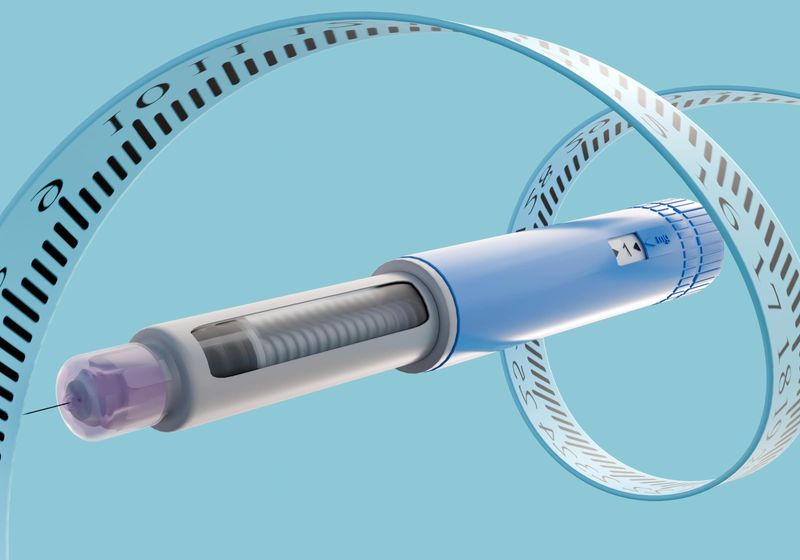
GLP-1 drugs have dramatic effects on weight loss but are often accompanied by unwanted side effects. A better understanding of how these drugs work may offer solutions, researchers say.
Glucagon-like peptide-1 (GLP-1) agonists have transformed weight loss treatments. However, about half of the patients who take these drugs stop within a year because of unwanted side effects.1,2
For this reason, “it’s important to further understand the mechanism of GLP-1 therapies,” said Lorenzo Leggio, a neuroendocrinologist at the National Institute on Drug Abuse who mediated the GLP-1 press conference at the 2025 Society for Neuroscience meeting.
In the session, four panelists discussed the effects of GLP-1-based treatments on the brain and physiology. Two panelists covered recent findings related to how GLP-1 agonists produce adverse side effects such as vomiting and thirst suppression, while the other two talked about new approaches in GLP-1 therapies.
The Positive and Negative Effects of GLP-1 Drugs Are Closely Intertwined
Warren Yacawych, a neuroscientist at the University of Michigan, and his team tried to disentangle GLP-1 drugs’ desired effects (reduced food intake and weight loss) from their unwanted accompaniments (often nausea and vomiting). Using mice, the researchers investigated two areas in the brain stem, nucleus of the solitary tract (NST) and area postrema (AP), which are linked to feelings of satiety and vomiting responses, respectively.
They discovered that the interaction between endogenous GLP-1 and its receptors in the NST, but not AP, is vital for weight loss. But GLP-1 agonists seemed to act differently: The direct administration of the drugs to AP, but not NST, caused weight loss. This indicates that the desired and undesired effects of GLP-1 are indeed intertwined, said Yacawych. “It’s very challenging, we think right now, to be able to separate these side effects like nausea from GLP-1’s intended effects like weight loss,” he added.
Rat Models Offer New Insight into GLP-1 Thirst Suppression
GLP-1 agonists can also cause thirst suppression, although this side effect is not as widely reported. “Almost every time I give a talk, there’s someone in the audience who’s taken [GLP-1] drugs and they say, ‘I just don’t feel thirsty anymore,’” said Derek Daniels, an ingestive behavior researcher at the University at Buffalo. Thirst suppression is particularly problematic considering the drugs’ other side effects, such as vomiting and diarrhea, which cause dehydration, Daniels added.
Daniels’s team investigated how GLP-1 drugs regulate thirst and drinking behavior using Brattleboro rats, a common animal model of a rare disorder called diabetes insipidus, which causes the animal to excessively urinate and subsequently drink water. The researchers discovered that an area in the brain, called the median preoptic nucleus, is likely mediates GLP-1 drugs’ effects on thirst. This finding is consistent with past studies that previously linked the region to behaviors related to thirst and water consumption, Daniels said. He added that the discovery helps provide a new direction for researchers to design drugs that target “the good places and not the bad places.”
With Oxytocin, a GLP-1 Agonist Caused More Weight Loss with No Gastrointestinal Side Effects
Oxytocin, colloquially called the love hormone, is best known for its associations with feelings of trust and attachment. But the hormone has also been linked to enhancing resilience, and like GLP-1, reducing food intake and promoting weight loss.
Ernie Blevins, an endocrinologist at the University of Washington, and his colleagues co-administered oxytocin and a low dose of tirzepatide, a dual agonist mimicking the effects of both GLP-1 and glucose-dependent insulinotropic polypeptide, to obese rats and discovered that together, they produced more pronounced weight loss than either treatment alone. The researchers also found that the treatment did not result in gastrointestinal side effects that are commonly associated with GLP-1 agonists. They believe that their discovery may offer a solution to a problem that has made so many patients give up GLP-1 drugs.
Small-Molecule GLP-1 Drugs Target the Brain’s Emotion and Reward Centers
Peptide GLP-1 agonists are difficult to manufacture, store, and administer—they must be injected. Pharmaceutical companies have been trying to produce small-molecule GLP-1 agonists that are shelf-stable and can be taken orally—for instance, Pfizer and Eli Lilly have developed Danuglipron and Orforglipron, respectively—“but we know very little about how they work,” said Ali Güler, a neuroscientist at the University of Virginia.
To address this gap, Güler’s team “humanized” mice GLP-1 receptors and investigated how the small molecules worked in mice brains. One of the most surprising findings, according to Güler, was how these drugs “[activated] the emotion center and [engaged] the reward mechanisms in the brain.”
When the researchers gave mice a “standard” diet, which Güler described as the equivalent of salads for humans, the drugs had no effect. On the other hand, when the mice received “rewarding” food, the equivalent of burgers for humans, drug-treated animals ate less. The researchers discovered that small-molecule GLP-1 drugs significantly reduced how much dopamine, a neurotransmitter that’s commonly associated with reward-motivated behaviors, was released, “essentially changing the animals’ perception of how rewarding that food is.”
Güler hopes that his team’s discovery can help guide future efforts in designing GLP-1 drugs that target specific parts of the brain, such as the reward center. He added that the drugs’ effects on the brain’s emotion and reward pathways also suggest that they may be repurposed to treat other conditions besides obesity, such as substance use disorders.
