
Close Menu
My Blog

    Subscribe to Updates

    Get the latest creative news from FooBar about art, design and business.

    What's Hot

    Nautilus debuts Voyager platform in push toward next-gen proteomics

    March 1, 2026

    First-in-Human Success for Prenatal Stem Cell Therapy in Spina Bifida

    February 28, 2026

    Pressure-Driven Pathway Links Liver Congestion to Fibrosis and Cancer

    February 28, 2026
    Facebook X (Twitter) Instagram
    X (Twitter) YouTube
    My BlogMy Blog
    Sunday, March 1
    • Home
    • About Us
    • Healthy Living
    • DNA & Genetics
    • Podcast
    • Shop
    My Blog
    Home»Gut Health»Has birds’ mysterious ‘compass’ organ been found at last?
    Gut Health

    Has birds’ mysterious ‘compass’ organ been found at last?

    adminBy adminNovember 20, 2025No Comments3 Mins Read
    Facebook Twitter Pinterest LinkedIn Tumblr WhatsApp VKontakte Email
    Has birds’ mysterious ‘compass’ organ been found at last?
    Share
    Facebook Twitter LinkedIn Pinterest Email

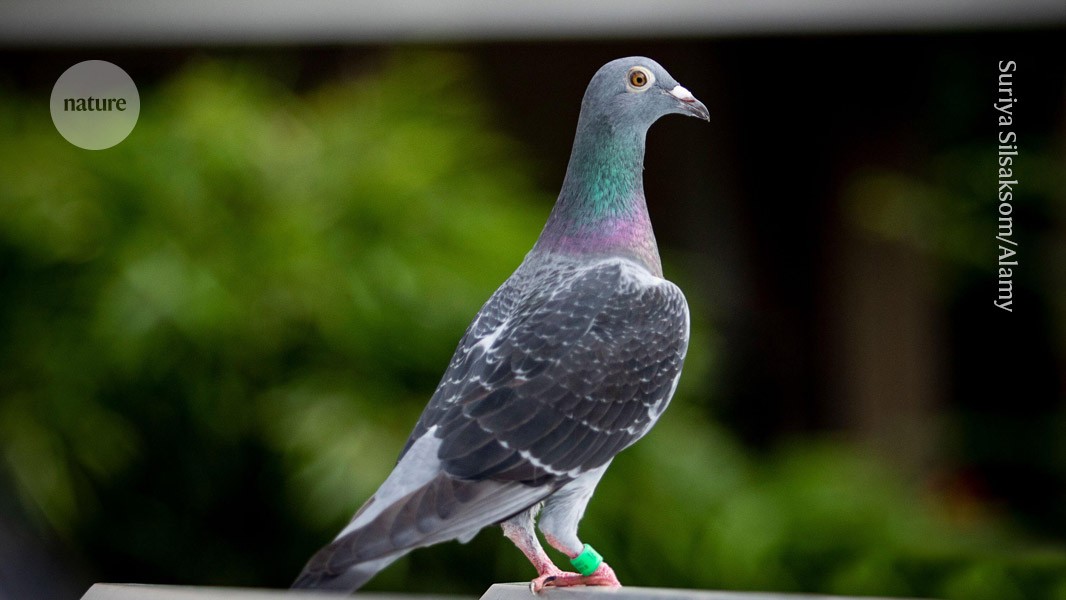
    Credit: Suriya Silsaksom/Alamy

    Pigeons can sense Earth’s magnetic field by detecting tiny electrical currents in their inner ears, researchers suggest. Such an inner compass could help to explain how certain animals can achieve astonishing feats of long-distance navigation.

    The team performed advanced brain mapping as well single-cell RNA sequencing of pigeon inner-ear cells. Both lines of evidence point to the inner ear as the birds’ ‘magnetoreception’ organ. The results appeared in the Science on 20 November 1.

    “This is probably the clearest demonstration of the neural pathways responsible for magnetic processing in any animal,” says Eric Warrant, a sensory biology researcher at the University of Lund in Sweden. Studies have suggested that various animals, including turtles, trout and robins, can sense the direction and strength of magnetic fields, although the evidence has sometimes been contested — and the mechanisms have remained controversial.

    Bird-brained navigation

    Two leading hypotheses have led the research into how birds sense magnetic fields. One is a quantum-physics effect in retina cells where birds ‘see’ magnetic fields. Another is that microscopic iron oxide particles in the beak could act as tiny compass needles. However, it’s largely unknown where magnetic information is sensed in animals’ brains and how sensory neurons confer sensitivity to electromagnetic changes.

    In 2011, researchers found hints that magnetic fields triggered pigeons’ vestibular system, the organ that enables vertebrates to sense accelerations (including gravity) and helps them to stay balanced2. The structure is made of three fluid-filled loops which are mutually perpendicular, so they can communicate to the brain the direction of an acceleration by breaking it down into three ‘x, y, z’ components.

    Compass protein attracts heap of criticism

    David Keays, a neuroscientist at Ludwig-Maximilian University of Munich in Germany, designed an experiment that could reveal how pigeons’ brains respond to magnetic fields.

    Keays’ team exposed six pigeons to a magnetic field slightly stronger than Earth’s for just over an hour. The birds’ heads were immobilized and the magnetic field was continually rotated to simulate the heads’ motions with respect to Earth’s geomagnetic field.

    Next, the team used a method for measuring activation patterns of neurons across the brain — by measuring a genetic marker of cell activity in pigeon brains made transparent by a technique called clearing. Maps of brain activity in birds that had been exposed to magnetic fields were compared to a control group that had not been exposed to magnetic fields.

    The results showed neuronal activity related to magnetic fields in the brain region that receives input from the vestibular system, as well as in regions that help to integrate various sensory stimuli. This result narrowed down the list of potential compasses to one — the vestibular system — although it did not explain how pigeon neurons can physically sense magnetic fields.

    A magnetic sense organ

    In principle, a conducting material in an organism could produce electric currents in response to magnetic fields, giving an animal a ‘magnetic sense’ — a mechanism that has been proposed as early as 1882 by French zoologist Camille Viguier3.

    In previous research, Keays had looked for a molecular mechanism of this magnetoreception by following inspiration from the biophysics of sharks and skates, which have organs that sense minute electric fields to help them find prey4. These animals express a protein sensitive to changes in neurons’ electrical activity, but modified with a 10-amino-acid-long insertion that allows them to sense electrical currents generated from magnetic fields.

    Fruit flies’ ability to sense magnetic fields thrown into doubt

    birds compass Mysterious organ
    Share. Facebook Twitter Pinterest LinkedIn Tumblr WhatsApp Email
    Previous Article4 Sleep Benefits of Masturbating Before Bed
    Next Article Gut Bacteria May Drive Ulcerative Colitis by Killing Macrophages
    admin
    • Website

    Related Posts

    The ins and outs of the new Dietary Guidelines for Americans in light of the gut microbiome

    February 25, 2026

    Patrick Veiga – Gut Microbiota for Health

    February 17, 2026

    The gut microbiome puzzle and probiotics in primary care patients with IBS

    February 16, 2026

    Lack of evidence for high-fiber diets to manage constipation? Here’s what works

    February 9, 2026
    Leave A Reply Cancel Reply

    Our Picks

    9 Time-Saving Kitchen Gadgets for Fall at Amazon

    September 5, 2025

    Why Exercise Is So Important For Heart Health, From An MD

    September 5, 2025

    An Engineered Protein Helps Phagocytes Gobble Up Diseased Cells

    September 5, 2025

    How To Get Rid Of Hangnails + Causes From Experts

    September 5, 2025
    • Facebook
    • Twitter
    • Pinterest
    • Instagram
    • YouTube
    • Vimeo
    Don't Miss
    Longevity

    Nautilus debuts Voyager platform in push toward next-gen proteomics

    By adminMarch 1, 20260

    Company’s new benchtop system promises a clearer view of proteins following validation at a leading…

    First-in-Human Success for Prenatal Stem Cell Therapy in Spina Bifida

    February 28, 2026

    Pressure-Driven Pathway Links Liver Congestion to Fibrosis and Cancer

    February 28, 2026

    A cellular atlas of aging comes into focus

    February 28, 2026

    Subscribe to Updates

    Get the latest creative news from SmartMag about art & design.

    About Us

    At FineGut, our mission is simple: to enhance your self-awareness when it comes to your gut health. We believe that a healthy gut is the foundation of overall well-being, and understanding the brain–gut connection can truly transform the way you live.

    Our Picks

    9 Time-Saving Kitchen Gadgets for Fall at Amazon

    September 5, 2025

    Why Exercise Is So Important For Heart Health, From An MD

    September 5, 2025

    An Engineered Protein Helps Phagocytes Gobble Up Diseased Cells

    September 5, 2025
    Gut Health

    Nautilus debuts Voyager platform in push toward next-gen proteomics

    March 1, 2026

    First-in-Human Success for Prenatal Stem Cell Therapy in Spina Bifida

    February 28, 2026

    Pressure-Driven Pathway Links Liver Congestion to Fibrosis and Cancer

    February 28, 2026
    X (Twitter) YouTube
    • Contact us
    • Privacy Policy
    • Disclaimer
    • Terms and Conditions
    © 2026 finegut.com. Designed by Pro.

    Type above and press Enter to search. Press Esc to cancel.