

Whole-body insight without radiation – mapping health, tracking change and catching disease early longer, better living.
Magnetic resonance imaging (MRI) uses powerful magnets and radio waves to create detailed 3D images of the body – without the ionizing radiation used in CT or PET scans. A whole-body MRI takes this a step further, scanning from head to toe to spot early signs of disease, assess organ health, and build a baseline for preventive care. Increasingly used in longevity-focused clinics, it offers a radiation-free way to visualize internal structures and track how the body changes with time and interventions. With longevity clinics moving toward data-rich baselines, full-body MRI is becoming a go-to tool for mapping health before symptoms ever appear – and a periodic look under the hood is often the simplest way to stay ahead of silent changes.
What is an MRI?
Magnetic resonance imaging (MRI) is a non-invasive imaging technology that produces three-dimensional detailed anatomical images. It does not use ionizing radiation, unlike CT or PET scans, making it safer for repeated imaging.
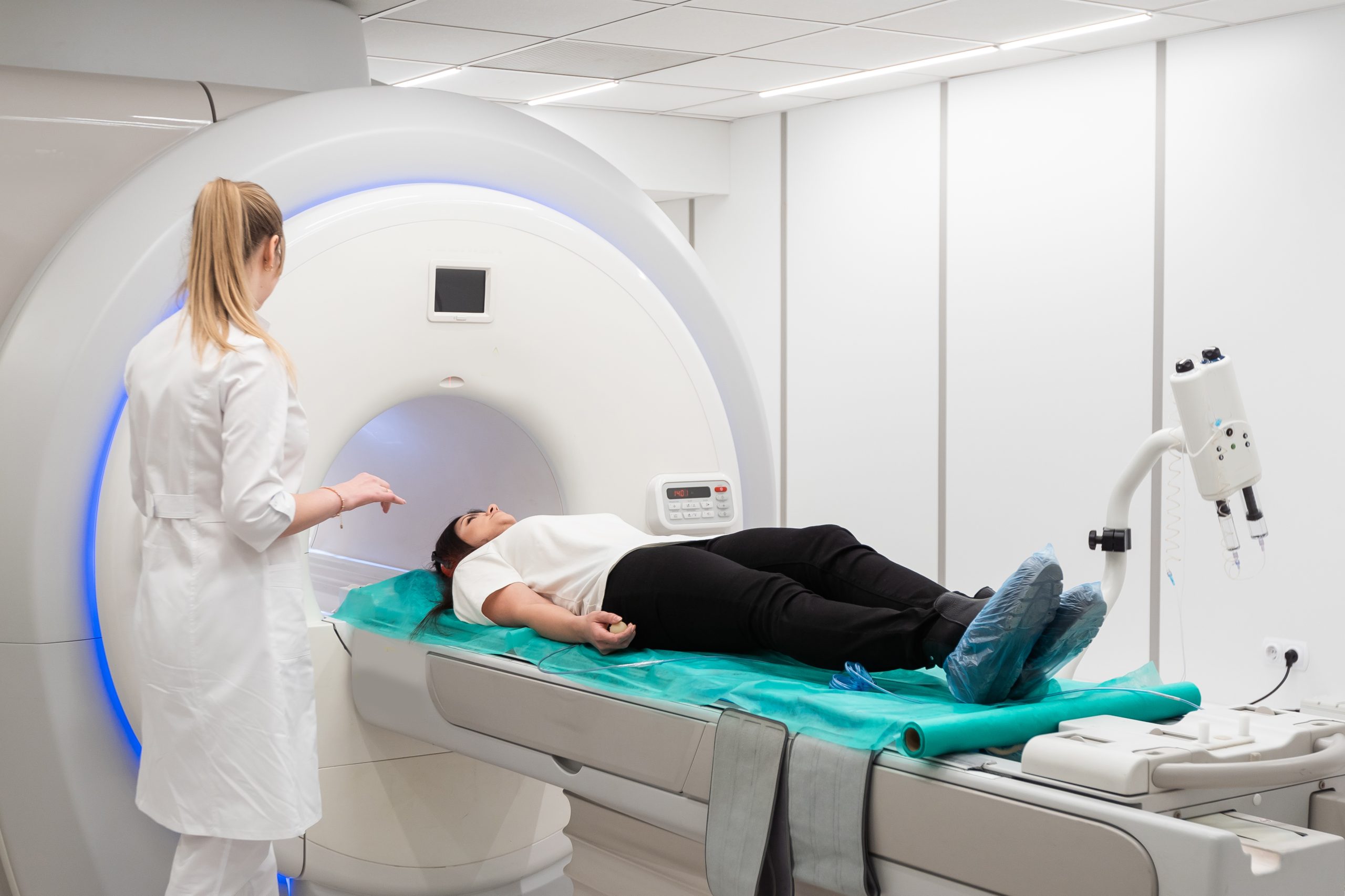
An MRI scanner is a long cylinder or tube with a powerful magnet. You lie on a table that slides into the scanner, and the magnetic field surrounds your body. Protons in your tissues align with this field. Radiofrequency pulses disturb the protons, and as they realign, they release signals that are captured and converted into images. Cross-sectional images are taken from many angles, allowing doctors to view the body in full detail [1].
In the clinic
During a full-body MRI, you’ll lie on a motorized table that slides slowly into the scanner – a quiet tunnel-shaped magnet surrounded by sensors that pick up the body’s natural signals. The process is painless and non-invasive, though it can take 30–90 minutes depending on the imaging protocol. Clinics use these scans to detect hidden issues like small tumors, aneurysms or inflammation before symptoms appear, as well as to monitor treatment effects or track biological aging. It’s a cornerstone of precision prevention – offering a window into the body’s internal landscape and helping longevity specialists personalize care long before problems arise. Regular follow-up scans help build a personalized health timeline, making age-related trends visible long before they translate into symptoms.
What can it do for me?
Whole-body MRI provides comprehensive imaging of organs, tissues, and blood vessels without radiation or contrast agents. It allows early detection of diseases, including cancer, and aids in preventive care and monitoring over time [2].
Whole-body MRI scans the entire body to detect cancer lesions in organs, bones, lymph nodes, and other tissues. It is recommended for patients with multiple myeloma, prostate cancer, melanoma, and individuals with cancer predisposition syndromes such as Li–Fraumeni or hereditary pheochromocytoma–paraganglioma. It can monitor nodal and bone metastasis in prostate cancer and is increasingly used for metastatic breast cancer, ovarian cancer, and lymphoma. WB-MRI can identify tumors and other abnormalities in the brain, neck, spine, chest, abdomen, and pelvis. While it provides broad coverage and early detection potential, it is not a substitute for targeted screening, and its precision varies by organ and lesion type [3].
Detailed disease detection by body region:
- Brain: aneurysms, benign and malignant tumors, early-onset Alzheimer’s and dementia, small vessel disease, multiple sclerosis, hydrocephalus, sinusitis
- Neck: salivary gland or thyroid tumors/cysts, thyroid cancer, enlarged lymph nodes, throat cancer
- Spine: multiple sclerosis, syrinx, spinal tumors, degenerative disc disease, arthritis, stenosis, bulging or herniated discs, bone cancer
- Chest: lung and breast tumors, aortic aneurysm, fluid in lung cavity, enlarged lymph nodes
- Abdomen: liver cirrhosis, pancreatic tumors/cysts/cancer, kidney tumors, stones, enlargement, adrenal tumors, splenomegaly, diverticulitis, abdominal aortic aneurysm, gallstones
- Pelvis: colon cancer, uterine fibroids, endometriosis, prostate cancer, enlarged prostate, hip arthritis [4].
It is important to continue standard cancer screenings such as mammography and colonoscopy, as WB-MRI is complementary rather than a replacement [5]. Because it surveys so much territory, it can flag harmless quirks or overlook tiny changes in harder-to-image tissues – which is why clinicians pair it with targeted tests when needed.
Precautions and safety considerations
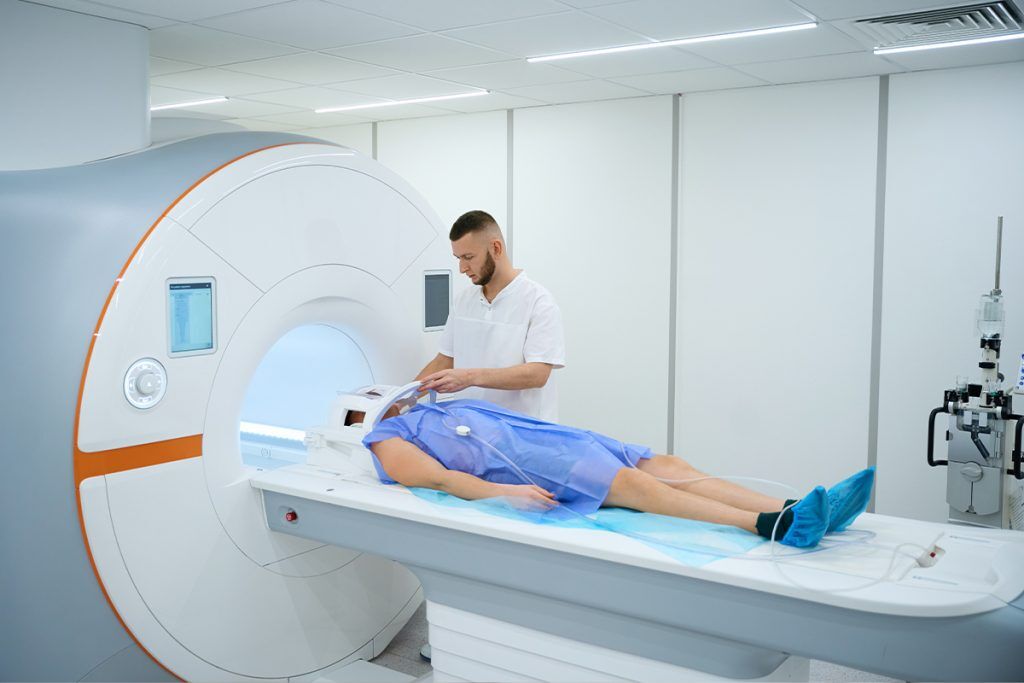
- MRI is generally safe, but strong magnets can interact with metal implants. Devices that may prevent MRI include:
- Certain metallic joint prostheses
- Some cochlear implants
- Some aneurysm clips or vascular coils
- Older pacemakers or defibrillators
- Vagal nerve stimulators [1]
- If you have claustrophobia or sensitivity to loud noise, discuss this with your physician before the scan [5].
- Wear MRI-safe clothing and remain very still during the exam.
[1] https://www.nibib.nih.gov/science-education/science-topics/magnetic-resonance-imaging-mri
[2] https://pubmed.ncbi.nlm.nih.gov/27635171/
[3] https://link.springer.com/article/10.1007/s11547-021-01392-2
[4] https://ecancer.org/en/journal/article/1164-whole-body-magnetic-resonance-imaging-technique-guidelines-and-key-applications
[5] https://www.ejradiology.com/article/S0720-048X(09)00108-9/abstract
