

- Most holiday leftovers last 2–4 days, so eat or freeze everything by Monday.
- Refrigerate leftovers within 2 hours and keep your fridge below 40°F for safety.
- Many dishes freeze well for up to 4 months—just label, date and reheat thoroughly.
For many Americans, a few days of turkey sandwiches, mashed potatoes and pumpkin pie after Thanksgiving is an annual tradition. Using up every bit of those leftovers isn’t just delicious—it’s also a great way to stretch your grocery budget and reduce food waste. But how long can you safely keep holiday leftovers in the fridge? And what’s the best way to extend their shelf life? We asked chefs, food scientists and safety experts to find out.
How to Make Your Holiday Leftovers Last Longer
Set yourself up for Thanksgiving leftover success by following everyday food safety guidelines as you prepare your holiday feast.
“Some of the best ways to extend the shelf life of holiday leftovers start with good food safety practices when initially preparing them,” says Vanessa Coffman, Ph.D., alliance director at the nonprofit organization Stop Foodborne Illness. “Make sure to wash your hands thoroughly before you start cooking and after touching raw meat, never wash your raw turkey or any other raw meat and use a meat thermometer to make sure foods reach a safe internal temperature.” These steps help prevent cross-contamination and kill harmful bacteria during cooking.
After the big meal, it’s important to refrigerate leftovers quickly. “Any food that’s not refrigerator cold or ready-to-serve hot is in the danger zone between 40°F and 140°F,” says April McGreger, culinary director and executive chef at The People’s Kitchen, a community-driven food rescue organization in Philadelphia. In this temperature range—known as the “danger zone”—bacteria can multiply rapidly, so aim to refrigerate leftovers within two hours of cooking. “You don’t want things sitting out for more than a couple of hours in that danger zone,” she says.
Also, be mindful of your fridge’s temperature, since proper temperature ensures food safety and protects quality. It should be set below 40°F, with freezers at 0°F or below. But just because your fridge is at the proper temperature when you start cooking doesn’t mean it will be if you fill it with several big pans or pots of still-warm food, which take much longer to cool than smaller containers. So portion dishes into smaller containers before storing to help them cool faster.
In commercial kitchens, McGreger says, chefs cool food in wide, shallow stainless-steel pans for faster cooling. At home, you can use shallow containers, takeout boxes or disposable foil trays to chill food efficiently.
“Make sure the leftovers are stored in airtight containers and that they are portioned out,” says Lisa Yakas, a trained microbiologist at NSF. “This reduces any food safety risk with leftovers being reheated multiple times.”
Ensure that holiday leftovers are well wrapped or sealed before storing to prevent drying out, off-flavors from light oxidation and freezer burn. Also, be sure to label and date them to keep things organized. Contrary to popular belief, it’s safe to refrigerate small portions of hot food without waiting for them to cool to room temperature. However, always let food cool before placing it in the freezer to avoid raising the freezer’s internal temperature.
How Long Can You Store Holiday Leftovers?
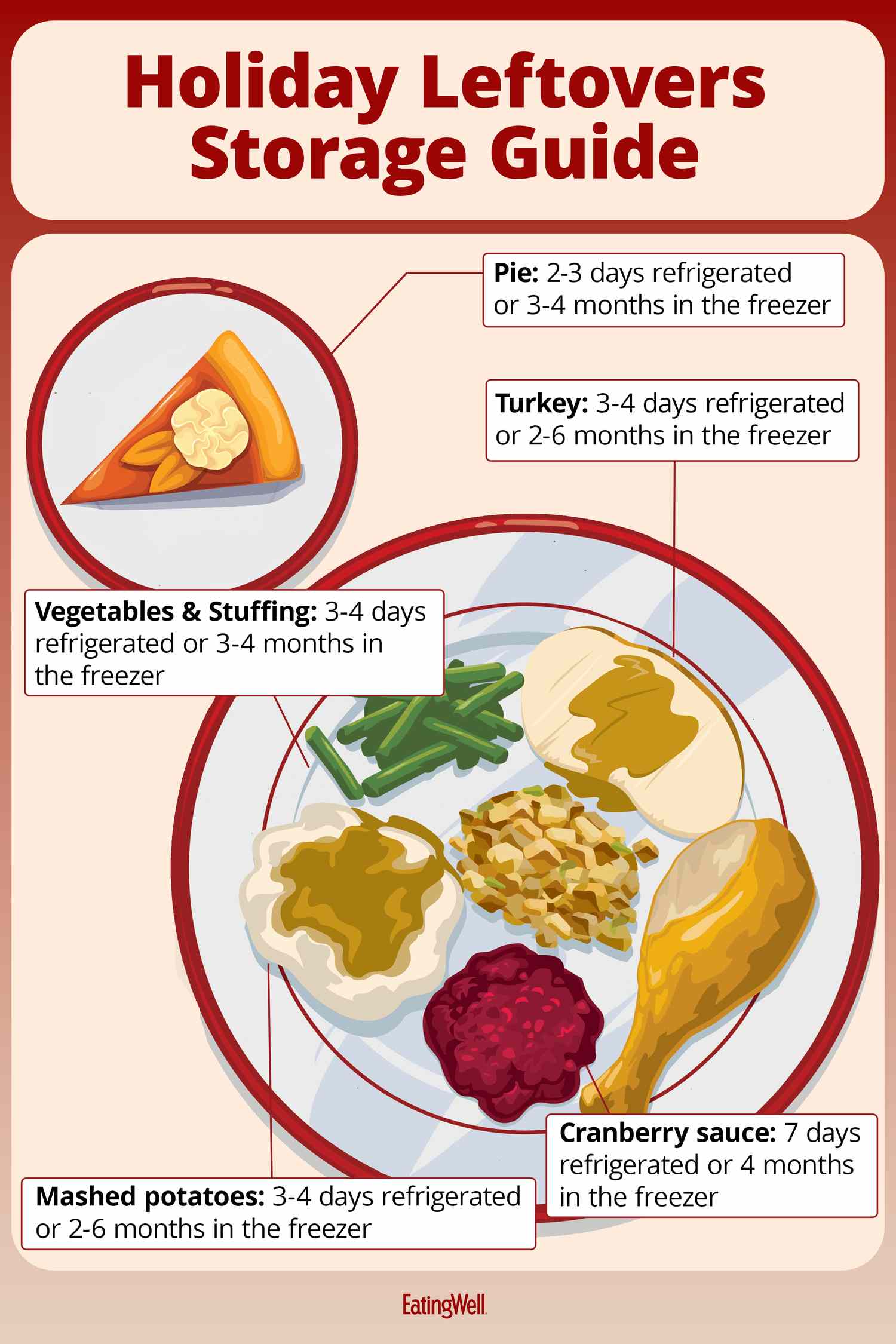
“Most holiday leftovers should be consumed within two to four days,” says Sara Bratager, senior food safety and traceability scientist at the Institute of Food Technologists. Plan to eat or freeze leftovers by the end of the long weekend. If something is still in your fridge by Monday morning, it’s best to compost it or toss it.
Many Thanksgiving classic dishes freeze well, though some—like stuffing or mashed potatoes—may change in texture. Dairy-containing foods may become grainy or watery when thawed. Stirring can help reincorporate moisture. While frozen foods are safe indefinitely, Bratager recommends eating them within three to four months for the best flavor and texture. Avoid thawing, reheating and refreezing leftovers to reduce food safety risks.
Turkey, Ham or Roast
Large meat dishes like roast turkey or ham can be stored in the fridge for three to four days and in the freezer for two to six months. For better flavor, Bratager suggests reheating turkey in the oven rather than the microwave to avoid off-flavors from fat oxidation. McGreger, who makes turkey stock from the leftover bird each year, says that the carcass can be frozen after removing the meat until you’re ready to make stock. Just be sure to use it within four months.
Mashed Potatoes
Bratager says that mashed potatoes last three to four days in the fridge and up to four months in the freezer in airtight containers. While they can reheat well in the microwave, she recommends heating them up until they’re steaming hot and stirring occasionally to ensure there are no cool spots.
Gravy
Gravy also lasts for three to four days in the fridge. McGreger recommends reheating it on the stove and bringing it to a rolling boil to kill any potential bacteria before serving. It can be frozen for up to four months.
Stuffing or Dressing
You can enjoy stuffing or dressing for three to four days after Thanksgiving. This is another case where reheating a dish in the oven—or, for a single serving, the toaster oven or air fryer—may give you a crispier, tastier texture. Stuffing stores well for three to four months in the freezer.
Cranberry Sauce
Due to its acidity and sugar content, cranberry sauce lasts longer than most Thanksgiving leftovers—up to seven days in the fridge. “Cranberry sauce’s high sugar and acidity help slow bacterial growth, which is why cranberry sauce lasts a bit longer than most leftovers,” Bratager says. Depending on the recipe, some cranberry sauces may last beyond one week, but they’ll likely taste better the sooner you eat them. Leftover cranberry sauce can be frozen for up to four months, though jellied varieties may change in texture once thawed.
Vegetable Sides
Veggie sides like roasted Brussels sprouts, green bean casserole and sweet potato casserole last three to four days. However, Bratager notes that roasted vegetables can get soggy quickly, so they’re best eaten soon. Any leftovers can be frozen for up to four months and defrosted overnight in the fridge before reheating. “For classic casseroles, oven reheating can help restore some of that crisped-top texture,” she says.
Pumpkin or Apple Pie
Pumpkin pie should be refrigerated within two hours of baking and eaten within two to three days. Bratager recommends always refrigerating homemade pies, but store-bought pies may be more shelf-stable depending on their ingredients. “If the store displays the pie at room temperature, it can likely remain at room temperature until the sell-by date, but refrigeration is still safer,” she says.
To freeze, let the pumpkin pie cool completely, then wrap it well in aluminum foil and place it in an airtight container or a zip-top bag. It can be frozen for up to three to four months. Apple pie can be stored at room temperature for up to two days or refrigerated for up to three. Note that refrigeration may make the crust turn stale more quickly. So any leftovers will taste best if they’re kept at room temperature for a shorter period.
Maren Caruso/Getty Images
Smart Ways to Use Up Leftovers
- Plan ahead. Have food storage containers, takeout boxes or disposable foil trays ready before the meal.
- Share the bounty. If you end up with more leftovers than your household and freezer can handle, plan to send guests home with a doggy bag.
- Freeze in portions. Use airtight containers, label with the date and freeze leftovers promptly. When you’re ready to enjoy them, simply defrost overnight and reheat.
- Eat foods with a shorter shelf life first. For example, polish off that pumpkin pie, which is lower in acid, before finishing an apple pie. The higher acidity in the apple pie will help slow potential bacterial growth.
- Reheat thoroughly. To minimize the risk of foodborne illness from Thanksgiving leftovers, McGreger recommends heating leftovers to piping hot. Boil gravy or soup for a full minute. Heat the food plates in the microwave until steaming, then let them cool to a comfortable temperature before enjoying.
Our Expert Take
With some planning and smart food safety habits, your holiday leftovers can provide several days of easy, tasty meals. Portion and refrigerate leftovers within two hours, and plan to eat or freeze everything by Monday. Many Thanksgiving dishes—from roasted meats to casseroles and pies—freeze well. Just be sure to chill, label and date everything before freezing, then thaw overnight in the fridge and reheat thoroughly before enjoying.
