

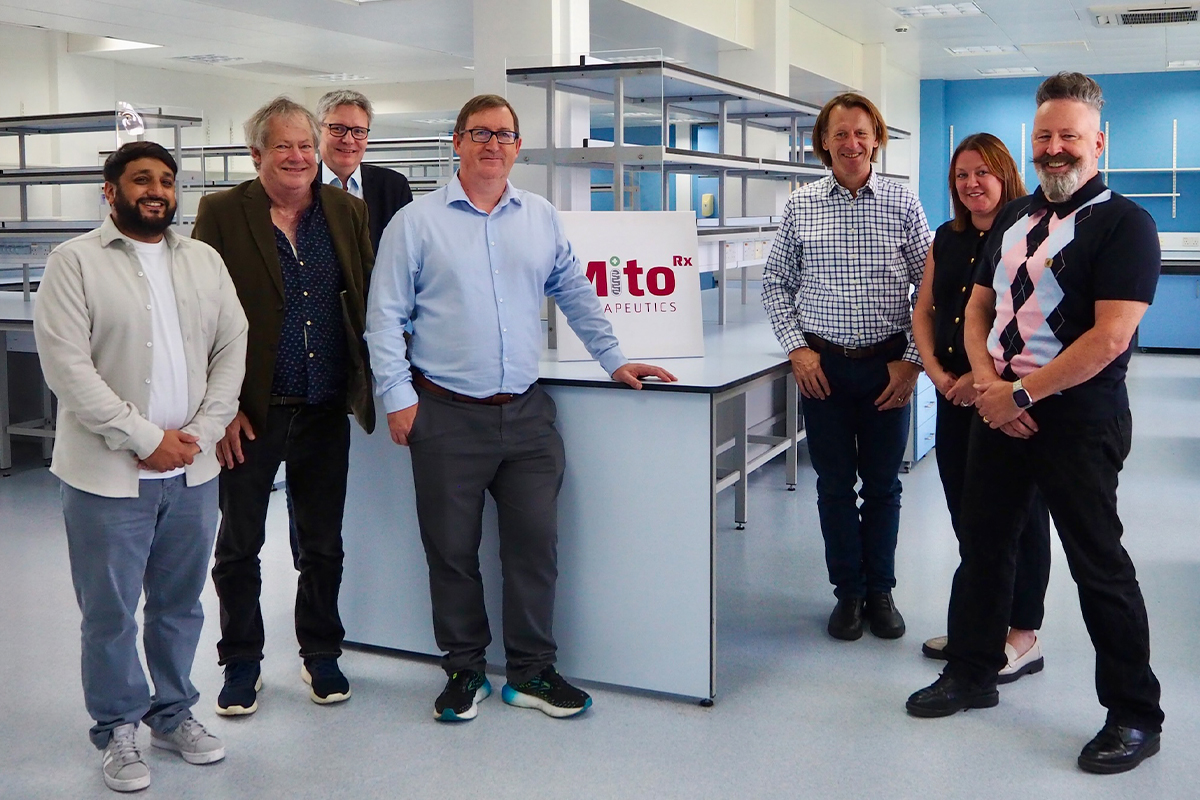
MitoRx raises new funding to advance Myo-004, a first-in-class mitochondrial-targeted obesity treatment that aims to preserve lean mass.
Oxford-based biotechnology company MitoRx Therapeutics Limited (MitoRx) has raised £5.5 million ($7.2 million) in a pre-Series A round, led by Oshen Holdings SA (Luxembourg), to accelerate development of what it describes as a next-generation obesity therapy called Myo-004.
The funding follows a series of recent preclinical data presentations and will move the said treatment program toward clinical candidate selection.
Myo-004 is a first-in-class injectable small molecule designed to promote fat loss without compromising muscle. In preclinical studies shared across multiple conferences in 2025, it improved metabolic rate, preserved lean mass and produced encouraging shifts in biomarkers linked to mitochondrial health.
Rather than simply reducing caloric intake or altering appetite pathways, the compound activates a targeted mitochondrial mechanism that aims to shift how the body uses and manages energy. For patients who experience fatigue, muscle decline, or fluctuating results on existing drugs, a mechanism that safeguards muscle could represent a meaningful clinical improvement.
Obesity continues to rise, with nearly 890 million people living with obesity worldwide, and 1.6 billion adults classified as overweight [1]. These pressures are forcing a shift toward treatments that not only reduce weight but also improve metabolic resilience and preserve muscle function.
While the obesity drug landscape has changed in recent years, a fundamental concern keeps resurfacing: the loss of lean mass during rapid weight reduction. While GLP-1 receptor agonists have reshaped the market and helped millions lose weight, muscle preservation remains a consistent and under-addressed challenge.
MitoRx is positioning itself in this exact gap. Its pipeline focuses not on appetite suppression but on mitochondrial correction, leaning on the idea that improving cellular energy systems can produce healthier, more functional weight loss.
The company’s new capital will carry Myo-004 through clinical candidate selection, the pivotal step before IND-enabling studies begin. It will also support the development of MitoRx’s oral programme through its proprietary Candidate Engine, which identifies next-generation mitochondrial-targeted molecules.
Dr Jon Rees, CEO and Cofounder of MitoRx, sees how “investors recognise that preservation of lean mass is key to effective weight loss therapy.”
“Our small molecules drive fat loss while preserving muscle through a unique mechanism, providing a better-quality outcome than GLP-1 receptor agonists. This funding enables us to build a comprehensive data package demonstrating safety, efficacy, and tolerability for people living with obesity,” Rees said.
For Oshen Holdings, the attraction lies in long-term therapeutic value rather than short-term weight reduction.
“While GLP-1 therapies have been a major step forward, the data show they are not the long-term solution,” said Justin Cahill, Managing Partner at Oshen Holdings SA. “MitoRx’s Myo-004 offers sustainable weight control, muscle preservation, and broader metabolic benefits, positioning the company at the forefront of next-generation obesity treatments.”
Despite the enthusiasm, the path ahead remains technically demanding. Mitochondrial-targeted therapies operate on intricate cellular systems and translating preclinical gains into human outcomes is challenging. Safety margins, dose optimisation and long-term metabolic effects will face scrutiny.
Still, timing may be on MitoRx’s side. As the first wave of GLP-1s exposes new gaps – muscle loss, rebound weight gain, high cost, tolerability issues – investors and clinicians are looking beyond appetite-focused mechanisms. A therapy that helps patients lose weight and maintain functional muscle could reshape how metabolic health is measured.
With the financing secured, MitoRx will advance Myo-004 through clinical candidate selection and begin preparing its IND-enabling package. The following 12 months will likely involve toxicology studies, formulation refinement, and early regulatory engagement, while the Candidate Engine continues to generate potential follow-on compounds.
If Myo-004 can sustain its early promise, MitoRx could emerge as a key player in the shift toward muscle-protective, mitochondria-centric obesity therapies, an approach that aligns more closely with long-term healthspan, not just weight on a scale.
Photographs courtesy of MitoRx
[1] https://www.who.int/news-room/fact-sheets/detail/obesity-and-overweight
