
Close Menu
My Blog

    Subscribe to Updates

    Get the latest creative news from FooBar about art, design and business.

    What's Hot

    Nautilus debuts Voyager platform in push toward next-gen proteomics

    March 1, 2026

    First-in-Human Success for Prenatal Stem Cell Therapy in Spina Bifida

    February 28, 2026

    Pressure-Driven Pathway Links Liver Congestion to Fibrosis and Cancer

    February 28, 2026
    Facebook X (Twitter) Instagram
    X (Twitter) YouTube
    My BlogMy Blog
    Sunday, March 1
    • Home
    • About Us
    • Healthy Living
    • DNA & Genetics
    • Podcast
    • Shop
    My Blog
    Home»Microbiome»Novel AI Tool Enables Spatial Quantification of Tumor Biopsy Images
    Microbiome

    Novel AI Tool Enables Spatial Quantification of Tumor Biopsy Images

    adminBy adminNovember 26, 2025No Comments3 Mins Read
    Facebook Twitter Pinterest LinkedIn Tumblr WhatsApp VKontakte Email
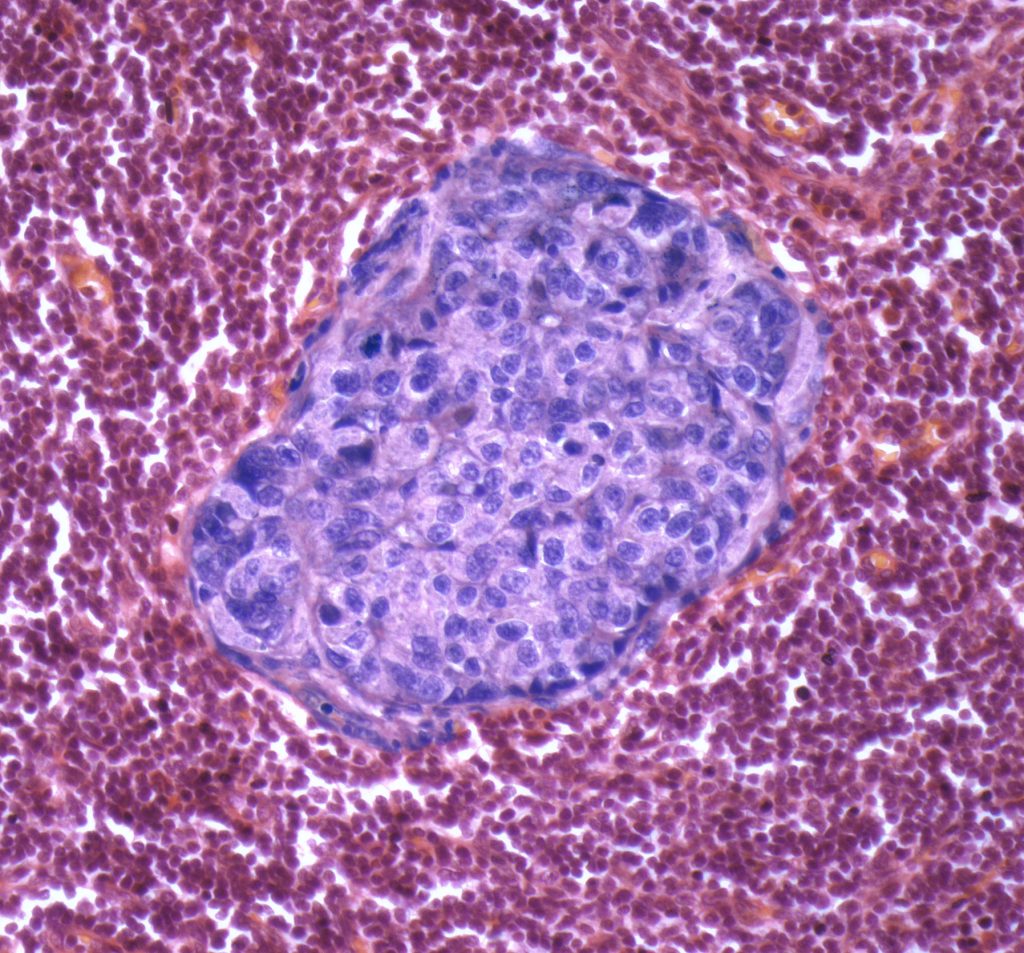
    Novel AI Tool Enables Spatial Quantification of Tumor Biopsy Images
    Share
    Facebook Twitter LinkedIn Pinterest Email

    Credit: STEVE GSCHMEISSNER/Getty Images

    University of Cambridge researchers have developed a machine learning algorithm that facilitates accurate spatial quantification of tumor tissue on digital pathology images, potentially enabling personalized treatment decisions guided by both what the tumor looks like and what its biology reveals.

    The tool, named SMMILe (Superpatch-based Measurable Multiple Instance Learning), not only matches or exceeds the performance of current state-of-the-art whole-slide image (WSI) tissue classification tools for the detection of cancer cells in tumor biopsies and surgical sections, but also predicts where the tumor lesions are located and the proportion of regions with different levels of aggressiveness.

    “SMMILe stands out because it delivers precise, scene-aware quantification of tissue types across diverse pathological contexts,” said lead researcher Zeyu Gao, PhD, from the Department of Oncology at the University of Cambridge in the U.K.

    “Rather than simply classifying a slide, it is able to measure how different tumor subtypes, grades and surrounding tissue components are spatially organized, giving us a structured and truly quantitative view of the tissue,” he told Inside Precision Medicine.

    Writing in Nature Cancer, Gao and co-authors explain that spatial quantification is a critical step in most computational pathology tasks because it guides pathologists to areas of clinical interest, can be used in biomarker discovery, and may facilitate downstream tasks such as spatially resolved sequencing.

    Yet the development of spatially aware computational pathology models is limited by the need for detailed spatial annotations, which are often unfeasible due to the vast scale of gigapixel images and the need for specialized domain knowledge.

    To overcome the need for manual annotations, modern computational pathology tools have use multiple-instance learning approaches that take a “representation-based” approach. They extract features from many small regions of a slide and then use an attention mechanism to combine these features. This allows the model to make predictions for the whole slide while also highlighting which regions are most important.

    These models have been successfully used in cancer screening and diagnosis, and for finding molecular markers and predicting treatment response. But the attention maps they produce can only be interpreted by visually inspecting them, which is qualitative and increasingly considered suboptimal for making spatially precise predictions.

    To address this, Gao and team developed SMMILe, a WSI analysis method designed to perform spatial quantification alongside WSI classification. Importantly, the tool was trained using slides that had been given simple, patient-level diagnostic labels, such as cancer type or grade rather than needing time-consuming, detailed region-by-region annotations from pathologists.

    The researchers tested the algorithm on eight datasets comprising 3850 whole-slide images covering lung, kidney, ovarian, breast, stomach, and prostate cancer. When compared with nine other WSI classification analysis AI tools, SMMILe’s performance in metastasis detection, subtyping, and grading either matched or exceeded these tools at slide-level classification, while significantly outperforming them when it came to estimating the proportions and spatial distribution of lesions.

    Once the tool has been tested on real-world datasets and in multi-center prospective validation studies, Gao said he believes it could support pre- and postoperative pathology assessment, helping clinicians track tissue changes, treatment response, and risk patterns.

    “SMMILe moves pathology from qualitative impressions to precise spatial quantification,” he said. “Patients who look similar under conventional pathology can now be distinguished by their tissue architecture and spatial organization. This provides a new layer of information to guide personalized therapies.”

    Biopsy Enables images quantification Spatial Tool Tumor
    Share. Facebook Twitter Pinterest LinkedIn Tumblr WhatsApp Email
    Previous ArticleOne of the Best Le Creuset Colors Is Retiring for Good
    Next Article ‘Anti-woke’ policies blamed for falling attendance at some US conferences
    admin
    • Website

    Related Posts

    First-in-Human Success for Prenatal Stem Cell Therapy in Spina Bifida

    February 28, 2026

    Pressure-Driven Pathway Links Liver Congestion to Fibrosis and Cancer

    February 28, 2026

    Genetic Biomarkers to Predict Efficacy of GLP-1 Therapies Uncovered

    February 28, 2026

    Mapping the Cellular Architecture of Aging Across 21 Organs

    February 28, 2026
    Leave A Reply Cancel Reply

    Our Picks

    9 Time-Saving Kitchen Gadgets for Fall at Amazon

    September 5, 2025

    Why Exercise Is So Important For Heart Health, From An MD

    September 5, 2025

    An Engineered Protein Helps Phagocytes Gobble Up Diseased Cells

    September 5, 2025

    How To Get Rid Of Hangnails + Causes From Experts

    September 5, 2025
    • Facebook
    • Twitter
    • Pinterest
    • Instagram
    • YouTube
    • Vimeo
    Don't Miss
    Longevity

    Nautilus debuts Voyager platform in push toward next-gen proteomics

    By adminMarch 1, 20260

    Company’s new benchtop system promises a clearer view of proteins following validation at a leading…

    First-in-Human Success for Prenatal Stem Cell Therapy in Spina Bifida

    February 28, 2026

    Pressure-Driven Pathway Links Liver Congestion to Fibrosis and Cancer

    February 28, 2026

    A cellular atlas of aging comes into focus

    February 28, 2026

    Subscribe to Updates

    Get the latest creative news from SmartMag about art & design.

    About Us

    At FineGut, our mission is simple: to enhance your self-awareness when it comes to your gut health. We believe that a healthy gut is the foundation of overall well-being, and understanding the brain–gut connection can truly transform the way you live.

    Our Picks

    9 Time-Saving Kitchen Gadgets for Fall at Amazon

    September 5, 2025

    Why Exercise Is So Important For Heart Health, From An MD

    September 5, 2025

    An Engineered Protein Helps Phagocytes Gobble Up Diseased Cells

    September 5, 2025
    Gut Health

    Nautilus debuts Voyager platform in push toward next-gen proteomics

    March 1, 2026

    First-in-Human Success for Prenatal Stem Cell Therapy in Spina Bifida

    February 28, 2026

    Pressure-Driven Pathway Links Liver Congestion to Fibrosis and Cancer

    February 28, 2026
    X (Twitter) YouTube
    • Contact us
    • Privacy Policy
    • Disclaimer
    • Terms and Conditions
    © 2026 finegut.com. Designed by Pro.

    Type above and press Enter to search. Press Esc to cancel.