

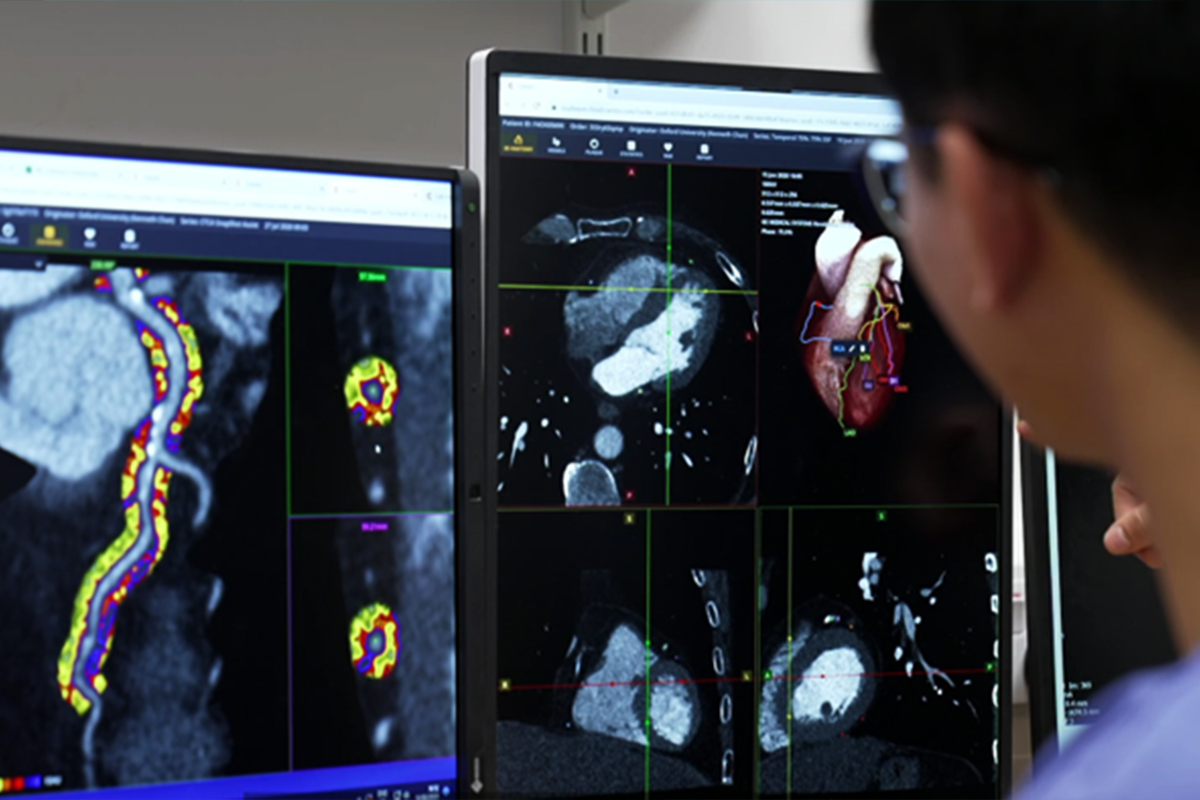
Medicare finalizes reimbursement for CaRi-Plaque, giving hospitals and clinics a unified route to adopt AI-powered coronary plaque analysis.
The use of AI in cardiovascular imaging took a major step forward as the Centres for Medicare & Medicaid Services (CMS) confirmed new national reimbursement for CaRi-Plaque, Caristo Diagnostics’ AI-based coronary plaque analysis.
From 1 January 2026, hospitals will be able to bill Medicare $950.50 for CaRi-Plaque under the Hospital Outpatient Prospective Payment System (OPPS). This follows CMS’s recent decision to set a 2026 Physician Fee Schedule (PFS) rate of over $1,000 for the same procedure in physician offices and imaging centers, using the new Category I CPT code 75577.
With both OPPS and PFS pathways now in place, CaRi-Plaque gains full Medicare coverage across the two settings where coronary CT angiography (CCTA) is most commonly performed.
CCTA is already a frontline tool for assessing coronary artery disease, but interpreting plaque burden and features can be slow, specialist-dependent and prone to variation. CaRi-Plaque automates this analysis, quantifying plaque volume and identifying high-risk features directly from standard scans.
The new reimbursement decision effectively removes one of the most significant barriers to adoption: cost uncertainty. With a clear billing route, hospitals and clinics can integrate the technology into routine workflows without the financial hesitation that often slows the uptake of emerging tools.
“CMS should be applauded for recognizing the value of AI-augmented plaque analysis of CCTA,” said Caristo CEO Frank Cheng. “With established payment in both hospital outpatient and physician-office settings, cardiac imaging and prevention professionals finally have a clear path to make CaRi-Plaque part of routine CCTA workflows.”
The ruling comes as CMS continues to expand support for AI diagnostics, reflecting a broader shift towards more proactive cardiovascular risk assessment. Heart disease remains the leading cause of death in the United States; tools that spot risk earlier – and with greater precision – are essential to changing that trajectory.
CaRi-Plaque is designed to quantify what cardiologists often cannot easily see: the structure and composition of plaque that drive coronary artery disease. By automating what is typically a labor-intensive process, the software promises both consistency and speed, enabling physicians to make earlier, more informed decisions.
A CaRi-Plaque report provides clinicians with a detailed snapshot of what is happening inside each coronary artery, turning a standard CT scan into a structured, quantitative map of plaque burden.
Rather than relying on subjective impressions, the system generates objective metrics that help cardiologists identify risk earlier and guide treatment decisions with greater precision. Each report includes:
- Maximum stenosis – the tightest narrowing in any coronary vessel
- Total plaque volume – the overall amount of plaque present
- Calcified plaque (CP) volume – hardened, long-standing deposits
- Non-calcified plaque (NCP) volume – softer, potentially more active plaque
- Low-density non-calcified plaque (LD-NCP) volume – the highest-risk, rupture-prone component
- Plaque burden – how much of the artery is affected overall
- Remodeling index – how the vessel wall is changing in response to disease
The CaRi-Plaque technology sits alongside Caristo’s flagship CaRi-Heart platform, which detects hidden coronary inflammation on routine CCTA – a powerful predictor of future cardiac events [1]. CaRi-Heart is currently under FDA review and is widely used across Europe. A 2024 Lancet study demonstrated its ability to reveal high-risk inflammatory markers that can predict heart attacks up to ten years before they occur [2].
The global leader in cardiovascular disease diagnostics and risk prediction is now working with hospitals and imaging centers across the US to support the implementation of CaRi-Plaque and ensure billing readiness ahead of the January 2026 start date. With both inpatient and outpatient reimbursement secured, the company expects wider clinical uptake and increased momentum behind AI-enhanced cardiac imaging.
Medicare’s decision is a signal for cardiology teams, clinics, and hospitals that AI-enabled plaque analysis is moving from experimental to expected practice. As reimbursement solidifies, the question is no longer whether to adopt tools like CaRi-Plaque, but how quickly services can integrate them to improve triage, risk prediction and prevention.
For providers preparing for 2026, the opportunity is clear: those who modernize their CCTA workflows now will be the first to offer patients a higher standard of cardiovascular care.
Images courtesy of Caristo Diagnostics
[1] https://www.caristo.com/cari-heart-technology/
[2] https://www.thelancet.com/journals/lancet/article/PIIS0140-6736(24)00596-8/fulltext
