

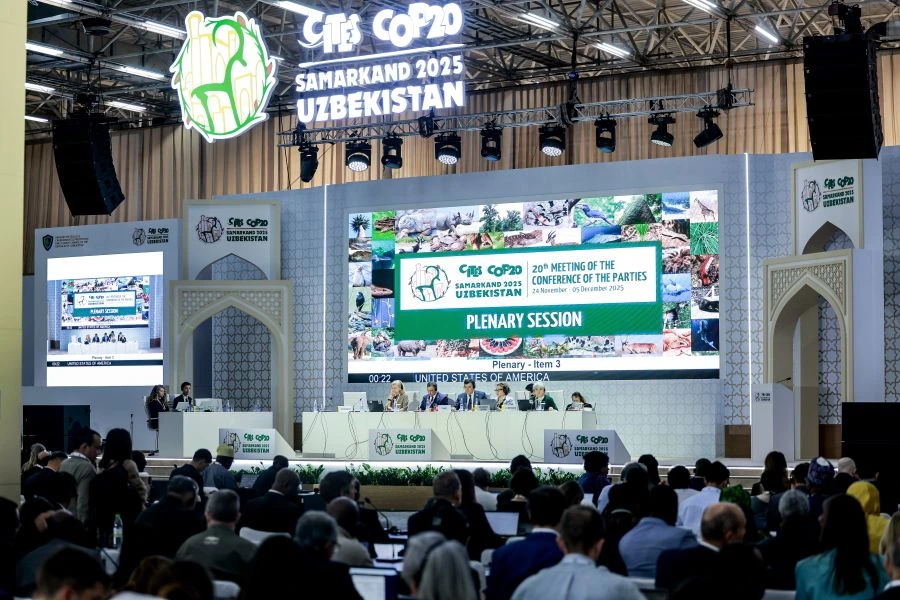
At the ongoing 20th Conference of the Parties (CoP) to the Convention on the International Trade in Endangered Species of Wild Fauna and Flora (CITES), 185 members gather in Uzbekistan to ensure international trade in wild species is sustainable, legal, and traceable. While trade in wild animals receives considerable public attention, the global wildlife trade monitoring NGO TRAFFIC cautions that wild plants may be overlooked.
Based on the most recent data, TRAFFIC reported earlier this year that plant-derived medicinals comprised the largest share of CITES-related seizures (21%) in the EU. Many of these products were seized due to the lack of accompanying permits, which are required for legal trade.
The organization’s director for Europe, Anastasiya Timoshyna, tells Nutrition Insight that a lack of awareness among buyers about CITES permit requirements is one of the key drivers behind this non-compliance.
“With the trade in plant ingredients, this is such a critical issue, because companies, both exporting and importing, may not be aware that they need to get permits,” she notes. “It’s also damaging for the business, because if products keep getting seized, you could end up seeing no benefits of CITES.”
In addition, she notes that while there is strong interest and support on animal trade issues, “there is very little engagement” with plants, making it challenging to share success stories and raise awareness.
Paola Mosig Reidl, co-lead of Data, Research, and Enforcement Support, adds that there is a need for greater awareness among regulatory authorities and consumers. “Often in plant ingredients, people who demand these products are not even aware that they come from a plant, and even less that they are listed in CITES.”
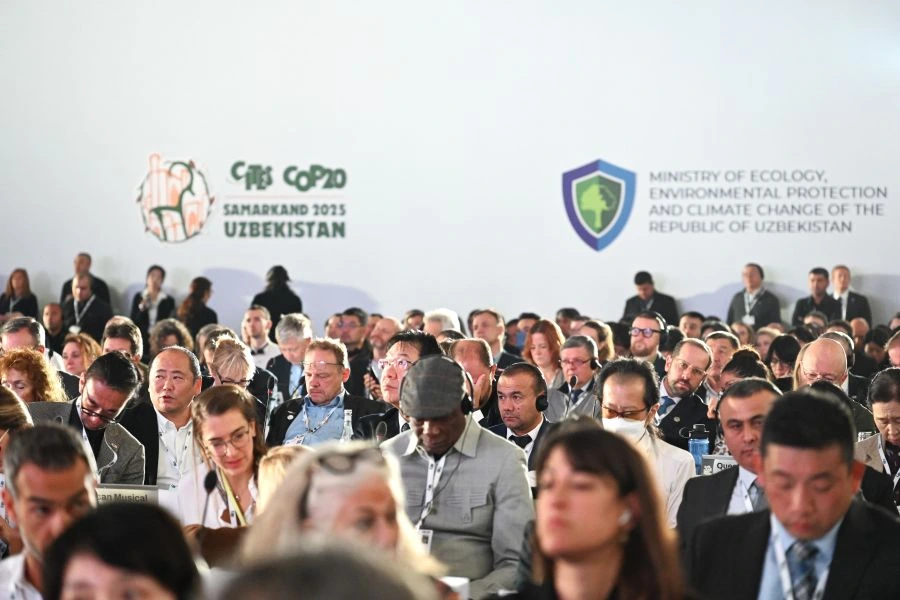 CoP20 is taking place in Samarkand, Uzbekistan, from Nov 24–Dec 5, where the Parties will consider proposals to amend appendices (Image credit: CITES Secretariat).The ongoing CoP20 aims to mitigate the decline of wildlife populations and protect ecosystems from illegal trade and habitat loss. CITES Parties come together every three years since the Convention entered into force in 1975, to determine which species need more or less protection by proposing amendments to its appendices.
How does it work?
CITES is an intergovernmental agreement that aims to ensure that international trade in over 40,000 species of wild animals and plants does not threaten their survival. CITES is a legally binding agreement to all countries that join it (Parties), but they must adopt their own domestic legislation to ensure national implementation.
The Convention lists species and plant parts in three Appendices, each with a different level of protection. Appendix I includes species threatened with extinction, where trade is only permitted in “exceptional circumstances.” Plant examples include several aloe and orchid species.
Meanwhile, trade in species listed in Appendix II is allowed but must be controlled to ensure their survival, although these are not necessarily threatened with extinction. Examples include all Rhodiola species, Panax ginseng from the Russian Federation, and African cherry (Prunus africana), which has a long history of use in traditional medicine.
Trading species on these two appendices requires an export permit or re-export certificate issued by the CITES Management Authority in the country of export. Appendix I species also require an import permit.
Traders can only obtain a permit if the materials are legally obtained and if trade “will not be detrimental to the survival of the species.” The exporting country’s Scientific Authority affirms this non-detriment finding (NDF) by compiling data on species’ population size and distribution, threats, and harvest levels and trends.
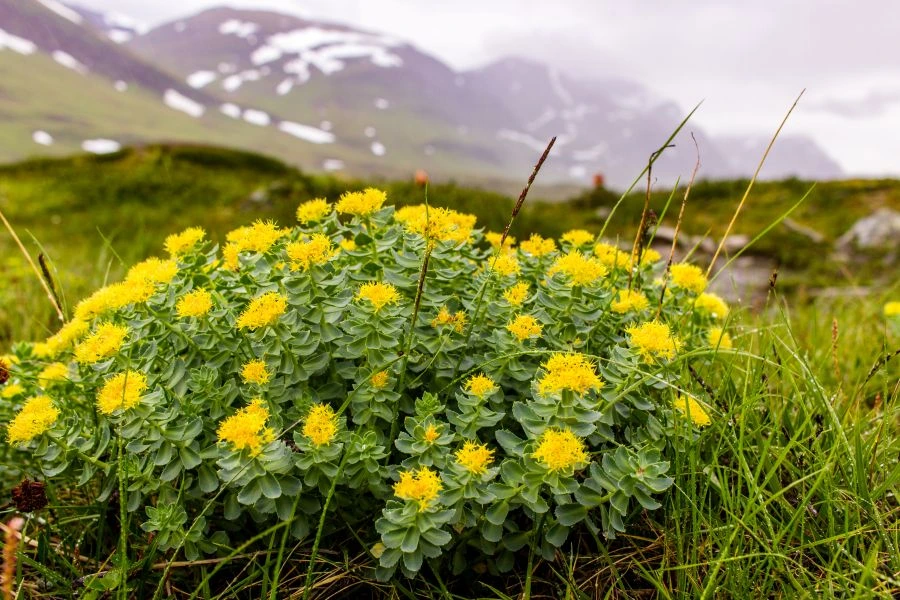 Only Rhodiola rosea and R. crenulata populations are in decline, but it is difficult to identify specific species, so the whole genus is listed in CITES.Species listed in the third appendix are protected in at least one country that has requested that other CITES Parties assist in controlling trade.
The issue with enforcement
TRAFFIC’s report on EU seizures of CITES-listed species notes that the high frequency of plant medicinal seizures creates a considerable administrative burden for authorities with limited resources.
Timoshyna explains that national-level agencies, such as customs, are involved in this process as it concerns illegal trade. She says this is a compliance matter: “Somebody didn’t know about these permits, or didn’t want to get one because it is expensive, takes time, and is low risk.”
She notes that there is an “astounding number of seizures,” which is a significant burden on enforcement authorities.
The complexity of long international value chains of plant products further complicates the issue, explains Timoshyna. In the case of P. africana, one of the most commonly seized plants in supplements, most EU seizures are for products originating from the US, rather than from Central African countries where this tree is native.
Solving this would require coherent action that connects all stakeholders, she says.
 In 2023, there were 5,195 reported CITES-related seizures in the EU, of which 21% constituted plant-derived medicinals. Mosig Reidl highlights another issue with CITES-listed plant species, noting that many of them are only included because they resemble threatened species, not because trade may harm their survival.
“Around 40,000 species are included in CITES; around 35,000 are plant species. We know, for example, that all orchids are included in CITES, and there are an estimated 25,000 to 30,000 species of orchids worldwide. Many of these species probably don’t even need regulation.”
Role of industry
Timoshyna calls on industry players to get more involved in CITES.
“Industry has a major role to play to continue innovating, being brave, and taking on these challenges, because these are important species and come from important places. And there is so much evidence that sustainable trade does have positive outcomes.”
TRAFFIC’s report also notes that buyers of seized plant medicinals “typically order low volume and low value products online.”
According to Timoshyna, government reporting on seizures often fails to include online trade. “Through online platforms, buying and selling have become so easy. But, as a consumer, I think there is some responsibility in asking, ‘Is it CITES-listed? If it is, did it come with a certificate?’ A simple question from a seller.”
Finished products vs. ingredients
The CITES appendices also clarify which parts of a plant are included, and could also include finished products containing a listed ingredient.
 Timoshyna calls on industry players to be more involved in CITES, as sustainable trade of wild species has positive outcomes.Timoshyna says that enforcement agencies may not always be able to assess the harm of seized products for a species’ survival, especially if these concern finished products that include a CITES-listed ingredient.
“If you see some products you want to know: ‘Does it have a really detrimental impact on populations or ecosystems?’ Because what you see would be thousands of pills of P. africana for herbal medicine or food supplements.”
Mosig Reidl adds that CITES Authorities sometimes may not be aware if traded ingredients are listed in the Convention. For example, she points to a case in Mexico, where authorities were unaware that candelilla wax, used in cosmetics, was listed in the appendices. “If you’re not in the industry, you don’t even realize. I think it’s a lot trickier with plants, and they go more inadvertently in trade.”
She urges that the regulation needs to cover whatever is driving the threat to the species. “In many cases, it doesn’t make any sense to regulate finished products.”
Mosig Reidl says that the most important thing is that countries where a species naturally grows make sustainable use of the species and can prove this. If they mainly export ingredients, not finished products, “that’s what needs to be regulated.”
