

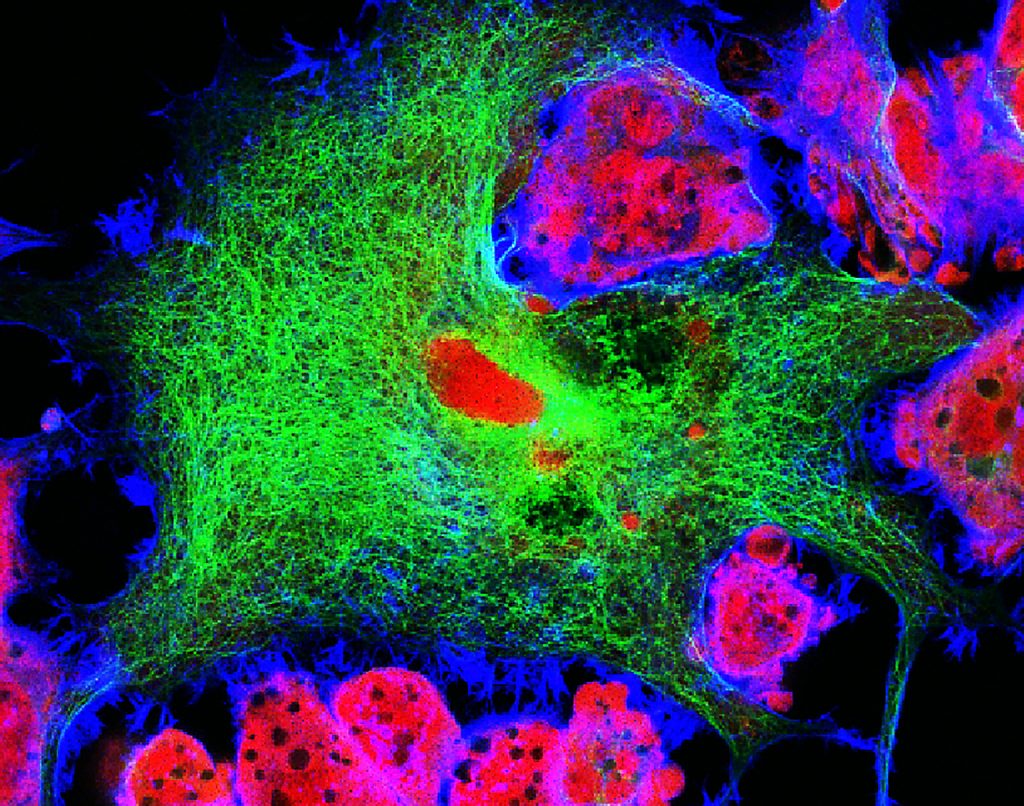
Researchers at the Garvan Institute of Medical Research in Sydney, Australia, have discovered that an existing cancer drug may help treat the childhood cancer neuroblastoma, a cancer that that kills nine out of every 10 patients whose cancer recurs. The research, published in Science Advances, shows that an approved drug for lymphoma called romidepsin can induce cell death in neuroblastoma through pathways that remain active even when standard chemotherapy drugs lose effectiveness. The discovery may help clinicians design treatment combinations that can avoid the development of the resistance that makes relapsed neuroblastoma so difficult to treat.
“Finding a way to overcome the resistant state of relapsed high-risk neuroblastomas has been a major goal for my lab,” said senior author David Croucher, PhD, an associate professor at the Garvan Institute. “These tumors can be highly resistant to chemotherapy—and the statistics once patients get to that point are devastating for families. By finding drugs that don’t depend on the JNK pathway, we can still trigger cancer cell death even when this usual route is blocked.”
Neuroblastoma is the most common solid cancer in children outside the brain and accounts for seven to eight percent of childhood cancers. While low- and intermediate-risk neuroblastoma have survival rates of 90% to 98%, most children have high-risk disease at the time of diagnosis. Current standard treatments for this cancer include multiagent chemotherapy, surgery, radiotherapy, and immunotherapy. However, fewer than half of patients with high-risk neuroblastoma are cured and 15% do not respond to initial chemotherapy, and half of those who do respond will eventually experience cancer recurrence. For these patients, the five-year overall survival rate is 10%.
Previous work by the team at Garvan explored the nongenetic mechanisms of how neuroblastoma develops treatment resistance and found that “an impaired ability to activate apoptosis through c-Jun N-terminal kinase (JNK)—a pathway required for the induction of apoptosis by many standard-of-care chemotherapy drugs—was significantly associated with poor overall survival for HRNB patients,” they wrote in Science Advances. Standard chemotherapies often target this pathway to treat the cancer, but once this pathway becomes impaired, any relapse becomes difficult to treat. The research also detailed how a population of JNK-impaired cells becomes stabilized within relapsed tumors.
To search for new treatment options, the researchers used a combined stratified panel of neuroblastoma cell lines with a pediatric-focused drug screen. The goal was to potentially identify approved oncology drugs that could induce cancer cell apoptosis that didn’t involved the JNK pathway. This screening approach identified the histone deacetylase (HDAC) inhibitor romidepsin as a particularly promising candidate because it was effective in neuroblastoma cells regardless of whether the JNK pathway was functional.
Based on this discovery, the team then tested romidepsin in combination with standard chemotherapy in mouse models of neuroblastoma. Through collaboration with the Children’s Cancer Institute, the researchers evaluated whether adding romidepsin could overcome resistance in relapsed neuroblastoma. The data showed that romidepsin, when combined with chemotherapy, reduced tumor growth and extended survival compared with standard treatment alone. An important finding was that including romidepsin in a combined treatment required lower doses of chemotherapy to be effective, which could alleviate the long-term side effects of high-dose chemotherapy.
In addition to their search for a drug that could be repurposed for treating neuroblastoma, the researchers also looked to find out why some chemotherapy combinations fail to produce strong responses. The researchers wrote that synergy between drugs “does not necessarily emerge from the combination of drugs with different mechanisms of action but rather from drugs that differ in their utilization of apoptotic network components.” This finding could explain why current salvage regimens used for relapsed neuroblastoma, such as TVD (topotecan, vincristine, doxorubicin), do not consistently improve survival.
The Garvan team noted that while romidepsin shows potential as a neuroblastoma treatment, there are still some challenges for its use—noting that there are well-known issues with specificity for HDAC inhibitors which can result in toxicity. Their mouse models showed dose-limiting toxicity, which constrained the amount of the drug that could be safely combined with chemotherapy. In the future, this combination treatment strategy could take advantage of next-generation HDAC inhibitors, such as antibody–drug conjugates or proteolysis-targeting chimeras (PROTACs), which could allow more targeted delivery with fewer side effects.
Researchers in the Croucher lab are now working to refine treatment schedules and delivery methods in preparation for the clinical trials that will be needed before romidepsin can be integrated into the clinic. Regardless of the outcome, the researchers wrote that their findings “provide a clear rationale to think differently about the design of effective multiagent chemotherapy schedules for HRNB,” particularly for relapsed disease in which tumor biology has fundamentally changed after initial therapy.
