
Close Menu
My Blog

    Subscribe to Updates

    Get the latest creative news from FooBar about art, design and business.

    What's Hot

    Nautilus debuts Voyager platform in push toward next-gen proteomics

    March 1, 2026

    First-in-Human Success for Prenatal Stem Cell Therapy in Spina Bifida

    February 28, 2026

    Pressure-Driven Pathway Links Liver Congestion to Fibrosis and Cancer

    February 28, 2026
    Facebook X (Twitter) Instagram
    X (Twitter) YouTube
    My BlogMy Blog
    Sunday, March 1
    • Home
    • About Us
    • Healthy Living
    • DNA & Genetics
    • Podcast
    • Shop
    My Blog
    Home»DNA & Genetics»From Circuits to Behavior: Early-Career Neuroscientists Awarded for Breakthrough Research
    DNA & Genetics

    From Circuits to Behavior: Early-Career Neuroscientists Awarded for Breakthrough Research

    adminBy adminDecember 3, 2025No Comments3 Mins Read
    Facebook Twitter Pinterest LinkedIn Tumblr WhatsApp VKontakte Email
    The Scientist Logo
    Share
    Facebook Twitter LinkedIn Pinterest Email

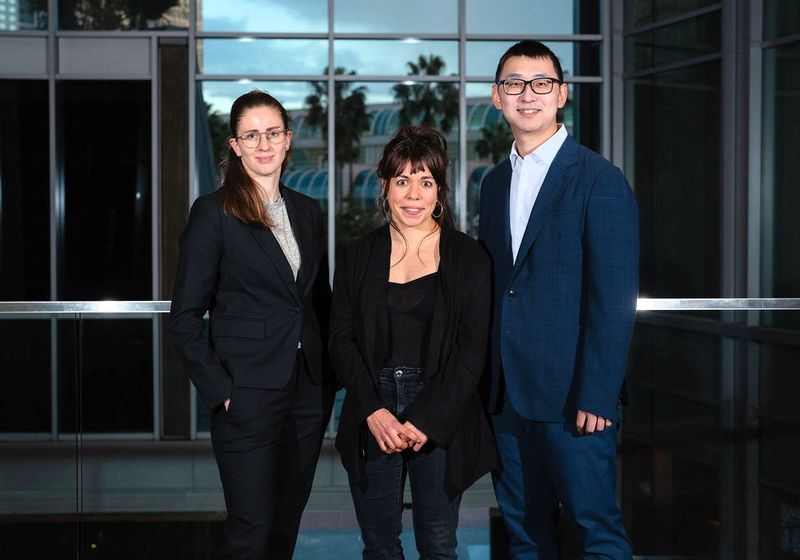
    Constanze Depp, Sara Mederos, and Cheng Lyu were recognized for their innovative contributions to neurobiology.

    Image credit:Eppendorf

    The Eppendorf & Science Prize for Neurobiology honors early-career scientists, 35 years of age or younger, who have shared their exceptional research through personal essays. In a ceremony on November 16, 2025, in San Diego during the week of the Annual Meeting of the Society for Neuroscience, representatives from Eppendorf and Science awarded neuroscientist Cheng Lyu with the top honor. Lyu was joined by finalists Constanze Depp and Sara Mederos, and all three scientists presented their research to the awards ceremony attendees.

    Top prize winner Cheng Lyu presented his research on rewiring olfactory circuits in fruit flies during the 2025 Eppendorf & Science Prize for Neurobiology ceremony.

    Eppendorf

    Cheng Lyu is a postdoctoral fellow at Stanford University in the laboratory of Liqun Luo. His prize-winning research focuses on rewiring the fruit fly olfactory neural circuit to understand its development. During his presentation at the awards ceremony, he discussed the process of manipulating Drosophila neural circuits to alter courtship behaviors. “[The altered males] show this enormous interest in each other, and they constantly chase. This chase last for hours,” Lyu said. “They even bump into each other, and sometimes they even form this…courtship chain.” Lyu has plans to start his own laboratory in the School of Life Sciences at Westlake University. “In my own lab, I will study the development function of these fly brain regions with the aim to understand, one day, how developmental changes shape our cognition,” he concluded.

    Continue reading below…

    Like this story? Sign up for FREE Newsletter updates:

    Latest science news storiesTopic-tailored resources and eventsCustomized newsletter content

    Subscribe

    The first of two finalists recognized at the awards ceremony was Constanze Depp, a postdoctoral fellow at the Broad Institute of MIT and Harvard. She was recognized for research performed while earning her PhD at the University of Göttingen, working in the laboratory of Klaus-Armin Nave at the Max Planck Institute for Experimental Medicine. There, she explored the role of oligodendrocytes and the myelin they produce in Alzheimer’s disease. “This work really started and was motivated by a bigger question, which is, why is aging this major risk factor for the development of Alzheimer’s disease?” Depp explained during her presentation. “In my PhD, I discovered a mechanism that might help us explain this age-related vulnerability. This mechanism was a pretty intricate interplay between oligodendrocytes, myelin, microglia, and amyloid.”

    Sara Mederos, a Wellcome Early Career Fellow working for the Sainsbury Wellcome Center at University College London, joined Depp as a finalist. Her work on the brain’s fear response, conducted in Sonja Hofer’s laboratory, explored how organisms can learn to suppress their fear instincts. For example, experiments where Mederos mimicked an approaching predator caused mice to run to a shelter for safety. After this threat was repeated multiple times without negative repercussions, the mice no longer hid. “So, mice learn to actually suppress this native escape response,” Mederos said during her talk. Next year, she will start an independent lab at the Hospital del Mar Research Institute in Barcelona as a Ramón y Cajal Fellow.

    Continue reading below…

    The 2025 Eppendorf & Science Prize for Neurobiology ceremony highlighted the creativity, rigor, and ambition that drive early-career researchers. Through their diverse work, Lyu, Depp, and Mederos showcased how fundamental research can reshape the understanding of the brain.

    awarded Behavior breakthrough Circuits earlycareer Neuroscientists Research
    Share. Facebook Twitter Pinterest LinkedIn Tumblr WhatsApp Email
    Previous ArticleNew studies tie social support to longevity of older adults
    Next Article 5 Supplements Women over 50 Should Consider
    admin
    • Website

    Related Posts

    A Video Report from AGBT

    February 27, 2026

    Novo Nordisk, Vivtex Ink Up to $2.1B Deal to Develop Oral Biologics for Metabolic Conditions

    February 27, 2026

    Increasing Rice Yields with Gene-Informed Selective Breeding

    February 27, 2026

    Mutant p53 Selective Reactivation Demonstrated in Advanced Solid Tumors

    February 27, 2026
    Leave A Reply Cancel Reply

    Our Picks

    9 Time-Saving Kitchen Gadgets for Fall at Amazon

    September 5, 2025

    Why Exercise Is So Important For Heart Health, From An MD

    September 5, 2025

    An Engineered Protein Helps Phagocytes Gobble Up Diseased Cells

    September 5, 2025

    How To Get Rid Of Hangnails + Causes From Experts

    September 5, 2025
    • Facebook
    • Twitter
    • Pinterest
    • Instagram
    • YouTube
    • Vimeo
    Don't Miss
    Longevity

    Nautilus debuts Voyager platform in push toward next-gen proteomics

    By adminMarch 1, 20260

    Company’s new benchtop system promises a clearer view of proteins following validation at a leading…

    First-in-Human Success for Prenatal Stem Cell Therapy in Spina Bifida

    February 28, 2026

    Pressure-Driven Pathway Links Liver Congestion to Fibrosis and Cancer

    February 28, 2026

    A cellular atlas of aging comes into focus

    February 28, 2026

    Subscribe to Updates

    Get the latest creative news from SmartMag about art & design.

    About Us

    At FineGut, our mission is simple: to enhance your self-awareness when it comes to your gut health. We believe that a healthy gut is the foundation of overall well-being, and understanding the brain–gut connection can truly transform the way you live.

    Our Picks

    9 Time-Saving Kitchen Gadgets for Fall at Amazon

    September 5, 2025

    Why Exercise Is So Important For Heart Health, From An MD

    September 5, 2025

    An Engineered Protein Helps Phagocytes Gobble Up Diseased Cells

    September 5, 2025
    Gut Health

    Nautilus debuts Voyager platform in push toward next-gen proteomics

    March 1, 2026

    First-in-Human Success for Prenatal Stem Cell Therapy in Spina Bifida

    February 28, 2026

    Pressure-Driven Pathway Links Liver Congestion to Fibrosis and Cancer

    February 28, 2026
    X (Twitter) YouTube
    • Contact us
    • Privacy Policy
    • Disclaimer
    • Terms and Conditions
    © 2026 finegut.com. Designed by Pro.

    Type above and press Enter to search. Press Esc to cancel.