
Close Menu
My Blog

    Subscribe to Updates

    Get the latest creative news from FooBar about art, design and business.

    What's Hot

    Nautilus debuts Voyager platform in push toward next-gen proteomics

    March 1, 2026

    First-in-Human Success for Prenatal Stem Cell Therapy in Spina Bifida

    February 28, 2026

    Pressure-Driven Pathway Links Liver Congestion to Fibrosis and Cancer

    February 28, 2026
    Facebook X (Twitter) Instagram
    X (Twitter) YouTube
    My BlogMy Blog
    Sunday, March 1
    • Home
    • About Us
    • Healthy Living
    • DNA & Genetics
    • Podcast
    • Shop
    My Blog
    Home»DNA & Genetics»C3 Glomerulopathy Treatment Breakthrough Found in Complement Inhibitor
    DNA & Genetics

    C3 Glomerulopathy Treatment Breakthrough Found in Complement Inhibitor

    adminBy adminDecember 4, 2025No Comments3 Mins Read
    Facebook Twitter Pinterest LinkedIn Tumblr WhatsApp VKontakte Email
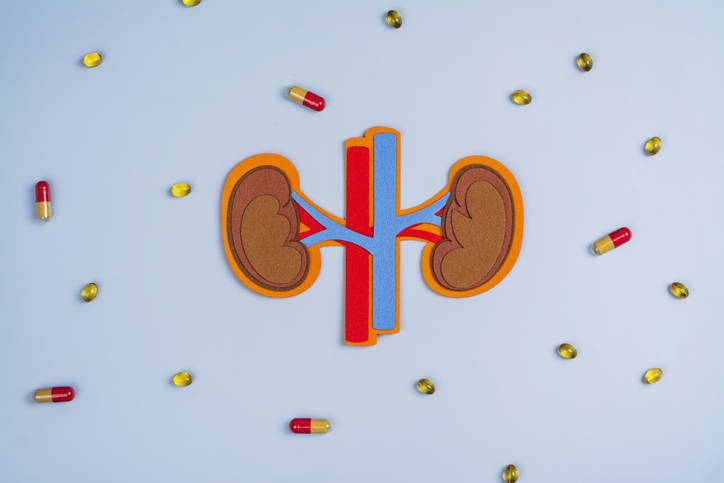
    kidney
    Share
    Facebook Twitter LinkedIn Pinterest Email

    The complement system is an innate immune response that leads to increased inflammation. The drug pegcetacoplan—a complement inhibitor—was approved for medical use in the United States in 2021 to treat adults with paroxysmal nocturnal hemoglobinuria (PNH)—a rare, life-threatening blood disease. In 2023, the drug was approved to treat people with age-related macular degeneration.

    Now, the drug has shown promise in a clinical trial involving patients with C3 glomerulopathy (C3G), an ultra-rare condition that primarily affects children and young adults. Only around 5,000 Americans have C3G, which causes progressive kidney damage, with more than half of patients reaching end-stage kidney failure within a decade of diagnosis.

    The clinical trial results are published in the New England Journal of Medicine in the paper, “Trial of Pegcetacoplan in C3 Glomerulopathy and Immune-Complex MPGN.”

    Unlike previous treatments for C3G that aimed to alleviate the damaging inflammatory process of the disease, the new, first-of-its-kind drug directly targets the root cause of C3G dysfunction in the body’s complement system.

    Carla Nester, MD, director of the Rare Renal Disease Clinic at University of Iowa Health Care Stead Family Children’s Hospital, led the global pediatric clinical trial. The results were striking: there was a 68% reduction in the amount of protein in the patients’ urine, and stabilization of kidney function. Up to 67% of children achieved complete remission, and 72% showed no disease activity on their kidney biopsies.

    “This is the closest thing to a cure we’ve ever seen for this disease,” says Nester. “We still need to follow the long-term outcomes for these patients, but the data from this trial is absolutely amazing.”

    The Phase III, randomized, double-blind, placebo-controlled trial was conducted at 122 centers in 19 countries and included 124 patients. Based on the results, pegcetacoplan was approved earlier this year by the U.S. Food and Drug Administration (FDA) as the first treatment for patients 12 years and older with C3 glomerulopathy (C3G) and primary immune complex membranoproliferative glomerulonephritis (IC-MPGN), a closely related rare and severe kidney disease.

    The research done over many years has advanced understanding of the underlying biology of C3G and led to a realization that inhibiting excessive activation of the complement pathway could be the key to an effective treatment. Determined to translate this knowledge into therapies for patients, the UI researchers collaborated with pharmaceutical companies to develop and test new drugs that could inhibit complement activation.

    Unlike previous treatments, which relied on broad anti-inflammatory drugs like steroids, or medications that targeted the wrong aspect of the complement pathway, this new class of medication precisely blocks the malfunctioning part of the complement system.

    Pegcetacoplan is administered via a twice-weekly injection, which many young patients prefer over daily oral medications. Another new drug called iptacopan, which also inhibits the complement system, was also approved earlier this year to treat adults with C3G.

    For patients, the impact of these new medicines is profound. Nester recalls one college student who had been struggling with the disease and is now in full remission and thriving in his career, as well as pediatric patients who no longer have to worry constantly about their health and can instead look forward to normal childhoods.

    “This is the year we finally get to help patients,” Nester says. “It’s been a long road, but we’re here.”

    breakthrough complement Glomerulopathy Inhibitor Treatment
    Share. Facebook Twitter Pinterest LinkedIn Tumblr WhatsApp Email
    Previous ArticleFamily Dog May Boost Mental Health in Teens Via the Microbiome
    Next Article Fountain Life brings $20m ROI with preventive healthcare
    admin
    • Website

    Related Posts

    A Video Report from AGBT

    February 27, 2026

    Novo Nordisk, Vivtex Ink Up to $2.1B Deal to Develop Oral Biologics for Metabolic Conditions

    February 27, 2026

    Increasing Rice Yields with Gene-Informed Selective Breeding

    February 27, 2026

    Mutant p53 Selective Reactivation Demonstrated in Advanced Solid Tumors

    February 27, 2026
    Leave A Reply Cancel Reply

    Our Picks

    9 Time-Saving Kitchen Gadgets for Fall at Amazon

    September 5, 2025

    Why Exercise Is So Important For Heart Health, From An MD

    September 5, 2025

    An Engineered Protein Helps Phagocytes Gobble Up Diseased Cells

    September 5, 2025

    How To Get Rid Of Hangnails + Causes From Experts

    September 5, 2025
    • Facebook
    • Twitter
    • Pinterest
    • Instagram
    • YouTube
    • Vimeo
    Don't Miss
    Longevity

    Nautilus debuts Voyager platform in push toward next-gen proteomics

    By adminMarch 1, 20260

    Company’s new benchtop system promises a clearer view of proteins following validation at a leading…

    First-in-Human Success for Prenatal Stem Cell Therapy in Spina Bifida

    February 28, 2026

    Pressure-Driven Pathway Links Liver Congestion to Fibrosis and Cancer

    February 28, 2026

    A cellular atlas of aging comes into focus

    February 28, 2026

    Subscribe to Updates

    Get the latest creative news from SmartMag about art & design.

    About Us

    At FineGut, our mission is simple: to enhance your self-awareness when it comes to your gut health. We believe that a healthy gut is the foundation of overall well-being, and understanding the brain–gut connection can truly transform the way you live.

    Our Picks

    9 Time-Saving Kitchen Gadgets for Fall at Amazon

    September 5, 2025

    Why Exercise Is So Important For Heart Health, From An MD

    September 5, 2025

    An Engineered Protein Helps Phagocytes Gobble Up Diseased Cells

    September 5, 2025
    Gut Health

    Nautilus debuts Voyager platform in push toward next-gen proteomics

    March 1, 2026

    First-in-Human Success for Prenatal Stem Cell Therapy in Spina Bifida

    February 28, 2026

    Pressure-Driven Pathway Links Liver Congestion to Fibrosis and Cancer

    February 28, 2026
    X (Twitter) YouTube
    • Contact us
    • Privacy Policy
    • Disclaimer
    • Terms and Conditions
    © 2026 finegut.com. Designed by Pro.

    Type above and press Enter to search. Press Esc to cancel.