

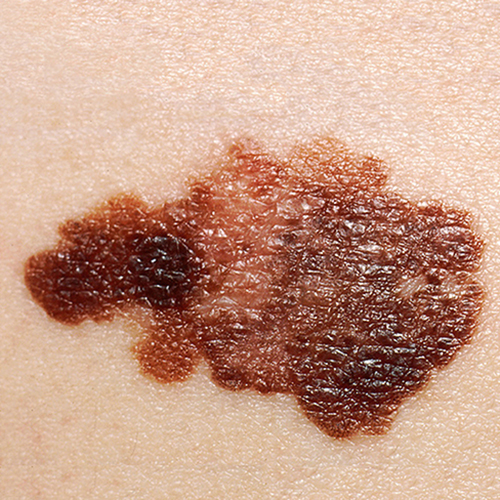
Researchers in Sweden have found that a lower dose of a common immunotherapy drug for malignant melanoma can significantly improve outcomes while reducing side effects. Their findings were published today in the Journal of the National Cancer Institute.
Malignant melanoma is the most invasive form of skin cancer, carrying the highest risk of death. While this type of cancer is highly treatable and curable in early stages before the cancer has spread, advanced tumors can be difficult to treat, especially when surgical removal is not an option. These advanced cases are typically treated with antibody-based immunotherapy drugs such as nivolumab and ipilimumab, which have been shown to significantly improve survival rates.
While these immunotherapy drugs are typically administered at a standard dose that has previously been approved by regulatory authorities, oncology centers in Sweden have increasingly adopted a modified protocol including a lower dose of ipilimumab, due to its high price and extensive side effects.
“In Sweden, we have greater freedom to choose doses for patients, while in many other countries, due to reimbursement policies, they are restricted by the doses approved by the drug authorities,” says Hildur Helgadottir, MD, PhD, senior physician and associate professor of oncology at Karolinska Institutet and senior author of the study.
The observational study included nearly 400 patients diagnosed with advanced malignant melanoma who were not eligible for surgery. Results showed that 37% of patients treated with the established dose of ipilimumab responded to the treatment, while 49% of patients treated with a lower dose showed a response.
Lowering the immunotherapy dose also increased progression-free survival from a median of three months to nine months, while overall survival increased from 14 to 42 months. In addition, the rate of serious side effects reported was reduced from 51% of patients in the group receiving the traditional dose to 31% for those who received the lower dose.
After adjusting results to account for differences in age and tumor stage between both treatment groups, outcomes remained significantly better for those who received the lower dose of ipilimumab.
“The results are highly interesting in oncology, as we show that a lower dose of an immunotherapy drug, in addition to causing significantly fewer side effects, actually gives better results against tumors and longer survival,” says Helgadottir.
While the retrospective study could not determine the reason behind the benefits of the lower immunotherapy dose, results support the modification of existing treatment protocols to improve patient outcomes. With melanoma diagnoses on the rise, boosting response rates and survival while reducing immunotherapy doses and the rate of serious side effects could translate into significant benefits for patients and healthcare providers alike.
“Immunotherapies are very valuable and effective, but at the same time they can cause serious side effects that are sometimes life-threatening or chronic,” says Helgadottir. “Our results suggest that this lower dosage may enable more patients to continue the treatment for a longer time, which is likely to contribute to the improved results and longer survival.”
