

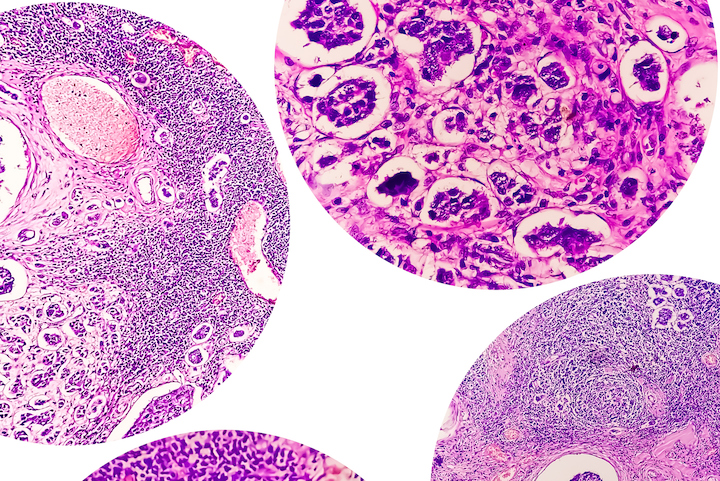
Astrin Biosciences has announced the launch of Certitude—a blood-based, early breast cancer detection test. The test combines AI and proteomics in what the company calls a “first of its kind,” because it detects the disease early and works in women with dense breast tissue.
The company says the Certitude supplemental screening test will be available in the U.S. in early 2026 by prescription only.
Dense tissue makes it much harder for mammograms to detect early-stage cancers. Meanwhile, dense breasts are also a significant risk factor for breast cancer. This feature alone gives Certitude an advantage in a market that is estimated to already be worth several billion dollars and to at least double over the next few years, especially as the growing number of young women with breast cancer raises concerns.
“Dense breast tissue is found more often in younger women, so for those women, Certitude will be a great supplemental screening option,” Astrin CSO Justin M. Drake, PhD, told Inside Precision Medicine.
Astrin says that proteomics makes the difference in Certitude’s case.
“We are capturing protein crosstalk,” said Drake. “This gives us a unique advantage over genomics or transcriptomics as those analytes are typically lower in abundance (especially in early-stage cancers such as breast cancer) resulting in decreased sensitivity.”
The latest results on the test’s performance will be presented at the upcoming San Antonio Breast Cancer Symposium (SABCS) on December 11, in a presentation titled “Deep Proteomics and AI Classifier for Early Breast Cancer Detection.”
In a study of 1,242 women, Certitude achieved 92% sensitivity at 93% specificity across breast cancer stages and subtypes. With a negative predictive value of >99.9%, Certitude is expected to reduce unnecessary imaging and biopsies that lead to overtreatment.
“These results reinforce the promise of combining deep proteomics with AI to transform how breast cancer is detected,” said Drake. “By identifying disease signals at the earliest stages, we can help more women benefit from timely intervention and improved outcomes.”
While mammography has enabled breast cancer to be diagnosed at an early stage in many more patients, there are still challenges. In the almost 50% of women with dense breast tissue, current imaging options are limited. Astrin’s findings support the use of Certitude to supplement mammograms, detecting specific signatures of cancer far earlier than visible on imaging or in circulating tumor DNA.
“I’ve seen firsthand how far screening has come—and where gaps remain. Mammography remains our most powerful population-level screening tool, but it is not perfect—particularly for the many women with dense breasts,” said Ben H. Park, MD, PhD, a scientific advisor to Astrin, in a company press release. Park is director of the Vanderbilt-Ingram Cancer Center, professor of Medicine, Division of Hematology/Oncology, and the Benjamin F. Byrd, Jr. Chair in Oncology.
Park added, “This represents one of the most meaningful advances in breast cancer detection in decades. A blood-based test that can identify molecular signals of cancer before they’re visible on imaging has the potential to fundamentally reshape the breast cancer screening paradigm.”
Genomic-based cancer blood tests have focused on circulating tumor DNA, cell free DNA, or fragments of DNA (DNA fragmentomics) in the bloodstream. However, these analytes are difficult to detect in early-stage disease, unless cancer cells have disseminated. With breast cancer, this becomes even more tricky since breast cancer cells do not disseminate early, making it nearly impossible to detect in early stages with genomic tests.
The test could make an important difference in screening women with dense breasts.
“For women with dense breasts, traditional supplemental imaging often leads to false positives, repeat scans, and biopsies that ultimately come back negative—creating tremendous anxiety and unnecessary cost,” said Barbara Levy, MD, also a scientific advisor to Astrin, in the press release. Levy is chief medical officer at Visana Health, clinical professor at George Washington University and UC San Diego Health.
She added, “Certitude brings an important new tool to clinicians—one that can reveal early signs of cancer without subjecting women to the cascade of follow-up tests. This is a meaningful step toward more patient-centered screening.”
